
A dirty outdoor unit can make an air conditioner buzz, but debris isn’t the only possible cause. If your AC is making a buzzing noise in New Braunfels, loose parts or an electrical problem may also be responsible. Turn the system off if the buzzing comes with a burning smell, smoke, visible electrical damage, sparking, or a tripped breaker.
It’s understandable to hope the sound is only leaves or dirt near the outdoor unit. Sometimes it is, but a persistent or worsening buzz can point to a problem that needs professional attention. Where the sound is coming from and whether cooling has changed can help narrow down the cause.
Learn how dirt and debris can trigger buzzing, what other common causes may sound like, and which warning signs make the noise more urgent. You’ll also find out when to switch off the AC and what a technician may inspect to identify the cause.
Key Takeaways
- Dirt, leaves, and twigs near the outdoor unit can trigger buzzing or vibration, but electrical and mechanical faults can sound similar.
- A failing capacitor or loose wiring may cause buzzing alongside hard starts, uneven cooling, or repeated shutdowns.
- Turn off the system if buzzing comes with smoke, a burning smell, sparking, visible electrical damage, or a tripped breaker.
- Keep debris clear of the condenser, but don’t open the unit or handle electrical components to investigate a noise.
- Pay attention to whether the sound persists or cooling changes; those clues help determine when an AC inspection is needed.
What Causes an AC Making Buzzing Noise and Is It an Emergency?
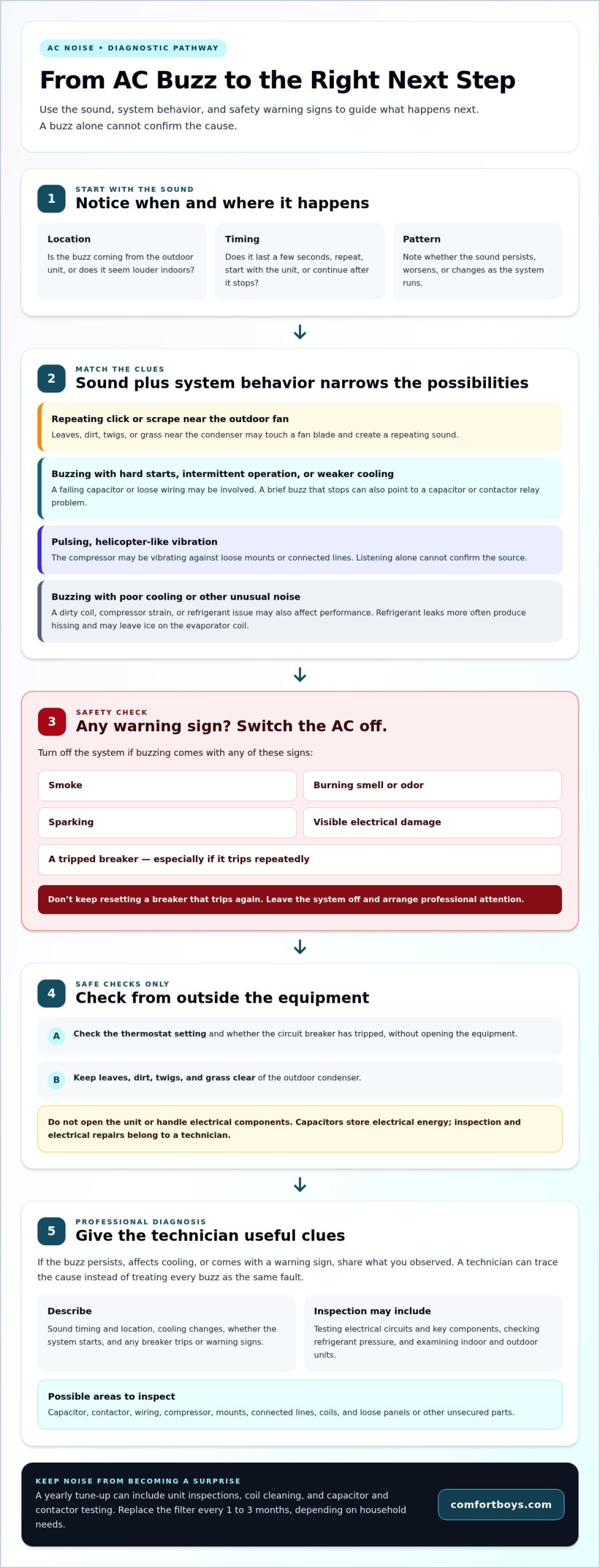
If your AC buzzes but won’t start, check the thermostat setting and whether the circuit breaker has tripped. Note whether the sound lasts a few seconds, repeats, or comes with smoke, a burning smell, or visible electrical damage.
Buzzing From Capacitor or Wiring Failures
A failing capacitor or loose wiring can make electrical components buzz as the air conditioner tries to operate. A capacitor problem may also cause difficult starts, intermittent operation, or weaker cooling. If the buzz lasts a few seconds and stops, a capacitor or contactor relay may be failing. Don’t open the unit: capacitors store electrical energy, and a technician should inspect them.
Compressor Vibration and Loose Mounts
The compressor can vibrate against loose mounts or connected lines, creating a pulsing, helicopter-like sound. That differs from a steady electrical buzz, although listening alone can’t confirm the cause. Loose mounts may transmit vibration through the outdoor cabinet, making the noise seem louder indoors. A technician can check the compressor, mounts, and lines to identify the source.
Buzzing When the AC Won’t Start
A buzz without the AC starting can point to a failing capacitor, contactor relay, or another electrical fault. Check the thermostat setting and breaker from outside the equipment, then note whether the fan or compressor starts. If the breaker trips repeatedly, don’t keep resetting it. Leave the system off and arrange professional AC repair. Repeated attempts can strain the equipment.
Not every buzz is electrical. Loose screws, access panels, mounting brackets, or other unsecured components can vibrate during operation. A loose panel may create a light rattle, while a loose or damaged part can cause louder banging. Notice whether the noise starts with the unit, changes as it runs, or continues after the system stops. These details help distinguish cabinet vibration from a deeper mechanical sound.
Urgency depends on the warning signs, not just the volume. Turn the air conditioner off if buzzing comes with smoke, sparking, a burning odor, visible electrical damage, or a tripped breaker. Electrical buzzing can signal overheating or a failing component, and continued operation may affect cooling or damage nearby parts. A shutdown alongside buzzing also deserves prompt attention.
Refrigerant problems are another possible source of unusual AC noise, although leaks more often produce hissing. A leak may also reduce cooling or leave ice on the evaporator coil. Buzzing with poor performance can have other causes, including a dirty coil or compressor strain, so the sound alone can’t identify the fault. Note any change in cooling alongside the noise.
AC diagnostics, repairs, and maintenance
In New Braunfels, choose a licensed HVAC company that handles AC repair and emergency calls. Ask whether its technicians hold Texas credentials, and describe the buzzing, cooling changes, and any breaker trips.
Preventive Noise Maintenance
Preventive maintenance checks the parts and airflow that can contribute to AC noise. A yearly tune-up can include inspecting indoor and outdoor units, cleaning coils, and testing capacitors and contactors. These checks help spot loose components or wear before they interfere with cooling. Between visits, replace the filter every 1 to 3 months, depending on household needs.
Keep a short record of new sounds, longer cooling cycles, and unusual increases in utility bills. For example, note whether buzzing starts when the outdoor unit runs or follows a recent filter change. This pattern gives a technician useful diagnostic context. Clear airflow also matters: a dirty filter can restrict circulation and make the system work harder.
AC Diagnostics and Repairs
AC diagnostics trace a noise to its cause rather than treating every buzz as the same fault. An inspection may include testing electrical circuits, checking key components, evaluating refrigerant pressure, and examining the indoor and outdoor units. The technician can compare the sound with system behavior, such as a hard start, weak cooling, or frequent shutdowns.
That distinction guides the repair. A loose panel may need attention, while electrical buzzing can require testing a capacitor, contactor, or wiring. Buzzing with poor cooling can also point to a dirty coil or refrigerant issue. Capacitors store electrical energy, so homeowners shouldn’t open the equipment or attempt electrical repairs themselves.
Emergency AC Repair Service
Emergency AC repair is appropriate when a new sound comes with an immediate safety warning or the system stops working. Turn off the air conditioner if buzzing occurs with smoke, a burning smell, sparking, visible electrical damage, or a tripped breaker. Don’t keep resetting a breaker that trips again. These signs can indicate an electrical fault that needs prompt attention.
When you call a licensed HVAC company, share the sound’s timing and location, whether the system still cools, and any warning signs. For example, explain if the outdoor unit buzzes but the fan doesn’t start. These observations help direct the inspection without requiring you to open the unit. If the buzz persists or affects cooling, professional AC diagnostics can help identify the fault.
Debris in the outdoor condenser unit
Leaves, dirt, twigs, and grass can collect around an outdoor condenser and cause buzzing, rattling, or vibration. Material caught near the fan may touch a blade as it spins, creating a repeating scrape or click. In New Braunfels, windblown leaves or grass clippings can reach the unit even when the yard looks clear. The sound’s location and rhythm offer clues, but buzzing alone doesn’t prove debris is responsible.
A fan blade scraping debris often makes a click or scrape that repeats with each rotation. A bent blade can produce a similar sound, so don’t assume every scrape has the same cause. If you hear clicking alongside blade contact, switch off power before checking for visible debris. Remove only debris you can safely reach from outside the unit. Don’t open the cabinet or reach through its grille toward the fan.
For steady buzzing at the condenser, turn off the air conditioning system and inspect the area for visible obstructions only. Look for a twig against the grille, leaves gathered near the base, or grass clippings blocking the space around the cabinet. If the sound continues after visible debris is cleared, the cause may involve another component, such as a capacitor, wiring, or compressor strain. Electrical parts aren’t safe for homeowners to inspect.
Give the outdoor unit room to move air. Trim nearby bushes, keep grass clippings and leaves clear, and check that the condenser sits on a level surface. These steps can reduce obstructions and help limit strain and vibration. During the cooling season, clear debris around the condenser monthly. After mowing, check for clippings near the grille instead of waiting for an unusual buzz.
Notice what happens after the system starts. A sound that begins with fan movement and changes when the fan stops may point to blade contact or vibration. A persistent hum without visible debris needs a different inspection. Record whether the noise is a click, scrape, rattle, or steady buzz, and whether cooling has weakened. These details help distinguish a simple outdoor obstruction from a mechanical or electrical problem.
Stop the system if a blade appears bent, the fan scrapes the cabinet, or the buzzing comes with a burning smell, smoke, or sparking. Don’t try to straighten a blade or tighten internal parts. A technician can assess blade alignment, the motor, and other components without risking further damage. Prompt attention matters if the fan can’t turn freely, because the condenser needs airflow to release heat during cooling.
Can a dirty AC unit cause buzzing sounds?
Yes. A dirty coil can contribute to buzzing when restricted airflow makes the air conditioning system work harder. But a dirty unit isn’t the only explanation: a failing capacitor, contactor, or loose wiring can also make electrical components buzz. The sound, cooling performance, and any safety symptoms help distinguish these possible causes.
A capacitor helps start and operate motors, while a contactor controls electrical power to parts of the system. If either component wears or develops a fault, the AC may buzz, start inconsistently, or click rapidly. A weak start can also leave the compressor struggling to run. Homeowners shouldn’t handle these parts, because capacitors store electrical energy even after the system is switched off.
Dirty coils can reduce airflow and cooling efficiency. When poor cooling occurs alongside buzzing, a dirty coil, iced evaporator coil, or low refrigerant may be involved. Ice on the indoor coil is a visible clue, but it doesn’t establish the cause. Turn the system off if you see ice, and don’t chip it away. A technician can determine whether airflow, refrigerant pressure, or another fault needs attention.
Electrical faults deserve particular care. Buzzing may indicate excessive current, overheating, or a failing electrical component. Turn off the air conditioner if the noise comes with a burning smell, smoke, sparking, visible electrical damage, or a tripped breaker. Don’t repeatedly reset a breaker that trips again. Continued operation can strain motors, disrupt cooling, or damage nearby components.
A professional inspection can include testing electrical circuits, checking capacitors and contactors, evaluating refrigerant pressure, and examining both indoor and outdoor units. Compressor diagnostics matter when buzzing comes with weak cooling, frequent shutdowns, or a motor that struggles to start. These symptoms can help locate the fault rather than treating the sound alone. AC capacitors and contactors should be tested annually to help prevent electrical buzzing, chatter, and hard starts.
Homeowners can support diagnosis without opening the equipment. Note whether buzzing starts at startup, continues steadily, or happens with rapid clicking. Record changes in cooling and whether the breaker trips. Also check the thermostat and air filter, and look for visible ice without touching internal parts. These observations give a technician useful context while keeping electrical components untouched. Persistent buzzing, worsening noise, or reduced cooling calls for an inspection rather than guesswork.
Should I turn off my air conditioner if it is buzzing?
Turn it off if buzzing comes with a burning smell, smoke, sparking, visible electrical damage, or a tripped breaker. A new squeal or grinding sound also deserves attention, especially if cooling weakens or the fan struggles to run.
Worn Bearings, Belts, and Misaligned Motors
A high-pitched squeal can come from worn motor bearings, a misaligned motor, or a slipping belt in equipment that uses one. These mechanical sounds matter because continued operation can add strain and worsen wear. Notice whether the squeal starts with the indoor blower or outdoor unit, and whether it changes as the fan runs. That distinction helps focus the diagnosis.
Condenser Fan Motor Problems
The condenser fan motor turns the outdoor fan, which moves air across the coil during cooling. A worn or damaged motor can buzz, hum, or squeal and may affect system performance. If the fan doesn’t turn, runs unevenly, or makes scraping sounds, switch the air conditioner off. Don’t reach through the grille or try to spin the fan by hand.
Fan Motor Wear and Operation
Fan motor wear can make operation noisy before the system stops cooling. For example, a motor with worn bearings may produce a rising squeal, while a loose mount can create vibration. Record when the sound occurs and whether airflow or cooling changes. A technician can use those details during inspection to distinguish motor wear from electrical or other mechanical causes.
For a less urgent buzz without safety symptoms, turn the AC off at the thermostat and listen for whether the noise stops. If it continues or returns at the next startup, leave the system off and arrange an inspection. Don’t remove panels or handle wiring. If a breaker has tripped, avoid repeated resets; recurring trips can indicate an electrical fault.
Pay attention to the sound’s location and pattern. A steady hum from the outdoor unit differs from a squeal near the indoor blower, while rapid clicking can point to a control or electrical issue. Note whether the compressor starts, whether the fan runs, and whether cooling continues. These observations help a technician narrow down the cause without exposing you to moving parts or electrical components.
Stop operation immediately for smoke, sparks, burning odors, or visible damage. These signs raise the risk beyond ordinary mechanical noise. For a persistent buzz, squeal, or fan problem, schedule AC repair so the system can be inspected before continued operation worsens the fault.
Comfort Boys Air and Heating: AC Installation
Comfort Boys can help when buzzing points to a repair need or an aging system that may require replacement. Its AC Repairs address operating problems, while AC Maintenance supports routine system care. If inspection shows that the existing unit needs replacing, AC Installation is another option. For homes suited to a ductless setup, Comfort Boys also offers Mini-Split Services.
Share when the buzzing starts, where you hear it, and whether cooling has changed. Those details help guide the next conversation about repair or replacement. Contact Comfort Boys Air and Heating to discuss your AC concerns.
Take the Next Step Toward Quieter, Reliable Cooling
Use the sound as a useful clue, not a reason to guess at a repair. Before arranging help, note when the buzzing starts, where it seems loudest, and whether the AC’s cooling has changed. These details can make the conversation more focused and help distinguish a developing mechanical issue from an electrical concern.
If an AC is making a buzzing noise in New Braunfels, Comfort Boys can help assess the system and determine an appropriate next step. Its AC Repairs address system problems, while AC Maintenance supports ongoing care. If an older or damaged unit needs replacing, Comfort Boys also offers AC Installation. The right option depends on what the inspection finds and the condition of the equipment.
For a clear path forward, contact Comfort Boys Air and Heating to discuss your AC concerns. A careful diagnosis can help you make an informed decision and get back to dependable comfort.
Frequently Asked Questions
Is a buzzing AC dangerous?
It can be, especially if the sound comes with smoke, sparking, a burning odor, visible electrical damage, or a breaker that trips. Switch off the system if any of these signs appear, and don’t touch exposed wiring or open equipment panels. A quiet buzz without warning signs may still indicate a developing fault, so note when it occurs and whether cooling changes.
What will a professional test and repair?
A technician can test electrical circuits and inspect the capacitor, contactor, wiring, fan motor, compressor, coils, and refrigerant pressure. The findings determine the repair, which could involve securing a vibrating part, addressing a faulty electrical component, or correcting an airflow or refrigerant problem. Describe whether the noise happens at startup or during operation, and mention any cooling changes to help focus the inspection.
Do these noises mean you need an AC replacement?
No. A buzzing sound alone doesn’t mean the system needs replacement; the deciding factors include the unit’s age, overall condition, and repair complexity. Air conditioners typically last 10-15 years. Replacement may be worth considering when a unit in that age range needs complex repairs, or when a repair would cost more than half the price of a new unit.
How much does it cost to fix a buzzing AC?
The price depends on the fault and is provided after a quote request. A loose panel and a failing compressor involve different parts and repair work, so the diagnosis and the work required affect the total. Tell the technician what the sound is like, when it occurs, and whether cooling has changed. That information helps identify the likely scope before repair work begins.
What causes an air conditioner to make a buzzing noise?
Common causes include a failing capacitor, loose wiring, a worn contactor, vibrating panels, compressor strain, or a fan problem. If your AC is making a buzzing noise in New Braunfels, note whether it happens at startup or during operation. For instance, a repeating scrape can suggest contact between a fan blade and an obstruction. These clues help narrow the possibilities, but the sound alone can’t confirm the faulty part.
What does a buzzing sound from an AC outdoor unit mean?
A buzz at the outdoor unit may come from debris near the fan, vibration from loose mounts, or an electrical issue involving the capacitor or wiring. If your AC is making a buzzing noise in New Braunfels, note whether the sound is steady or follows the fan’s rotation, and whether cooling seems normal. If you see smoke or sparking, shut the system off. Don’t reach through the grille or open the cabinet.
Can a buzzing AC be dangerous or cause further damage?
Yes. An electrical fault can overheat components, disrupt cooling, damage nearby parts, or shut the system down. A struggling compressor or fan may also face added strain if the AC keeps running with a persistent fault. Stop operation if the noise comes with a burning smell, smoke, sparks, or a tripped breaker. A buzz that grows louder or affects cooling also merits an inspection.
When should I turn off a buzzing air conditioner and call a technician?
Turn it off at the thermostat if you notice a burning smell, smoke, sparking, visible electrical damage, or a breaker trip. If needed, switch off the circuit breaker, but don’t repeatedly reset one that trips again. For a persistent buzz without those warning signs, note when it starts and whether cooling changes, then arrange an inspection instead of opening the unit yourself.