
When searching for a family-owned HVAC company near me, look beyond friendly service: check whether the company serves your area, handles the work you need, and explains its recommendations clearly. Customer reviews can offer useful clues, but the company’s service details and qualifications matter, too.
When your home’s comfort is at stake, you need more than a friendly name. Learn how to read customer feedback, assess a company’s service offerings, and compare repair, maintenance, and installation options.
This guide also covers common heating and cooling needs, from an AC that isn’t keeping up to a furnace that needs attention. Knowing how to describe the problem and what to ask can help you choose a local HVAC team with confidence.
Key Takeaways
- Look for consistent patterns in homeowner reviews, especially around communication, workmanship, and how service concerns are handled.
- Use a company’s credentials and clear explanations of the proposed work to make a more informed choice.
- Learn which factors can help guide the decision between AC repair and installation.
- See what to consider when a heating system or furnace needs repair or replacement.
- Explore AC installation, repair, tune-ups, and mini split installation options for different home comfort needs.
Air conditioning repair and installation
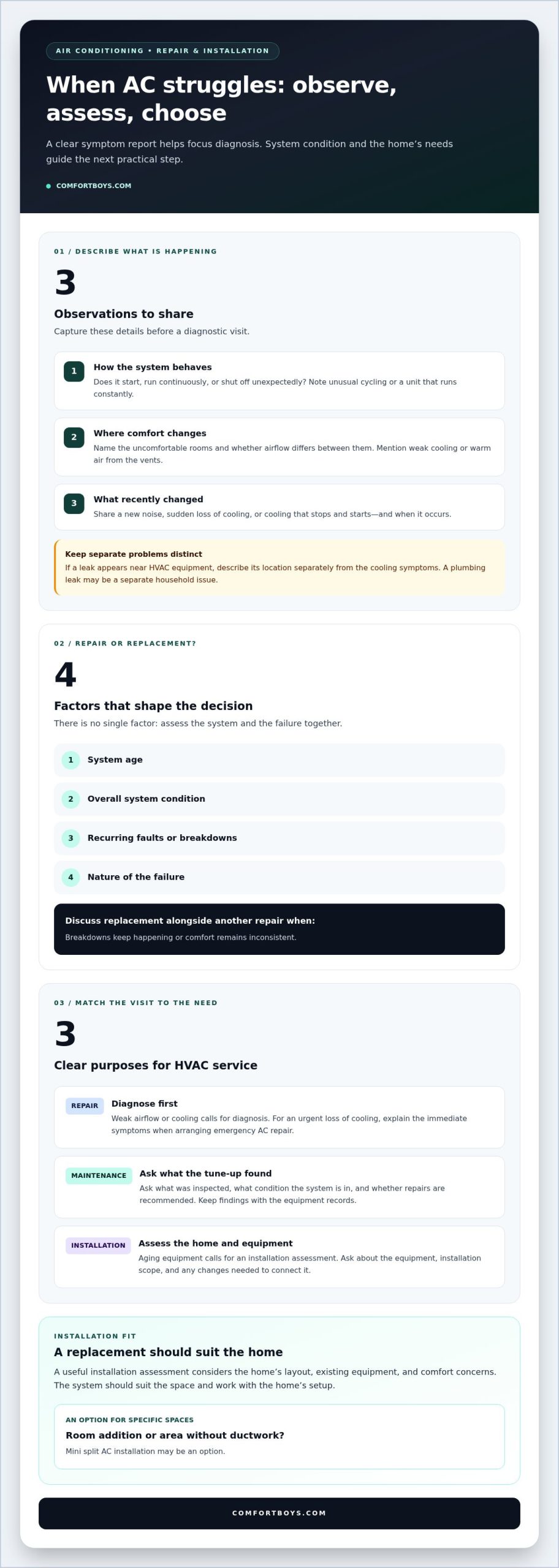
A useful HVAC assessment connects the symptom to the system’s condition and the next practical step. Note what changed, such as weak cooling, unusual cycling, or a unit that runs constantly.
Heating and Cooling Installation
Heating and air conditioning installation starts with understanding the home’s layout, existing equipment, and comfort concerns. A replacement system should suit the space and work with the home’s setup. Ask for a clear explanation of the equipment, installation scope, and any changes needed to connect it. For a room addition or an area without ductwork, mini split AC installation may be an option.
Cooling Repair and Replacement
For a cooling repair, describe the symptom and when it occurs, such as warm air from the vents or cooling that stops and starts. This helps focus the diagnostic visit. Whether to repair or replace depends on the system’s age, condition, recurring faults, and the nature of the failure. If breakdowns keep happening or comfort remains inconsistent, discuss replacement alongside another repair.
Use a simple sequence when the air conditioner struggles:
- Note whether the system starts, runs continuously, or shuts off unexpectedly.
- Record which rooms feel uncomfortable and whether airflow differs between them.
- Share any recent change, such as a new noise or a sudden loss of cooling.
These observations can help distinguish an air-conditioning problem from a separate household issue, such as a plumbing leak. If a leak appears near HVAC equipment, describe its location and the cooling symptoms separately. For an urgent loss of cooling, emergency AC repair addresses the air-conditioning fault; explain the immediate symptoms when arranging service.
Maintenance gives technicians a chance to assess the air conditioner before a comfort problem disrupts the home. During a tune-up, ask what was inspected, the system’s condition, and whether repairs are recommended. Keep the findings with the equipment records so future visits can take past work and observations into account.
Heating and air conditioning services include installation, repair, and maintenance, but each visit should have a clear purpose. Someone replacing an aging unit needs an installation assessment, while weak airflow calls for diagnosis first. A furnace and an air conditioner may need separate maintenance because their components and operating needs differ. Identify the equipment and describe the problem to clarify the next step.
Family-owned and locally operated HVAC company
Ownership and local service coverage can help you understand how an HVAC company works with homeowners. Compare its service area, residential experience, and available services with your needs before deciding whether it’s a fit.
Company Background and Local Ownership
Family ownership describes a company’s ownership structure, not an automatic measure of service quality. Look for a clear account of who operates the business, where it works, and which heating and air services it handles. For example, one homeowner may need help with an existing central system, while another needs a different setup. Direct answers help you understand whether the company’s work matches your needs.
How do family-owned HVAC companies compare with larger chains? A family-owned business may offer more direct access to its owners, while a chain may use standardized processes across locations. Neither structure alone proves quality, so compare service scope, communication, and explanations. Judge a family-owned HVAC company near me and a larger chain by the work and service details each provides.
Check the company’s stated service area against your community, then match its services to the job. For example, Comfort Boys serves San Antonio and the Texas Hill Country, including Boerne, Comfort, Spring Branch, and Blanco. Coverage information helps you identify whether a company serves your area. When searching for a family-owned HVAC company near me, start with its listed locations.
Local HVAC History and Experience
Local history is most useful when it explains the work a company has done, rather than relying on a broad experience claim. Look for examples involving residential HVAC systems, such as troubleshooting an older air conditioner or installing heating equipment in a home with a different layout. Relevant experience means work resembling your home’s system and current concern.
Assess experience through practical details: how the company describes its work, whether its service categories match the problem, and whether its explanations are understandable. For example, a contractor discussing an air-conditioning fault should distinguish diagnosis from replacement. That clarity helps you understand the proposed next step without relying on ownership labels alone.
What family-owned HVAC companies are near me? The relevant options depend on your community and each company’s service area. In San Antonio and the surrounding Texas Hill Country, check whether the company serves your town, then compare its residential HVAC services with the work you need.
Do nearby family-owned HVAC companies offer free estimates or emergency service? Estimate policies vary, so don’t assume an estimate is free. Emergency availability also differs; an emergency AC repair service doesn’t by itself establish hours or response time. For urgent cooling problems, describe the symptoms and the service you need.
What rebates or tax credits are available for HVAC upgrades in my area? There isn’t one incentive that applies to every home; eligibility depends on location, equipment, and the upgrade. Review the relevant program terms for your area and proposed system before including an incentive in your decision.
For a cooling problem, local AC repair support can be a practical next step.
Heating and furnace repair and installation
A furnace that struggles to heat a home needs diagnosis before replacement is recommended. Note which rooms are affected, what has changed, and whether the problem recurs. Those details help technicians focus on the equipment and explain whether a repair or installation project fits the situation.
Age and reliability both matter. Consider replacing a furnace or boiler when the heating system is older than 15 years or frequently breaks down. That threshold is a decision point, not a diagnosis: the system’s condition, repair history, and current performance still shape the recommendation. For example, an older unit with repeated faults deserves a careful comparison between another repair and replacement.
For furnace or boiler installation, ask how the proposed system will suit the building and connect to its existing setup. Residential and commercial properties can have different heating demands, so the equipment and work plan should reflect the space. Ask what the installation includes, which parts of the existing system will remain, and how technicians will test operation afterward.
A repair discussion should identify the fault before outlining the work. If a furnace stops heating, describe when it happens and whether the system starts. If an electrical component is involved, ask for a plain-language explanation of the diagnosis and proposed repair. This helps distinguish the immediate fix from maintenance that may reduce strain on other components.
Read installation and repair warranty terms before work begins. Check what they cover, how long the coverage applies, and which parts or conditions are excluded. Keep the paperwork with your service records. If a problem arises later, the completed-work description and written terms can help clarify the next step.
A maintenance plan can organize routine attention to heating equipment, but its value depends on the included services. Compare the plan’s tasks with your system’s needs and keep notes from each visit. If a noise keeps recurring, for example, ask whether it calls for repair or simply monitoring. Keep maintenance tasks and repair recommendations distinct so each has a clear purpose.
Air conditioning needs its own maintenance and installation planning. Before AC installation, describe comfort problems by room and say whether the home has ductwork. For a cooling concern, note weak airflow or uneven temperatures. These details give technicians useful context, while a written scope makes clear what the proposed work addresses.
Customer reviews and company credentials
Reviews and credentials offer different clues: customer comments describe service experiences, while credentials document qualifications. Consider both in relation to the job you need, such as diagnosing an air conditioner before the cooling season.
Customer Reviews and Ratings
Ratings for local family-owned HVAC companies vary by business and review platform; there’s no single local score. Read the written reviews behind a rating. Comments about timely updates, clear explanations, and careful work can show what customers experienced.
Look for patterns across reviews rather than treating one glowing or critical comment as conclusive. Several accounts describing clear explanations during a furnace repair offer more insight than a vague claim of great service. Note whether reviewers say the company explained the work and addressed the comfort problem they reported.
Reviews have limits. A homeowner’s comfort and expectations may differ from yours, and a short comment may leave out context. Use reviews to identify questions to ask, such as how the company communicates during installation, then consider its explanation of the process.
Company Credentials
Credentials can include documented qualifications, training, or memberships. Read the exact credential name and scope, then consider whether it relates to your project. A general experience claim, for example, doesn’t explain which technicians will handle your repair or which systems they service.
Ask for a plain-language explanation of relevant qualifications and how they relate to your project. A qualification connected to equipment installation may not describe experience diagnosing a recurring furnace issue. Clear answers help you understand what a credential represents without treating it as proof of every kind of expertise.
Use a consistent review-reading process:
- Match each comment to a service type, such as repair, maintenance, or installation.
- Look for specific descriptions of communication, diagnosis, and completed work.
- Compare those details with the company’s explanation of the service you need.
For example, a review about a summer AC repair may show how a customer experienced communication during a warm season. It can’t establish how every job is handled, but it may prompt useful questions about scheduling, diagnosis, and the work summary.
Consider whether credentials and customer feedback tell a consistent story. If reviews praise clear explanations, the company’s own description of a proposed repair should also be understandable. If a profile highlights installation qualifications, look for relevant detail about the equipment and project scope. This comparison helps you assess whether the information speaks to your needs and supports a lasting working relationship.
Family-owned and operated HVAC company
Family ownership can shape how a local HVAC business communicates, but it doesn’t replace clear work practices. Assess the company’s service explanations, its indoor air quality services, and how it describes the work it does.
A family-owned structure means relatives own or operate the business; it doesn’t explain who handles each service visit. One family member may manage customer communication while technicians carry out the work. Focus on practical details: who explains the proposed work, what the service includes, and how findings are shared afterward.
For an indoor air concern, start with a concrete observation. Note where odors linger, when a room feels stuffy, or whether dust collects quickly. These details help frame a conversation about indoor air quality without assuming a cause. Heating, air conditioning, ventilation, and household activities may all be relevant to comfort.
Keep a short record before discussing the concern:
- Describe the room or area where you notice the issue.
- Note when it occurs, such as during heating or cooling operation.
- List recent changes, such as renovation, new furnishings, or altered ventilation habits.
Specific observations give the conversation a useful starting point. If a bedroom feels stuffy only when its door is closed, mention that pattern. If an odor appears near a boiler, describe its location and timing instead of assuming the boiler is responsible. Clear observations help separate symptoms from possible explanations.
Ask how the suggested work relates to your concern. An indoor air quality recommendation should explain the issue being addressed and the proposed scope. You can then compare that explanation with your original observation and understand the purpose and limits of the service.
Local ownership may mean direct communication, but each company’s process differs. Consider how the business explains service steps, documents completed work, and handles follow-up questions. A family member may be involved in operations, but the most useful measure is whether the information is clear and relevant.
Indoor air quality is part of the home comfort picture, alongside heating and cooling. A lasting solution starts with identifying the concern, explaining the conditions, and choosing work that matches the issue. Keep notes from the discussion so future service visits can build on earlier observations rather than begin without context.
If indoor comfort concerns persist, explore indoor air quality service as a next step.
Comfort Boys Air and Heating: AC Installation
Comfort Boys helps homeowners plan AC installation around their home’s cooling needs. If an existing system needs attention, AC repair services address performance problems, while AC tune-ups provide maintenance for air-conditioning equipment. Mini split AC installation can suit a home addition or a space that needs a different cooling setup.
Consider installation when planning a new system, repair when the current unit isn’t working properly, and a tune-up for routine maintenance. Sharing the symptoms or project details helps focus the service discussion.
Contact Comfort Boys Air and Heating to discuss AC installation or service for your home.
Make your next comfort decision with confidence
Choosing a family-owned HVAC company near me means finding a team whose services fit your home’s needs and whose explanations help you decide what comes next. Whether you’re planning an upgrade, dealing with an AC problem, or arranging routine care, start by describing the issue and the result you need.
Comfort Boys provides AC installation, AC repair services, and AC tune-ups. These services support different cooling needs, from setting up a system to addressing a fault or maintaining existing equipment. Describe your project clearly to focus the discussion on the relevant service.
Take the next step when you’re ready to discuss your home’s cooling needs. Contact Comfort Boys Air and Heating to talk about AC installation, repair, or maintenance. A thoughtful decision today can help you move toward a more comfortable home.
Frequently Asked Questions
What Are Other Homeowners Saying?
Homeowner reviews are most useful when they describe a specific service and its outcome, not just a star rating. Look for comments about the original problem, communication, and whether the work was explained clearly. Detailed feedback can reveal patterns, but one review can’t predict every service visit. Compare comments about work similar to your HVAC need.
Which nearby HVAC companies are locally owned and operated?
Comfort Boys is a family-owned business serving San Antonio and surrounding Texas Hill Country communities, including Boerne, Comfort, Spring Branch, and Blanco. Check whether the company’s service area includes your community, then compare its HVAC services with your home’s needs. Local ownership describes the business structure; it doesn’t establish service quality or credentials by itself.
What HVAC services do family-owned companies near me offer?
Services vary by company. Comfort Boys offers AC installation, AC repair, AC tune-ups, mini split AC installation, heater repair, indoor air quality, duct cleaning, smart thermostats, and wine cooler repair and installations. A homeowner whose air conditioner won’t cool needs a different service from someone planning a mini split. Match the service to the equipment and issue.
Are local HVAC contractors licensed, insured, and certified?
Don’t assume a company’s licensing, insurance, or certifications based on family ownership or customer reviews. Assess its documented qualifications separately, and check that the business name matches the company proposing the work. Read what each document covers and whether it relates to your HVAC service. A general experience claim isn’t proof of a specific qualification.
How can I verify an HVAC company’s reputation and avoid scams?
Compare detailed customer comments with the company’s written description of its services. Confirm that the business name and contact details are consistent across its materials, and look for clear information about diagnosis, service scope, and next steps. Don’t approve work until you understand what’s proposed. Keep written service documents so you can review what was discussed and authorized.
What HVAC warranties and guarantees do nearby companies provide?
Warranty terms vary. Before work begins, review the written coverage, duration, and excluded parts or conditions, then keep the paperwork with your service records.