
A recommendation to replace your HVAC system deserves a clear explanation, not a rushed decision. A practical first step in avoiding HVAC scams in San Antonio is to get a written estimate, compare the recommended work, and seek another opinion if someone urges immediate full-system replacement without clear evidence. Review and approve the written scope before work begins.
It’s reasonable to feel uneasy when a repair diagnosis comes with pressure, unclear costs, or a surprisingly cheap tune-up offer. Comparing written estimates can help you understand what’s recommended and why, so you can make a considered decision about your home’s comfort. This guide explains what an estimate should include, how to recognize pressure tactics, what to check in tune-up promotions, and how to explore repair options before replacing a system.
Key Takeaways
- Compare written estimates by looking at the work, parts, labor, and warranty details, not just the bottom line.
- Pause before approving major work if a contractor pressures you to decide immediately or discourages a second opinion.
- Use regular maintenance to stay ahead of problems, and assess tune-up promotions by understanding what the advertised service includes.
- Before agreeing to replace a system, ask for the diagnosis, evidence of the problem, and repair options where appropriate.
- Keep the written estimate and payment terms clear before work begins, and avoid paying the full cost upfront.
1. Getting second opinions and comparing quotes
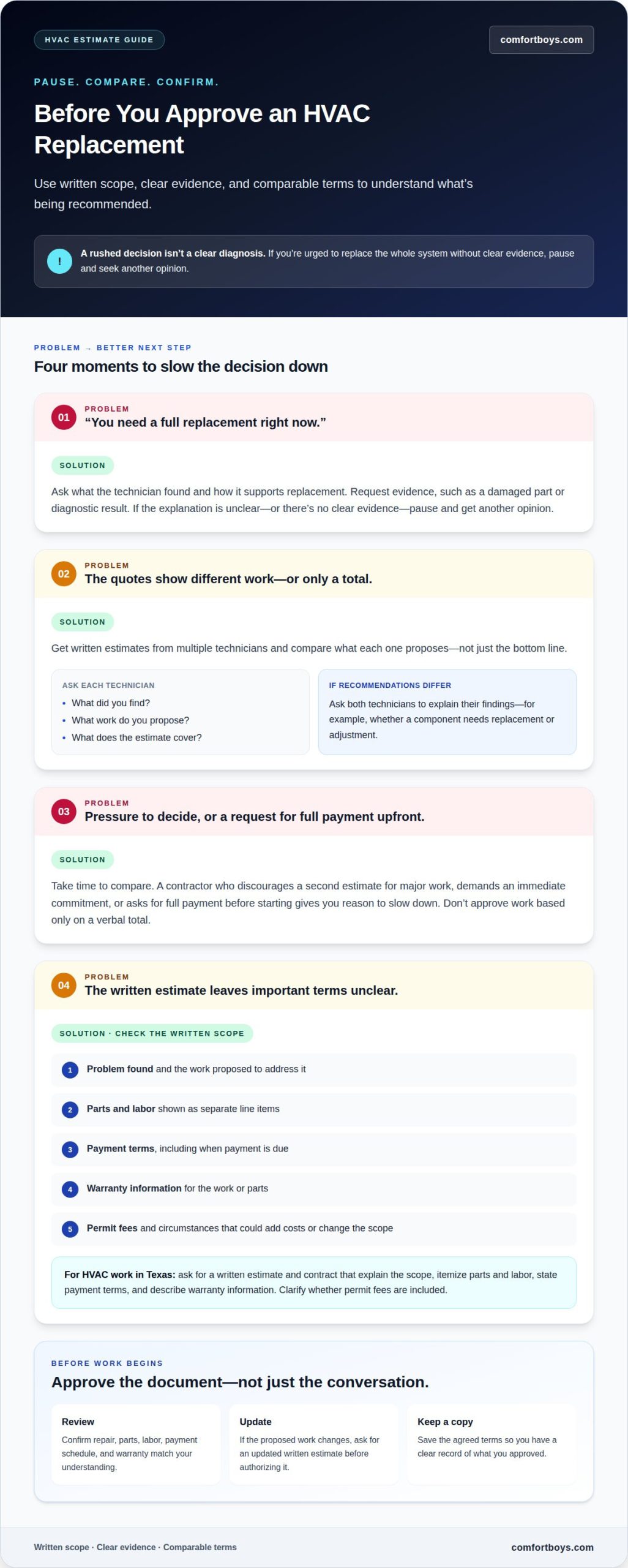
A replacement recommendation can feel urgent, especially when your home isn’t cooling properly. Before approving a major project, get written estimates from multiple technicians and compare the proposed work. If someone recommends replacing the entire system without clear evidence, pause and seek another opinion. A technician should explain the diagnosis and how it supports the recommended solution.
Compare the scope, not just the total. One estimate might specify a part and labor, while another describes only a broad repair. Ask each technician what they found, what work they propose, and what the estimate covers. If recommendations differ, use those explanations to pinpoint the disagreement, such as whether a component needs replacement or adjustment.
For a useful comparison, check whether each written estimate identifies:
- The problem found and the work proposed to address it.
- Parts and labor as separate line items.
- Payment terms, including when payment is due.
- Warranty information for the work or parts.
- Any required permit fees and circumstances that could add costs.
For HVAC work in Texas, ask for a written estimate and contract that explain the scope, itemize parts and labor, state payment terms, and describe warranty information. Before signing, clarify whether permit fees are included and what could change the scope or cost. Approve the written estimate before work begins, and keep a copy of the agreed terms.
Compare the documents side by side. If one estimate includes replacing a component and another does not, ask both technicians to explain their findings. Request evidence for major recommendations, such as a damaged part or a diagnostic result. A clear explanation helps you tell whether the estimates address the same problem or propose different solutions.
Watch for pressure that prevents a fair comparison. A contractor who discourages a second estimate for major work, demands an immediate commitment, or asks for full payment before starting gives you reason to slow down. Don’t approve work based only on a verbal total. When avoiding HVAC scams in San Antonio, base your decision on written scope, clear evidence, and comparable terms.
Before work starts, compare the final document with what you approved. Confirm that the repair, parts, labor, payment schedule, and warranty match your understanding. If the proposed work changes, ask for an updated written estimate before authorizing it. This gives you a clear record of what you agreed to.
2. Preventive maintenance with a trusted contractor
Routine maintenance helps build a service history before a breakdown. A reputable contractor explains what the technician inspected, notes any concerns, and distinguishes recommended repairs from routine maintenance. Ask for a written record of the visit so you can compare future findings with earlier notes.
Research the company before scheduling. Read recent reviews on Google, Yelp, or Angi’s List, and look for recurring complaints about dishonesty, overcharging, or unfinished work. One negative review may describe a single dispute, while repeated reports of the same issue deserve closer attention. Check the company’s website for licensing information, certifications, and service guarantees, then verify relevant credentials for your area.
Confirm who is coming to your home and which business they represent. If an offer arrives by phone, email, or at your door, independently verify the company’s identity and business details before agreeing to a visit. Don’t rely only on a caller’s claims or a badge shown at the door. If someone says they represent a utility, contact the utility directly before letting them inside.
After a storm, unsolicited offers to inspect roofs, gutters, or insulation deserve extra caution. The City of San Antonio warns that door-to-door offers to sell home-repair services are likely scams. Verify the contractor’s identity and business, and avoid paying an unsolicited visitor in cash. A neighbor’s roofer working nearby isn’t automatically qualified to handle your HVAC system.
Before signing, make sure the contract puts the scope, payment schedule, warranty information, and cancellation terms in writing. Read the agreement rather than assuming a cancellation period or refund rule, and keep a copy. Avoid paying the full cost before work begins. A deposit may be part of a large installation, while final payment should follow completed work.
San Antonio residents can report suspected fraud to local law enforcement and submit contractor complaints to the relevant Texas consumer-protection agency. Keep the company’s name, visit dates, written estimates, messages, and payment records together to support a complaint. For recurring maintenance, a planned HVAC maintenance visit can help you track system condition and discuss findings before they become urgent.
Regular HVAC maintenance can help keep a system efficient and reduce unexpected breakdowns. At each visit, ask what was inspected, what needs attention now, and what can wait. Clear explanations and a written service record make it easier to track changes and assess future recommendations without being rushed.
3. Recognizing fear-based safety pressure sales
A warning about a dangerous HVAC condition deserves a clear explanation, not a forced decision. If a technician says your heating system is unsafe, ask what they observed, where the problem is, and how it creates the stated risk. A sound recommendation connects the concern to specific evidence instead of relying on alarming language or pressure to approve work immediately.
Pressure may sound like “sign now or your home is in danger” or “this offer ends before we leave.” Those claims don’t prove a diagnosis. Ask the technician to pause and explain the finding in plain language. If they say a component creates a hazard, ask to see the part or relevant inspection result. Note the explanation and recommended next step.
Look for these warning signs during an inspection:
- The technician describes a severe risk but won’t identify the affected component or explain the evidence.
- A same-visit deadline is used to push approval before you can consider the recommendation.
- Questions about repair alternatives receive threats or repeated sales language instead of direct answers.
- The proposed work expands while the original concern remains unexplained.
When a contractor says a problem needs immediate attention, separate the technical explanation from the sales pitch. Ask what could happen if you wait, what evidence supports that concern, and whether a temporary step can address the immediate issue. A clear answer helps you distinguish a practical safety recommendation from pressure to prevent a considered decision.
Don’t let urgency erase your choice. Ask for the findings in writing, take time to review them, and get another qualified opinion for major work. If the technician refuses to explain the issue or discourages another assessment, stop the sales conversation. A real diagnosis should still make sense when the pressure is removed.
Keep a record of the visit, including the company name, technician’s explanation, observed condition, and proposed work. Note whether the technician showed you a damaged part or only described a possible danger. These details help you compare the account with another technician’s assessment instead of relying on memory during a stressful repair.
In San Antonio, the City warns that door-to-door offers to sell home-repair services are likely scams. Take particular care when an unexpected visitor pairs a safety claim with a demand for immediate approval. Independently verify the person’s business, decline rushed decisions, and schedule an assessment on your terms. Clear evidence and calm explanations are more useful than fear.
4. Evaluating low-cost tune-up and inspection promotions
A low advertised rate can make an HVAC visit seem straightforward, but the promotion’s scope matters more than its headline. Before booking, read the full offer and identify which system, inspection, or maintenance tasks it covers. A discount for an air-conditioning check may not include repairs, replacement parts, or follow-up work. Unclear terms can leave you unsure what the visit includes.
Look for the exact service description, any exclusions, and how the company handles additional findings. A tune-up isn’t the same as a repair diagnosis or a promise that every system issue will be fixed. If an advertisement mentions an inspection, ask what the technician will inspect and whether the written service record will describe the findings. Clear boundaries help you compare offers fairly.
Unusually low-cost furnace inspections or duct-cleaning offers can be used to gain entry before an aggressive upsell. A technician may then claim the furnace is unsafe or the ducts are contaminated and demand costly emergency work. Treat that claim as a new recommendation, not part of the original promotion. Ask what was observed and what evidence supports the proposed work.
Before accepting extra work, separate the promotional visit from the repair proposal. Ask the technician to identify each additional task, explain why it’s recommended, and show relevant evidence. For a duct-cleaning claim, ask what material or condition was found and where. For a furnace safety claim, ask which component is involved and what the inspection revealed. Specific answers are more useful than broad warnings.
Use a simple process when reviewing an offer:
- Save the advertisement and read its eligibility terms before booking.
- Write down what the promotion says it includes and excludes.
- At the visit, compare the completed inspection with that advertised scope.
- Review any separate repair recommendation before approving added work.
- Keep the promotion, service notes, and any estimate together.
A promotion can be a reasonable way to schedule maintenance when its terms are clear. Regular HVAC maintenance can help keep a system efficient and reduce unexpected breakdowns, but an advertised inspection shouldn’t automatically lead to extensive repairs. Compare the technician’s findings with the service performed and the evidence provided. If the recommendation changes from inspection to repair, take time to understand why.
For example, an offer may advertise a system check, while the technician recommends replacing a component after inspection. Ask about the component’s condition, why replacement is proposed, and whether another repair option is suitable. Keep the answer with the written recommendation. This record helps you assess the work separately from the promotion and make a considered decision about your HVAC system.
5. Getting repair options before replacing an HVAC system
A replacement recommendation should follow a diagnosis, not replace one. Ask the technician to describe the system’s problem, identify the affected component, and explain why repair may not address it. If the recommendation centers on an igniter or control board, ask what testing showed and whether the component can be inspected. HVAC scammers may falsely claim these parts need replacement and quote inflated prices.
Request repair options before deciding. A useful explanation distinguishes the immediate fault from other system concerns, then describes which repairs could address it. Ask what each option would change and which symptoms may remain. If the technician recommends only full-system replacement, ask why repair isn’t suitable and what evidence supports that conclusion. A clear answer helps you compare the options on their merits.
A legitimate diagnosis connects the observed problem to the recommended work. Ask the technician to show evidence, such as a damaged component, explain the test or inspection, and answer questions without pressure. If the explanation doesn’t support immediate replacement, pause and seek another assessment before committing.
For installation or replacement in San Antonio, permit requirements depend on the work. Ask which permits apply to the specific scope, who will handle them, and whether required permit fees are included in the written estimate.
Before deciding, gather the details you need to compare repair and replacement options:
- Record the symptoms, when they occur, and any changes in system operation.
- Ask for the diagnosis and the specific evidence behind each recommendation.
- Request repair alternatives where appropriate, with their scope explained in writing.
- Compare what each proposed option addresses, including parts, labor, and warranty terms.
A refrigerant recharge can be expensive, so ask what the technician measured and why adding refrigerant is recommended. This example shows why the diagnosis matters as much as the proposed work. Don’t assume a recharge proves the underlying problem has been found.
Replacement can still be the right recommendation when the evidence supports it. The important distinction is whether the technician explains the diagnosis, discusses repair options when appropriate, and answers questions without pressure. If you need an assessment of a specific fault, schedule AC repair service to understand the repair path before making a replacement decision.
For a repair recommendation, ask to see evidence, such as the damaged component. A refrigerant recharge may cost hundreds or even thousands of dollars, so confirm the basis for the recommendation.
Comfort Boys Air and Heating: AC Installation
Comfort Boys can help homeowners in San Antonio, Boerne, Comfort, and surrounding Hill Country communities move from an HVAC diagnosis to a practical next step. If an inspection identifies a repair, AC Repair Services can address the problem; if replacement is appropriate, AC Installation is available. Homeowners considering a different setup can also explore Mini Split AC Installation.
For ongoing system care, AC Tune Ups offer a maintenance option. Choose the service that matches the identified need rather than feeling pushed into replacement before understanding the diagnosis and repair possibilities. A clear explanation can make the decision easier.
For help with an AC repair or installation, contact Comfort Boys Air and Heating or visit comfortboys.com.
Make your next HVAC decision with confidence
A practical habit for avoiding HVAC scams in San Antonio is keeping a simple record of your home’s system. Note when a concern started, what the technician observed, and which work you approved. Over time, these notes give you a useful history to refer to when a new problem appears or a recommendation raises questions.
Keep service records and correspondence together, in a folder or digital file. A clear record can help you explain the system’s history and focus on the next decision instead of relying on memory. You don’t need technical expertise to keep useful notes; record what happened in plain language.
When you’re ready to discuss an HVAC concern, contact Comfort Boys Air and Heating. Take the next step at your pace, with your questions and home records close at hand. A thoughtful decision can make caring for your home feel more manageable.
Frequently Asked Questions
What are the most common HVAC scams to avoid?
Common warning signs include claims of component failures without evidence, pressure to approve replacement immediately, and low-cost promotions followed by aggressive upselling. Be cautious if someone claims to represent your utility or an insurance claims department and requests access or personal information. If a visitor says they need to inspect indoor equipment, independently contact the organization they claim to represent before letting them inside.
How can San Antonio homeowners verify an HVAC contractor’s Texas license and insurance?
Ask for the contractor’s business name, license details, and proof of insurance, then compare those details with the records of the relevant Texas licensing authority. Make sure the person and company information match rather than relying on a logo, vehicle, or verbal claim. Review the insurance document for the named business and coverage dates, and keep a copy with your service paperwork.
How do I check HVAC contractor reviews and complaint history in San Antonio?
Search the company name on Google, Yelp, and Angi’s List, then look for recurring patterns rather than relying on one review. Complaints about unfinished work, misleading diagnoses, or unexpected changes deserve attention, especially when separate customers describe similar experiences. Also search the business name alongside terms such as “complaint” or “repair dispute.” Note how the company responds and whether it addresses the customer’s specific concern.
What are common HVAC repair and replacement scam tactics in San Antonio?
Some tactics include claiming that a control board or igniter has failed without showing evidence, or insisting the system must be replaced immediately. Another is an advertised inspection that turns into pressure for costly emergency work. Ask the technician to identify the affected part and explain the finding. A recommendation that changes substantially during a visit deserves a clear, itemized explanation before you approve it.
How can I compare HVAC quotes, equipment efficiency ratings, and warranties?
Compare estimates for the same work and ask each contractor to identify the proposed equipment’s exact make and model. Use the manufacturer’s documentation to compare listed efficiency ratings instead of relying on broad labels such as “high efficiency.” Review warranty terms, including coverage, exclusions, and any steps required to keep coverage active. Keep those details beside each quote so differences are easy to spot.