
A small AC problem is easier to address before it becomes a breakdown. Preventative AC maintenance in Fredericksburg can help identify developing issues before they interrupt cooling or lead to more costly repairs. Routine care may reduce the risk of an unexpected failure, though it can’t prevent every one.
It makes sense to want dependable cooling without surprise repair bills. The cost depends on the system’s condition and the work involved, and is provided after a quote request. This guide explains what affects tune-up costs, how maintenance can help prevent breakdowns, what outdoor-unit care involves, and what an annual tune-up typically covers. You’ll also learn which warning signs deserve attention and how to think about scheduling maintenance around the cooling season. With a clearer picture of the work involved, you can make a practical plan for keeping your home comfortable.
Key Takeaways
- See which factors shape an HVAC tune-up quote, including system condition and the work required.
- Learn how routine inspections can catch developing issues before they disrupt home comfort.
- Understand what outdoor-unit care can involve and why keeping the area clear matters.
- Find out how seasonal heating and cooling tune-ups support year-round system care.
- Explore how a maintenance club can help make regular tune-ups part of your home-care routine.
How much does an HVAC tune-up cost in Fredericksburg, TX?
For Fredericksburg, Texas homeowners, a tune-up quote depends on the system’s condition and the work involved. Pricing depends on system type, access, and required tasks, and is provided after a quote request. A visit focused on inspection differs from one that identifies a repair need. A tune-up and a repair are related, but they aren’t the same job.
Ask what the maintenance visit covers. A clear scope helps you understand whether the technician will inspect, clean, and check system operation. The system’s condition and the technician’s findings shape the next steps. If an inspection reveals a fault, the repair can be discussed separately from routine maintenance.
Preventative AC maintenance in Fredericksburg can help identify developing problems before they cause unexpected interruptions. Regular HVAC maintenance gives a technician a chance to inspect system operation and spot issues that may affect efficiency. It can’t guarantee equipment won’t fail, but early attention may help prevent a small concern from becoming a larger repair. Maintenance is useful even when the system seems to be cooling normally.
Which HVAC companies offer AC tune-ups in Fredericksburg, Texas? Comfort Boys provides AC Maintenance for homeowners in Fredericksburg and the surrounding Hill Country. A tune-up is a practical way to assess cooling equipment before heavier use. It is not the same as a repair: inspection findings determine whether the system needs corrective work.
Certification can be one quality signal, but it doesn’t replace a clear service scope or explanation of findings. According to Pearl Certification, only the top 5% of contractors nationwide hold Pearl Certification. That figure describes Pearl Certification holders nationwide; it doesn’t establish that a particular tune-up includes specific tasks. Ask what the technician will inspect and how findings will be explained.
Can homeowners do AC maintenance themselves, and what should they avoid? Homeowners can follow the system manual for basic care, such as replacing an accessible filter and keeping leaves away from the outdoor unit. Avoid opening electrical panels, handling refrigerant, or attempting repairs without the right training. Those tasks require professional assessment, because a mistaken adjustment can create equipment or safety problems.
Routine HVAC maintenance supports more than cooling. It gives a technician an opportunity to assess system condition, explain observed issues, and distinguish maintenance needs from repair needs. A clean filter and unobstructed airflow can support efficient operation, while an inspection may reveal a concern that isn’t obvious from indoor comfort alone. The value lies in understanding what the equipment needs, not assuming every visit will produce the same result.
Preventing breakdowns and costly repairs
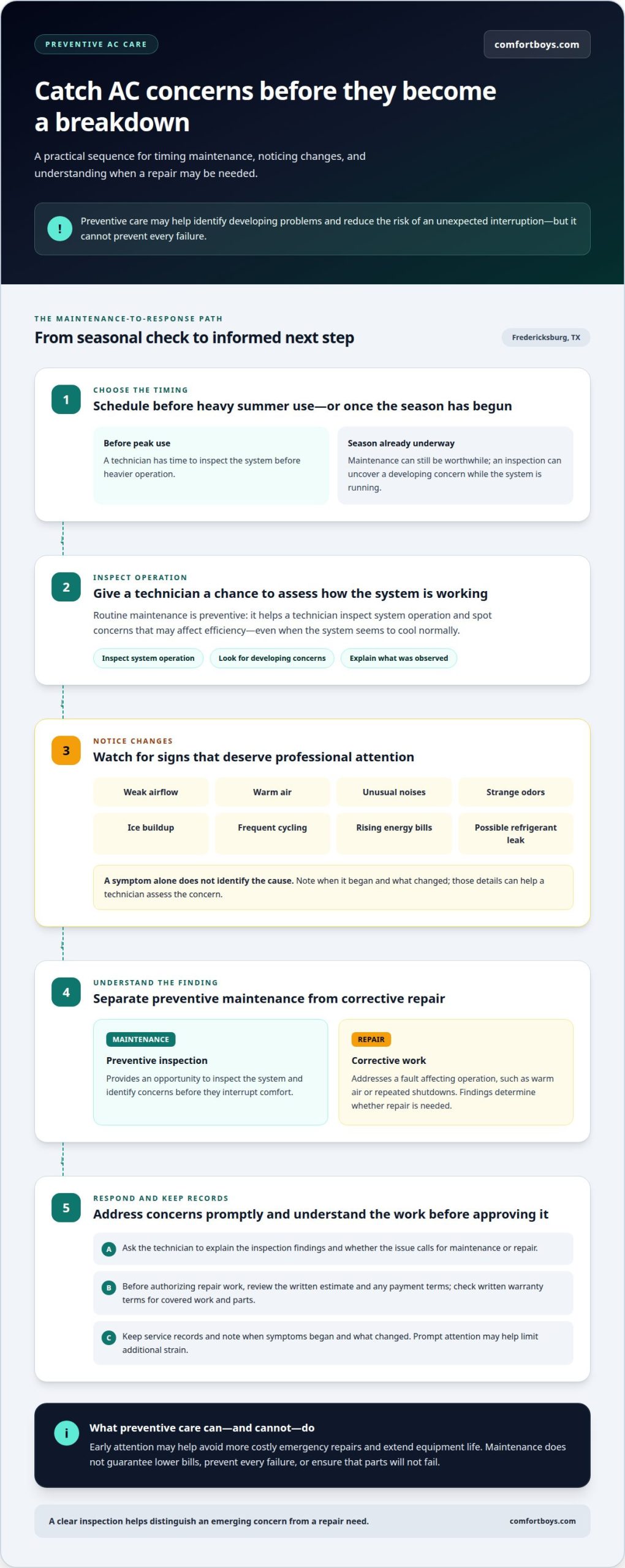
Scheduling air conditioning maintenance before summer use peaks gives a technician time to inspect the system before heavier operation. If cooling season has already started, maintenance can still be worthwhile. An inspection can reveal a developing concern while the system is running, rather than after a breakdown interrupts comfort. Preventive care can’t eliminate every failure, but early attention may help avoid more costly emergency repairs and extend equipment life.
Watch for changes that suggest the system needs professional attention. Weak airflow, warm air, unusual noises, strange odors, ice buildup, frequent cycling, rising energy bills, or signs of a refrigerant leak can all point to an AC problem. One symptom doesn’t identify the cause by itself. A technician can inspect the equipment, assess its operation, and explain whether the issue calls for maintenance or repair.
Regular maintenance and air conditioning repairs serve different purposes. Maintenance is preventive: it gives technicians an opportunity to inspect the system and identify concerns. Repair addresses a fault that affects operation, such as an AC that blows warm air or repeatedly shuts off. Prompt professional attention can limit additional strain. Waiting until the system stops cooling may turn a developing issue into an urgent disruption.
Repair warranties and payment plans are separate from routine maintenance. Warranty coverage depends on the written terms for the equipment or repair, so review what work and parts those terms cover. A payment plan is a financing arrangement, not an automatic part of a maintenance visit. Before authorizing repair work, read the written estimate and any payment terms carefully so you understand the approved work and the amount you’re agreeing to pay.
Reducing repair costs starts with responding to warning signs and keeping service records. Note when symptoms began and what changed, such as new noise or weaker airflow. These details help technicians narrow down the concern. Regular maintenance services can also reveal wear before it develops into a larger problem, although no inspection can promise that parts won’t fail. For a cooling problem that needs professional diagnosis, AC repair services are the appropriate next step.
- Arrange an inspection before summer demand peaks, or schedule one after the season begins.
- Take warning signs seriously, especially ice, warm air, leaks, or repeated cycling.
- Separate preventive maintenance from repairs, and review written warranty and payment terms before approving work.
Does regular AC maintenance reduce energy bills or prevent breakdowns? Maintenance can help the system operate efficiently and catch problems early, which may reduce the chance of unexpected breakdowns. It doesn’t guarantee lower bills or prevent every failure. Prompt AC repair in Fredericksburg is important when symptoms such as weak airflow, unusual noises, or warm air appear, because early intervention may help save money and extend equipment life.
Outdoor-unit inspection and cleaning tasks
The outdoor unit needs clear airflow and an inspection of visible components. A technician checks for leaves, grass, dirt, and other debris around the cabinet, then examines the coil and accessible surfaces for buildup or damage. Vegetation or stored items close to the unit can obstruct airflow and make access harder. Cleaning should remove buildup without bending delicate coil fins or disturbing electrical components.
Inspection goes beyond cleaning. The technician looks for visible wear, loose-looking panels, damaged insulation, or signs of water or refrigerant issues. Electrical wiring and connections also deserve attention. A professional inspection can identify visible damage or deterioration that may affect operation; electrical work should be left to a qualified technician. If the system makes an unusual sound while running, mention it during the inspection.
Indoor equipment has its own checklist. A technician can inspect the air filter, accessible indoor coil, blower area, and condensate drain for dirt or obstruction. The thermostat and airflow matter too: a room that stays warm while others cool may point to an airflow or control concern. The inspection helps distinguish a maintenance task from a repair need.
What is included in an AC tune-up checklist? It can include an outdoor-unit inspection and cleaning, indoor-component checks, airflow and thermostat review, condensate-drain inspection, and a visual review of electrical connections. The exact tasks depend on the equipment, its condition, and its installation.
- Outdoor unit: Clear debris around the cabinet and inspect accessible coil surfaces.
- Indoor unit: Check the filter, blower area, coil, and drain for visible buildup or obstruction.
- Electrical components: Look for visible wear or damage in wiring and connections.
- System operation: Observe thermostat response and airflow while the equipment is running.
Regular tune-ups make these checks part of a planned inspection instead of waiting for an obvious problem. A heat pump, for example, can operate during both heating and cooling seasons, so its condition matters in both modes. Inspection findings can help identify a developing concern and clarify whether cleaning, adjustment, or repair is the next step.
A comprehensive visit should account for both the outdoor and indoor equipment, not just the most visible cabinet. Installation details and access can affect which components a technician can inspect and clean. This practical assessment is useful for homes in Fredericksburg and nearby Hill Country communities, especially when equipment has limited clearance or visible debris buildup.
Benefits of routine furnace and AC tune-ups
Seasonal checks help prepare equipment for the work ahead. Schedule cooling maintenance before summer use peaks, then arrange heating maintenance before colder temperatures arrive. This gives a technician a chance to assess each system before heavier operation. If cooling season has already begun, an AC inspection can still be useful. A furnace check before sustained heating use serves the same purpose: identifying developing concerns before they disrupt comfort.
Heat pumps need attention in both seasons because they can provide heating and cooling. A cooling-focused visit may not address how the equipment operates in heating mode. During routine maintenance, a technician can assess the system’s condition and note concerns affecting either mode. An issue that appears during heating operation, for example, may not be obvious while the system is cooling. Seasonal inspections help keep both functions in view.
For homes with a separate furnace and AC, maintenance should reflect the equipment being checked. The cooling visit focuses on the air conditioner’s operation, while a heating visit assesses the furnace before cold weather. Keeping these appointments distinct makes it easier to understand which system was inspected and what the findings mean. A record of service dates and observations can also help track recurring concerns, such as uneven temperatures or a change in system noise.
- Before cooling demand rises: Arrange an AC inspection ahead of peak summer use.
- Before colder weather: Schedule furnace maintenance before heavier heating operation.
- For a heat pump: Include attention to both heating and cooling operation.
- After a service visit: Keep the findings with your equipment records.
Routine maintenance supports informed decisions about system condition. If a technician identifies a concern, you can distinguish a maintenance recommendation from a repair need instead of treating every finding as an immediate breakdown. That distinction helps clarify the next step and why it is recommended. Even when the equipment runs normally, an inspection offers a chance to discuss its condition before seasonal demand changes.
Consistent seasonal care also gives you a clearer picture of how the system performs over time. For example, if a room stays uncomfortable through both cooling and heating seasons, that pattern is useful context during an inspection. The technician can consider whether the concern relates to system operation, airflow, or another issue. Routine maintenance doesn’t guarantee that breakdowns won’t occur, but scheduled attention can help surface problems earlier and support reliable system running.
Annual tune-ups through the maintenance club
A maintenance club can give homeowners a structured way to plan recurring HVAC care instead of waiting for a comfort problem. The practical value is organization: keep track of the appointment, the system inspected, and any findings that need follow-up. Planning a tune-up before heavier cooling use gives the technician a chance to assess your AC before demand rises.
The Comfort Service Club is a way to make maintenance planning part of your home-care routine. Review the club’s terms to understand how appointments are arranged and what the membership includes. Don’t assume a club covers repairs or replacement work; a tune-up assesses equipment, while repairs address a diagnosed problem. That distinction helps you understand the purpose of each visit.
A useful appointment should leave you with clear information, not just a completed service call. Ask the technician to explain what was inspected, which findings need attention, and whether a concern is preventive or requires repair. A note about restricted airflow, for example, gives you a specific issue to track, while a repair recommendation should identify the fault and proposed work. Keep those details with your equipment records to support future decisions.
Homeowners can make a club appointment more productive by preparing a short list of observations. Include changes such as uneven cooling, a new sound, or an odor that appears when the system operates. Share when the symptom occurs and which rooms are affected. These details help the technician focus the visit and connect the inspection to your comfort concerns.
- Plan: Arrange the tune-up around the season when the equipment will work hardest.
- Record: Keep the appointment date and inspection findings with your HVAC records.
- Discuss: Ask for a clear explanation of maintenance findings and any repair recommendation.
- Follow up: Track unresolved concerns so they remain visible at the next appointment.
A club doesn’t replace attention to the system between visits. If cooling changes or unusual operation appears, note the symptom rather than waiting for the next planned appointment. Routine maintenance helps assess equipment condition, but it can’t prevent every breakdown. A thorough visit should explain what the technician observed and how it relates to system operation.
If you want a more consistent way to plan HVAC care, consider the Comfort Service Club for maintenance appointments. A planned tune-up can help you understand your equipment’s condition, maintain a record of service, and identify the next practical step for home comfort.
Comfort Boys Air and Heating
Comfort Boys helps homeowners make informed decisions about AC care, repairs, and system needs. If an inspection points to a developing issue, its AC Repair Services address equipment problems; scheduled AC Maintenance supports ongoing care. When an existing system no longer meets your needs, AC Installation and Mini-Split Services offer options for updating home cooling.
Share the symptoms you’ve noticed, such as weak airflow, warm air, or unusual noises. Clear details help guide the conversation toward the appropriate next step, whether that’s maintenance, repair, or a system change. The goal is practical guidance, not pressure to choose work your home doesn’t need.
For help with your AC maintenance or system concerns, contact Comfort Boys Air and Heating.
Make your next maintenance step count
Use your next service visit to build a clearer picture of your system’s condition. Keep the technician’s findings with your home records, then note any changes in comfort or operation between visits. Over time, that history can make future maintenance conversations more specific and useful.
Preventative AC maintenance in Fredericksburg is most useful when it fits your equipment and how you use your home. If you’re unsure what to prioritize, share the symptoms you’ve noticed and your questions with Comfort Boys. A focused conversation can help you decide whether routine care or a separate repair is the right next step.
Comfort Boys Air and Heating can help you consider the next step for your home’s HVAC system. Discuss your AC maintenance needs and move forward with a clearer plan for home comfort.
Frequently Asked Questions
Why Is HVAC Maintenance So Important?
HVAC maintenance helps identify wear or operating issues before they interrupt heating or cooling. A technician can assess system condition and explain whether a finding needs attention or can be monitored. For example, a thermostat setting that doesn’t match your comfort needs may be worth discussing during service. Maintenance also gives homeowners a clearer record of equipment observations to inform future service decisions.
How often should I have my HVAC system serviced?
Have air conditioning and heating systems serviced at least once a year. Schedule cooling maintenance before summer use peaks and heating maintenance before colder temperatures arrive. If your home uses a heat pump, mention that it provides both heating and cooling so the technician can assess its operation in both modes. Service records can help you track which system received attention and when.
What Does The Process Look Like?
An HVAC service visit typically begins with a discussion of comfort concerns and any changes you’ve noticed. The technician then inspects the relevant equipment, checks its operation, and explains findings in plain language. Mention if one room feels warmer than the rest or if the thermostat behaves differently than expected. The visit can distinguish routine maintenance from a diagnosed repair and clarify the recommended next step.
When should I schedule AC maintenance?
Schedule AC maintenance before your home relies heavily on cooling, so an inspection can happen ahead of peak summer use. If warm weather has already arrived, a tune-up can still be worthwhile. Choose a time when you can describe recent changes in operation, such as uneven cooling or unusual cycling. Sharing when a symptom occurs can help the technician focus on the conditions you’ve experienced.
What does preventative AC maintenance include?
Preventive AC maintenance generally includes inspection of indoor and outdoor components, airflow, thermostat response, and visible electrical connections. The technician can also check for debris near the outdoor unit and inspect accessible areas for buildup or drainage concerns. Homeowners can replace filters every 30-90 days, based on the system’s needs and filter condition. Mention unusual sounds or odors so the technician can consider them during the assessment.
How often should an air conditioner be serviced in Fredericksburg, Texas?
Have an air conditioner in Fredericksburg, Texas serviced at least once a year. Scheduling before summer cooling demand rises gives the technician an opportunity to assess the equipment before heavier use. If the system has unusual noises, airflow changes, or inconsistent cooling, describe those symptoms during the appointment. The technician can consider them alongside the system’s condition and explain any recommended follow-up.
How much does AC maintenance cost in Fredericksburg, Texas?
The cost of AC maintenance in Fredericksburg, Texas depends on the equipment’s condition, access, and work included in the visit. Routine maintenance differs from corrective repair, so an inspection finding can affect the work needed. A quote request provides pricing for the specific service scope. Before approving any additional work, review what the technician found and how the proposed repair differs from the tune-up.
When is the best time to schedule AC maintenance in Fredericksburg?
In Fredericksburg, Texas, schedule AC maintenance before summer cooling use peaks when possible. This allows a technician to assess the system before heavier operation begins. If summer has already started, a tune-up can still help you understand the equipment’s condition. When booking, be ready to describe recent comfort changes, such as uneven cooling or a room that stays warmer than others.