
What if keeping your home comfortable through Texas heat began with a routine, not a repair call? An HVAC service club Texas homeowners consider can help organize seasonal upkeep, especially when a busy schedule makes it easy to put maintenance off until something goes wrong.
That hesitation is understandable. Heating and cooling systems work hard through changing Texas seasons, and membership benefits depend on the plan’s terms. A service club can put maintenance on your calendar, but its usefulness depends on what it covers, how visits are arranged, and whether the terms suit your household.
This guide explains how HVAC service clubs generally work and what to compare before joining, including maintenance visits, plan terms, and how to keep a routine on track. You’ll also learn how to assess the Comfort Service Club, which Comfort Boys Air and Heating offers, and decide whether it fits your home.
Key Takeaways
- An HVAC service club Texas homeowners consider can make recurring upkeep easier to organize, but its value depends on how well the schedule and terms fit your home.
- Compare membership maintenance with booking individual visits, including what each approach means for scheduling and included work.
- Review written inclusions, visit frequency, exclusions, renewal, and cancellation terms before choosing a plan.
- Keep your system details and service records together to make maintenance easier to track over time.
- Use your needs and the Comfort Service Club’s terms to decide whether ongoing upkeep is a practical fit for your household.
Why Texas homeowners consider an HVAC service club
Texas homeowners rely on air conditioning through extended hot-weather periods, so putting off upkeep can leave an important part of home comfort unattended until a problem appears. An HVAC service club Texas homeowners may consider offers a way to plan maintenance in advance, rather than booking only when the season changes or a concern arises.
An HVAC service club is a membership arrangement for organizing routine system maintenance; repair service addresses a problem that needs correction. The distinction matters: a maintenance visit can assess system condition, but it can’t promise a breakdown-free season. Heating, ventilation, and air conditioning systems combine equipment that manages indoor temperature and airflow. Readers new to the term can explore this overview of HVAC.
For a practical look at why routine care matters, watch this maintenance overview:
What does an HVAC service club generally do?
Scheduled maintenance is the central purpose of a service club. The plan provides a framework for arranging routine inspections or tune-ups, while the exact work depends on its written terms. If a technician finds a fault that needs correction, that is repair work, not automatically part of routine maintenance. Check the distinction when reviewing the plan so you know what to expect from a maintenance visit and what would be handled separately.
A planned routine can also make upkeep easier to remember. Instead of relying on a reminder that may get lost during a busy season, homeowners can use the membership schedule to keep maintenance on their home-care calendar. That structure is useful, even though it can’t prevent every equipment issue.
Why does maintenance planning matter in the Texas Hill Country?
During extended hot-weather periods, a cooling system plays an important day-to-day role. Planning maintenance before cooling demand rises gives homeowners a chance to arrange a checkup ahead of time, rather than waiting until a concern interrupts comfort. That’s a practical consideration for households in San Antonio and nearby Hill Country communities.
Comfort Boys is a family-owned local HVAC provider serving the area, with HVAC maintenance, AC tune-ups, and repair services. Its Comfort Service Club gives homeowners an option for organizing ongoing upkeep. A maintenance plan is not a substitute for repair when equipment develops a fault. To decide which approach suits your home, first compare a club with booking individual maintenance visits.
How an HVAC service club differs from booking one-time maintenance
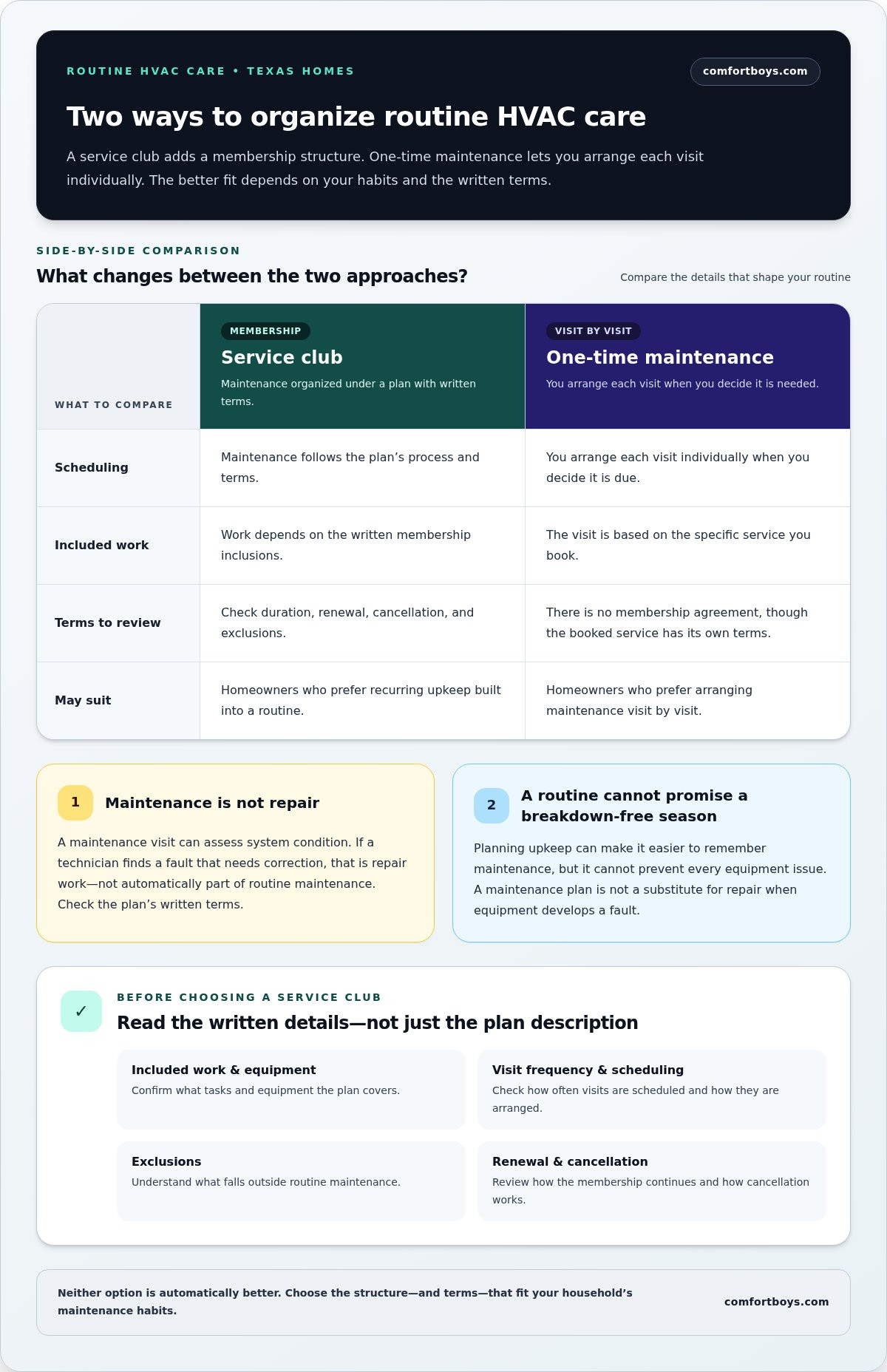
Both approaches can help you arrange routine HVAC care, but they suit different habits. A membership organizes maintenance under a plan with written terms, while one-time service lets you book a visit when you decide it’s due. Neither option is automatically better. Consider what the plan includes, how you expect to use it, and whether a recurring structure will make upkeep easier to manage.
| What to compare | Service club | One-time maintenance |
|---|---|---|
| Scheduling | Maintenance is organized according to the plan’s process and terms. | You arrange each visit individually when you decide it’s needed. |
| Included services | Work depends on the written membership inclusions. | The visit is based on the service you book. |
| Terms | Review the plan’s duration, renewal, cancellation, and exclusions. | There’s no membership agreement, though the booked service still has its own terms. |
| May suit | Homeowners who prefer recurring upkeep built into a routine. | Homeowners who prefer arranging maintenance visit by visit. |
When might a membership-style maintenance routine suit a homeowner?
A service club may suit a household that appreciates having upkeep organized or wants seasonal maintenance to become part of its annual home-care routine. Busy homeowners may prefer a plan’s structure over remembering to schedule each visit from scratch. Before enrolling, compare the written inclusions and terms with the maintenance you expect to use. Membership does not automatically mean repairs, a particular appointment schedule, or other benefits are included.
When might one-time maintenance feel like a better fit?
Booking individual visits can work well if you prefer to make maintenance decisions one at a time or already keep track of your home’s service needs. You choose when to arrange a visit and review what that specific service covers. The tradeoff is that you’re responsible for remembering to schedule it. A club can provide more structure, but its value still depends on its terms and your preferences.
For a closer look at keeping HVAC care on track in the local climate, read this HVAC maintenance guide for San Antonio homes. You can also explore information from the Texas Air Conditioning Contractors Association as part of learning about the state’s HVAC industry. If a planned upkeep routine sounds like a better fit, explore the Comfort Service Club and compare its terms with your household’s maintenance priorities. An HVAC service club Texas homeowners choose should make the routine clearer, not leave them guessing about what’s included.
What to compare before choosing a Texas HVAC service club
A maintenance plan is useful when its terms match the care your home needs. Before joining an HVAC service club Texas homeowners are considering, read the written details rather than relying on a general description of “routine maintenance.” Check what equipment and tasks are covered, how often visits are scheduled, what falls outside the plan, and how renewal and cancellation work.
Which service details should homeowners understand?
Start with the maintenance work itself. Identify the equipment covered and the tasks included in a scheduled visit, then note the visit frequency and how appointments are arranged. Check whether the terms explain exclusions and what happens if a technician finds a problem requiring corrective work. These details help distinguish a tune-up or inspection from a repair that addresses a fault.
Keep any recommendations involving repair, replacement, or other services separate from the plan’s maintenance inclusions. A maintenance visit may identify a concern, but that doesn’t mean corrective work or a replacement is part of the membership. Review the Comfort Service Club’s written terms to understand its services and conditions, and base your decision on those details.
How can you judge whether the plan fits your home?
Consider your system’s age and service history, your household schedule, and how reliably you arrange upkeep on your own. A recurring plan may appeal if you prefer maintenance built into a routine. If you already track service needs and would rather book visits individually, membership may be less useful. There’s no universal answer; the decision depends on your habits and the plan’s documented services.
Use this quick review before deciding:
- Coverage: Does the plan name the system or equipment it applies to?
- Visits: How frequently are maintenance visits scheduled, and how are they arranged?
- Exclusions: Which tasks or circumstances require separate service?
- Agreement: What are the renewal and cancellation terms?
- Fit: Would the included upkeep address a real need in your home?
Then weigh the terms against the maintenance you would otherwise arrange. A plan with services you won’t use may not suit your household, while a clearly defined routine may help if scheduling upkeep tends to slip. Focus on what’s documented rather than assuming savings, repair coverage, or priority access. This comparison gives you a grounded way to decide whether membership supports your home-care routine or whether booking maintenance as needed is a better fit.
How to fit HVAC club maintenance into your Texas home-care routine
A little organization makes routine HVAC upkeep easier to follow and helps you distinguish a planned checkup from a repair need. An HVAC service club Texas homeowners consider should fit into the household’s existing routines and make it clear what equipment is covered and when to arrange service.
Build a seasonal maintenance plan around your household
Start with a simple record of your heating and cooling equipment. Note each system’s model, recent service, and any concerns you’ve observed. Then use the plan’s written terms to identify which equipment and maintenance tasks it covers and how visits are scheduled. Plan ahead of the periods when dependable indoor comfort matters most, following the plan’s schedule rather than assuming one calendar fits every home.
Keep the information together so it’s easy to find when it’s time to arrange upkeep:
- Identify equipment: Record system type, model, and location in the home.
- Review terms: Check covered equipment, maintenance tasks, visit timing, and exclusions.
- Schedule upkeep: Follow the plan’s process and keep appointments on your household calendar.
- Track service: Save visit notes, dates, and any recommendations with your system records.
This record gives you a useful snapshot of the system’s service history. It can also help you describe a change in operation clearly if you later need HVAC repair.
Know when routine upkeep is not enough
Maintenance is planned care, not a substitute for attention to a new problem. If the system starts making an unusual sound, airflow changes, or rooms no longer feel as comfortable as usual, don’t wait for the next routine visit to raise the concern. A maintenance plan doesn’t mean corrective repairs are included. Follow the plan terms and arrange appropriate HVAC service for symptoms that need attention.
That distinction is especially useful when reviewing examples of repairs and their outcomes. See the San Antonio AC repair case study guide for situations where a repair need differs from preventive upkeep.
Comfort Boys serves San Antonio and the Texas Hill Country with HVAC maintenance and repair services. If a planned upkeep routine suits your home, explore the Comfort Service Club and compare its terms with your records, schedule, and system needs.
The Comfort Boys Service Club: make a confident next step
The Comfort Service Club is Comfort Boys’ option for homeowners interested in ongoing HVAC upkeep. Whether it fits depends on your system, how you prefer to organize maintenance, and what the membership’s written terms provide. A service club is not automatically the right choice for every household, so use the same careful comparison you would apply to any maintenance plan.
What homeowners should understand about the Comfort Service Club
Start with the plan details. Review the maintenance tasks and equipment covered, how scheduled visits work, and any exclusions or agreement terms. These specifics define what the membership provides. The club name alone doesn’t establish a visit schedule, repair coverage, discounts, or priority service.
Keep routine maintenance separate from corrective work. If a technician identifies a repair need, the membership’s written terms determine whether that work is included or arranged separately. The same distinction applies to replacement recommendations and other services. Knowing what falls within the plan helps you make a decision based on its actual scope rather than assumptions.
Choose a practical next step for your HVAC upkeep
Think about the equipment in your home and the way you manage its care. If you value having upkeep organized as part of a home-care routine, compare the Comfort Service Club’s documented services and terms with the maintenance your system needs. If you prefer to arrange visits individually, consider whether a membership structure would genuinely make upkeep easier for you.
A manageable routine can reduce the guesswork involved in remembering system care. Keep the plan details with your equipment information and service records, then use them to track what’s covered and what needs separate attention. That gives you a practical reference as your home’s needs change.
For homeowners weighing an HVAC service club Texas option, match the written terms to your system and maintenance preferences, without assuming benefits that aren’t stated. Comfort Boys is a family-owned HVAC provider serving San Antonio and the Texas Hill Country. Explore Comfort Boys HVAC services and choose an upkeep approach that feels clear and manageable for your home.
Make HVAC upkeep easier to manage
A service club can make seasonal HVAC maintenance a planned part of home care, while booking one-time visits may suit homeowners who prefer to arrange upkeep independently. The right choice depends on your household’s routine and the plan’s written inclusions, visit schedule, exclusions, renewal, and cancellation terms. Routine maintenance supports system care but isn’t a substitute for repairs when a new problem appears.
Before choosing an HVAC service club Texas homeowners can compare, consider your equipment and service history, then match the program’s documented terms to the upkeep your home needs. Comfort Boys is a family-owned HVAC company serving San Antonio and the Texas Hill Country, with HVAC maintenance, AC tune-ups, and the Comfort Service Club. The company serves homeowners in San Antonio, Boerne, Kerville, Fredricksburg, Pipe Creek, Comfort, Spring Branch, New Braunfels, and Blanco.
Ready to make a practical plan for your home? Explore the Comfort Service Club and plan your home’s HVAC upkeep. A clear, manageable routine is a good step toward caring for your home with confidence.
Frequently Asked Questions
What is an HVAC service club in Texas?
An HVAC service club is generally a membership or maintenance arrangement that helps organize recurring system care. An HVAC service club Texas homeowners consider can differ in covered tasks, equipment, visit timing, and agreement terms. Review the written plan to see what routine upkeep involves and whether it fits your home. Don’t assume repairs, discounts, or guarantees are included unless the plan explicitly says so.
Is an HVAC service club worth it for a Texas homeowner?
It may be worthwhile if you prefer a planned maintenance routine instead of arranging every visit from scratch. The decision depends on the program’s documented services and terms, your household’s preferences, and the upkeep you’d otherwise arrange. Compare those details before joining. A membership can help organize maintenance, but it can’t guarantee that equipment will never need repair or replacement.
How often should HVAC systems be maintained in Texas?
Maintenance timing depends on the equipment, how it’s used, and guidance from the manufacturer or an HVAC professional. Rather than treating a club’s schedule as a rule for every system, review the requirements for your specific equipment. Homeowners in San Antonio and the surrounding Hill Country may find it practical to plan upkeep ahead of periods of heavier heating or cooling demand, instead of waiting for a problem.
Does an HVAC service club include repairs?
Not necessarily. Some clubs focus on scheduled maintenance, while repair coverage depends on the written terms of the particular plan. Tune-ups and inspections are different from diagnosing and correcting a system problem. For the Comfort Service Club, use its written terms to understand the scope of membership. Don’t assume it covers repairs or prevents breakdowns unless those details are expressly included.
Can an HVAC service club help maintain both heating and cooling equipment?
It depends on the program’s equipment coverage and listed services. Read the plan terms to see whether they apply to your cooling system, heating equipment, or both, and which maintenance tasks are included for each. This is especially helpful if your home has separate systems or equipment with different service histories. Don’t assume every system in the home is covered by a single membership.
What should I compare before joining an HVAC maintenance club?
Compare the written inclusions, equipment covered, visit frequency, exclusions, renewal terms, and cancellation conditions. Pay close attention to the difference between preventive maintenance and repairs, since one doesn’t automatically include the other. Homeowners in San Antonio, Boerne, Kerville, Fredricksburg, Pipe Creek, Comfort, Spring Branch, New Braunfels, and Blanco can use the same checklist: match documented plan services to their equipment and upkeep preferences.
Can a maintenance club prevent my AC from breaking down during a Texas heat wave?
No maintenance club can promise that an AC will never develop a problem. Routine upkeep helps organize system care, but equipment condition, use, and other factors can affect operation. If you notice unusual sounds, reduced airflow, or a loss of comfort, don’t rely on a future routine visit to address it. Arrange appropriate HVAC service for symptoms that may need diagnosis or repair.