
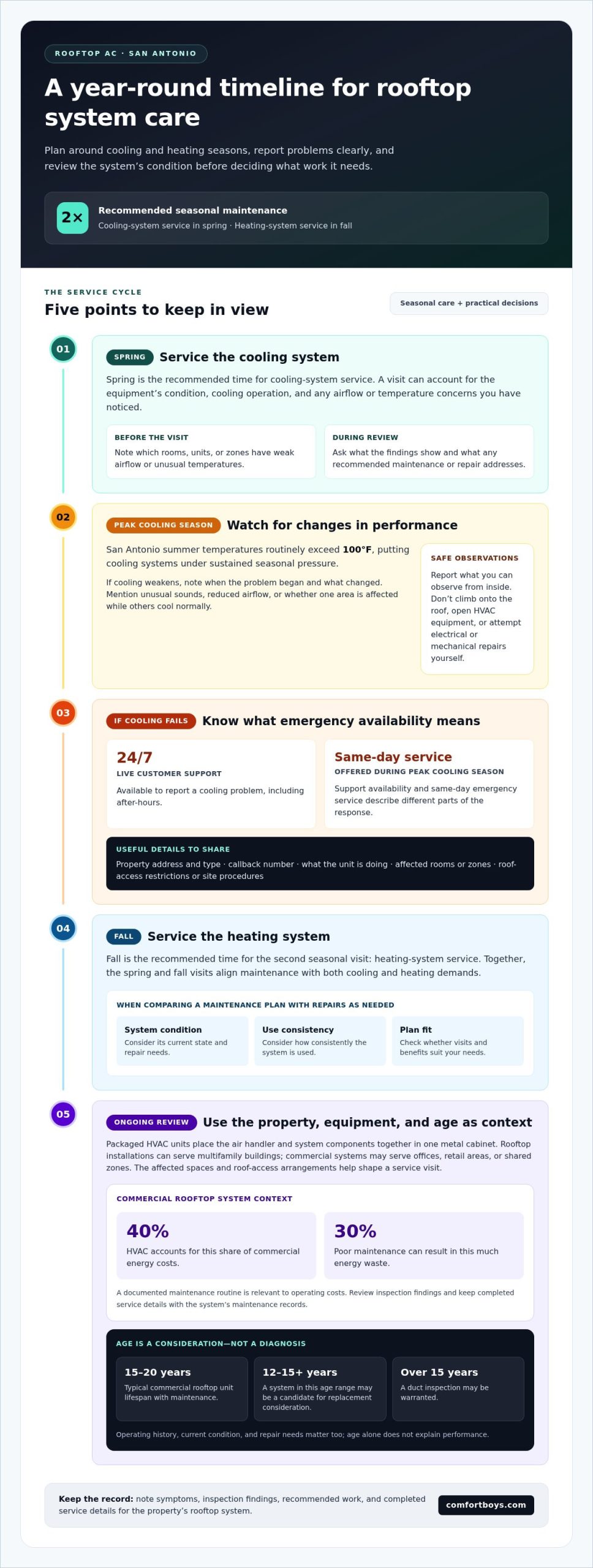
Seasonal maintenance can be worth the investment when it helps you keep a rooftop system ready for both cooling and heating demands. For rooftop AC unit service in San Antonio, the recommended schedule is twice a year: cooling-system service in spring and heating-system service in fall.
It’s reasonable to compare a maintenance plan with paying for repairs as they arise, especially when a system serves a home, multifamily property, or business. Consider the system’s condition, how consistently it’s used, and whether the plan’s visits and benefits suit your needs.
This guide explains what seasonal maintenance can cover, what influences repair costs, and what to consider when choosing emergency, residential, or commercial AC service. You’ll also learn how rooftop systems differ by property type and when repair or replacement may make more sense. Repair pricing depends on the equipment and work required, and a quote is provided after a quote request.
Key Takeaways
- Seasonal maintenance is recommended twice a year, with cooling-system service in spring and heating-system service in fall.
- Learn how rooftop and packaged systems serve different residential and commercial properties, and what maintenance can help address.
- Understand which equipment and repair details influence an AC quote, so you can better assess the work being proposed.
- Use practical criteria to compare service scope, repair recommendations, and warranty terms before choosing an HVAC company.
- See when AC repair, tune-ups, or installation may be the next step for a San Antonio-area property.
Do you provide emergency service?
Emergency AC service is available during peak cooling season, with same-day service offered. Live customer support is available 24/7, so you can report a cooling failure and describe what the system is doing.
For an emergency, explain whether the rooftop unit has stopped cooling, is making an unusual sound, or is showing another visible problem.
To see how rooftop equipment fits into San Antonio’s climate, watch this video:
Same-Day Emergency Response
Same-day emergency AC service is offered during peak cooling season. This matters when a rooftop unit stops cooling and indoor conditions are becoming difficult for homeowners, tenants, or staff. When you call, describe the symptoms and the property type. Clear details help the service team understand whether the problem affects one space or the whole building.
Before service, note when the issue began and what changed. For example, mention if the system stopped after an unusual noise or if airflow weakened across several rooms. Don’t climb onto the roof or open HVAC equipment to investigate. Share what you can observe safely from inside, then follow the service team’s instructions.
After-Hours Emergency Availability
Live customer support is available 24/7, including after-hours periods. That gives you a way to report a cooling problem outside regular daytime routines. Be ready to provide the property address, a callback number, and a concise description of what the system is doing. These details help the support team understand the issue and discuss the appropriate response.
Round-the-clock support and same-day emergency service are related, but they describe different parts of the process. Support is available 24/7; same-day emergency AC service is offered during peak cooling season. Explain whether the unit serves a home, a shared residential building, or a commercial space. Also mention whether the loss of cooling affects the entire property or only one area.
For rooftop AC unit service in San Antonio, the system’s location can shape a technician’s approach. Rooftop equipment may require access arrangements, so tell Comfort Boys about locked gates, restricted roof access, or building procedures. For a business, identify who can meet the technician and explain any site access rules. These details help prevent delays caused by missing entry information.
Keep the area around indoor equipment clear, and don’t attempt electrical or mechanical repairs yourself. If the unit is running but cooling poorly, describe that rather than reporting a complete shutdown. Specific observations help explain the problem. For homeowners and facility staff, a clear report is a practical first step toward addressing the cooling issue.
Residential and commercial air conditioning services
Rooftop air conditioning can serve homes, multifamily properties, and commercial buildings, but each site has different demands. In San Antonio, summer temperatures routinely exceed 100 degrees, putting cooling systems under sustained seasonal pressure. A service visit should account for the equipment type, how the property is used, and the areas affected by a problem.
Packaged HVAC units combine an air handler and system components inside one metal cabinet. They may be installed on the roofs of multifamily buildings, keeping equipment outside individual living areas. During an inspection, a technician can assess the unit’s condition, cooling operation, and reported airflow or temperature concerns. Roof access and the location of affected rooms help shape the visit.
Commercial systems often serve larger or more varied spaces, such as offices, retail areas, or shared building zones. HVAC accounts for 40% of commercial energy costs, and poor maintenance can result in 30% energy waste. Those figures make a documented maintenance routine relevant to operating costs. A technician’s inspection can identify concerns that need attention and explain which work is recommended.
Before an inspection, note specific symptoms and when they occur. For example, tell the technician whether one office feels warm while other areas cool normally, or whether a multifamily unit has weak airflow throughout. After the inspection, review the findings and any recommended repair or maintenance, including what the work addresses. Clear explanations help property owners distinguish a system fault from routine upkeep.
- Residential: Describe which rooms or units have cooling problems, and share any changes in airflow or temperature.
- Commercial: Identify affected zones, operating schedules, and access procedures for rooftop equipment.
- Either property type: Keep inspection findings and completed service details with the system’s maintenance records.
With maintenance, a typical commercial rooftop unit lifespan is 15-20 years. An AC system past twelve to fifteen years old may be a candidate for replacement consideration, while systems over 15 years old may warrant a duct inspection. Age alone doesn’t explain performance; operating history, current condition, and repair needs also matter. For a cooling fault that needs attention, AC repair services can address system problems through a service visit.
Service area in San Antonio and surrounding communities
Comfort Boys serves San Antonio and surrounding Hill Country communities, including Boerne, Kerrville, Fredericksburg, Pipe Creek, Comfort, Spring Branch, New Braunfels, and Blanco. Rooftop service involves more than diagnosing a cooling problem. The property’s location, roof access, equipment placement, and urgency all help shape the visit. A home in San Antonio and a commercial site farther into the Hill Country may have different access arrangements.
Share the property’s street address and describe its setting when arranging service. For example, mention whether it’s a San Antonio neighborhood, a multifamily complex, or a rural Hill Country location. Include gate instructions, a building contact, or roof-access procedures. These details help Comfort Boys understand how to reach the equipment and whom to meet.
Rooftop units can be easy to overlook from inside, so describe how the problem affects the rooms below. Say whether one area feels warm, several spaces have weak airflow, or the entire property has lost cooling. For a central AC system, note any change in airflow or temperature. Describe a furnace problem separately from a summer cooling issue.
San Antonio summer temperatures routinely exceed 100 degrees, making a loss of cooling especially disruptive. When reporting an urgent issue, give the location, the time the problem began, and the areas affected. A commercial property manager might add which business zones need attention. A homeowner can identify the rooms affected and whether the system still runs. Specific details support an honest description of the problem before the visit.
Commercial sites may also have visitor procedures that affect rooftop access. If a building requires licensed contractors to follow site rules, explain those requirements when arranging service. Identify who can provide entry and whether equipment is reached through a locked area. For a multifamily property, note whether access requires coordination with a manager or maintenance contact.
Before the visit, gather the system’s model information if it’s readily available, along with previous repair or maintenance records. Don’t climb onto the roof to find labels or inspect equipment. Instead, share the property address, symptoms, and access details from a safe location. Whether the site is in San Antonio or the surrounding Hill Country, these steps help focus the service visit on the rooftop unit and the comfort issue.
What rooftop AC services do HVAC companies in San Antonio offer?
Rooftop AC service can include maintenance, troubleshooting, repairs, and equipment replacement. The right work depends on the system’s condition and the building’s needs. A packaged unit, for example, combines an air handler and system components in one metal cabinet. Multifamily buildings may place these units on the roof, while other properties use different equipment arrangements.
Seasonal maintenance helps identify developing problems before cooling or heating demand increases. The recommended schedule is twice a year: cooling-system service in spring and heating-system service in fall. During a visit, a technician can inspect the equipment, assess its operation, and explain any recommended work. Ask for findings that distinguish routine maintenance from a repair addressing a specific fault.
Repair service addresses symptoms such as reduced cooling, unusual operation, or a system that stops working. Start by describing what changed and which rooms or building areas are affected. For example, if one office feels warm but nearby areas remain comfortable, report the difference. A clear description helps focus troubleshooting on the problem.
For commercial properties, maintenance can matter to both comfort and operating costs. HVAC accounts for 40% of commercial energy costs, while poor commercial HVAC maintenance can result in 30% energy waste. These figures make it useful to keep service records and review inspection findings. A property manager can track recurring issues and note whether work was completed before the next seasonal visit.
Equipment age can also shape the repair-or-replacement discussion. A typical commercial rooftop unit lifespan with maintenance is 15-20 years. An AC system past twelve to fifteen years old may warrant replacement consideration, while a system over 15 years old may warrant a duct inspection. Age is one factor; reported performance and the condition found during inspection also inform the recommendation.
For an AC system under ten years old, repair may be worth considering when it costs less than about one-third of a new unit. Compare the proposed work with the system’s age, service history, and condition. If replacement is recommended, ask what issue it addresses and how the equipment’s condition supports that recommendation. A clear explanation helps you weigh the options without relying on age alone.
- Maintenance: Plan cooling service in spring and heating service in fall.
- Repair: Describe the symptoms and affected areas before the inspection.
- Replacement: Compare system age, repair needs, and inspection findings.
What should I check before hiring a rooftop AC service company in San Antonio?
Start by clarifying the service scope. Ask what the inspection covers, how the technician will explain the findings, and whether recommendations distinguish urgent repairs from optional work. For a rooftop unit, discuss how roof access will be arranged and who should meet the technician. A property manager, homeowner, or building contact can provide access and describe the affected areas.
Next, look for clear written terms before authorizing work. The estimate should identify the problem, proposed repair, included labor, and any parts involved. Ask how the company documents completed work and handles a return visit if the same issue comes back. In San Antonio, service terms can include a return visit at no additional cost when the same service-call issue recurs within 30 days. Read the specific terms carefully.
Review warranty terms carefully. Check what the warranty covers, how long it lasts, and whether it applies to labor, parts, or both. A San Antonio contractor has offered a two-year labor warranty for replacement work, illustrating why written coverage details matter. Don’t assume every warranty covers the same work. Keep the estimate, warranty terms, and final invoice together for future reference.
For equipment replacement, clarify the project steps and responsibility for permits. The City of San Antonio requires a mechanical permit for air-conditioning equipment replacement. Ask how the replacement scope, permit process, and installation details will be handled. A written explanation helps you understand the work before scheduling, especially when rooftop access or building procedures affect the project.
- Scope: Confirm the inspection, diagnosis, recommended work, and completed repairs are documented.
- Access: Share roof-entry instructions and identify the person who can meet the technician.
- Terms: Review return-visit and warranty conditions in writing.
- Replacement: Clarify the permit process with the contractor for equipment replacement.
Compare estimates by matching the proposed work, not just the final total. Repair cost depends on the equipment, diagnosed fault, parts, labor, and access requirements; a quote is provided after a quote request. If one estimate recommends replacement and another recommends repair, compare each explanation against the unit’s age, condition, and service history. Ask what each proposed step addresses, then keep the written answers with your records.
For a clear next step on a cooling problem, request AC repair service and share the unit’s symptoms and roof-access details.
Comfort Boys Air and Heating: AC Installation
Comfort Boys provides AC repair, AC maintenance, and AC installation. If an inspection points toward a new system, AC installation can restore cooling. For a localized cooling need, mini split AC installation may suit the property’s layout.
Share the system’s symptoms, age, and service history when discussing the next step. That context helps determine whether AC repair, an AC tune-up, or installation best fits the situation. For rooftop equipment, include its location and any roof-access instructions so the service discussion accounts for the property.
Contact Comfort Boys Air and Heating to discuss your AC needs, or visit comfortboys.com.
Make your next AC decision with confidence
Comfort planning starts with the building’s needs, not a one-size-fits-all fix. Consider how the space is used, whether comfort issues recur, and what you want from the system over time. That context can guide a practical conversation about rooftop AC unit service in San Antonio, whether you’re addressing a current fault or planning ahead.
Comfort Boys provides AC repair, AC tune-ups, and AC installation. Share your priorities and what you’ve noticed to focus the discussion on a suitable next step. Recurring performance concerns, for example, may call for a different approach than preparing an existing system for seasonal use.
To discuss your system and the service that fits your needs, contact Comfort Boys Air and Heating. A clear next step can make caring for your property’s cooling system feel more manageable.
Frequently Asked Questions
Are seasonal maintenance plans worth the investment?
They can be worthwhile if regular tune-ups fit your system’s needs and help you keep maintenance consistent. Compare the plan’s included visits and service benefits with the upkeep you’d otherwise arrange. For example, Comfort Service Club includes twice-yearly professional maintenance and a 10% discount on future services. That structure may appeal if you value scheduled seasonal care and expect to use covered services.
How often should my system be serviced?
Plan for seasonal service: cooling equipment in spring and heating equipment in fall. Regular visits give technicians an opportunity to assess each system before its main operating season. Between appointments, replace air filters every 30-90 days, as recommended for the system, and keep vents clear. A clogged filter or blocked vent can affect airflow, so include those details when describing a comfort problem.
How much does rooftop AC repair cost in San Antonio?
Repair cost depends on the diagnosed fault, required parts, labor, and rooftop equipment access. A straightforward component repair differs from work involving a major system part or multiple issues. Compare the written scope: what failed, what work is proposed, and what the repair addresses. When requesting service from Comfort Boys, provide the unit’s symptoms and property details.
What is the average cost to replace a commercial rooftop AC unit in San Antonio?
Replacement cost depends on the equipment selected and the installation work the building requires. Factors include system capacity, rooftop access, removal of existing equipment, duct connections, and related controls. Compare written proposals by matching the equipment and work scope. If one proposal includes different installation tasks, compare those details before judging the totals.
Which San Antonio HVAC companies service rooftop AC units and offer emergency repairs?
Comfort Boys serves San Antonio and surrounding Hill Country communities, including Boerne, Kerrville, Fredericksburg, Pipe Creek, Comfort, Spring Branch, New Braunfels, and Blanco. Its AC Repair Services and Emergency AC Repair Services address cooling-system problems. For a rooftop issue, describe the equipment, symptoms, and building access arrangements when contacting the company. These details give the service team useful context for your repair request.
How often should rooftop AC units be inspected and maintained in San Antonio?
Schedule professional maintenance around seasonal use, with cooling service in spring and heating service in fall. Filter care is a separate, more frequent task: replace filters every 30-90 days. For example, a property manager can record filter changes and note any new warm areas or airflow changes between visits. These observations help distinguish routine upkeep from a developing performance issue.
What are common rooftop AC problems in San Antonio’s hot climate?
Common warning signs include warm air from vents, weak or uneven airflow, unusual noises or odors, frequent cycling, and rising energy bills. Weak airflow across several rooms, for example, differs from one room staying warm while others cool normally. Note what you observe and when it happens. This helps describe the problem without attempting to diagnose rooftop equipment yourself.
How do rooftop AC repair, replacement, and maintenance costs compare?
Maintenance is planned inspection and upkeep; repair addresses a diagnosed fault; replacement involves new equipment and installation work. Their costs reflect different scopes, so compare what each proposal includes rather than treating them as interchangeable. An estimate for a failed component, for example, isn’t directly comparable to a replacement proposal. System condition, repair needs, access, and installation requirements shape the decision and final quote.