
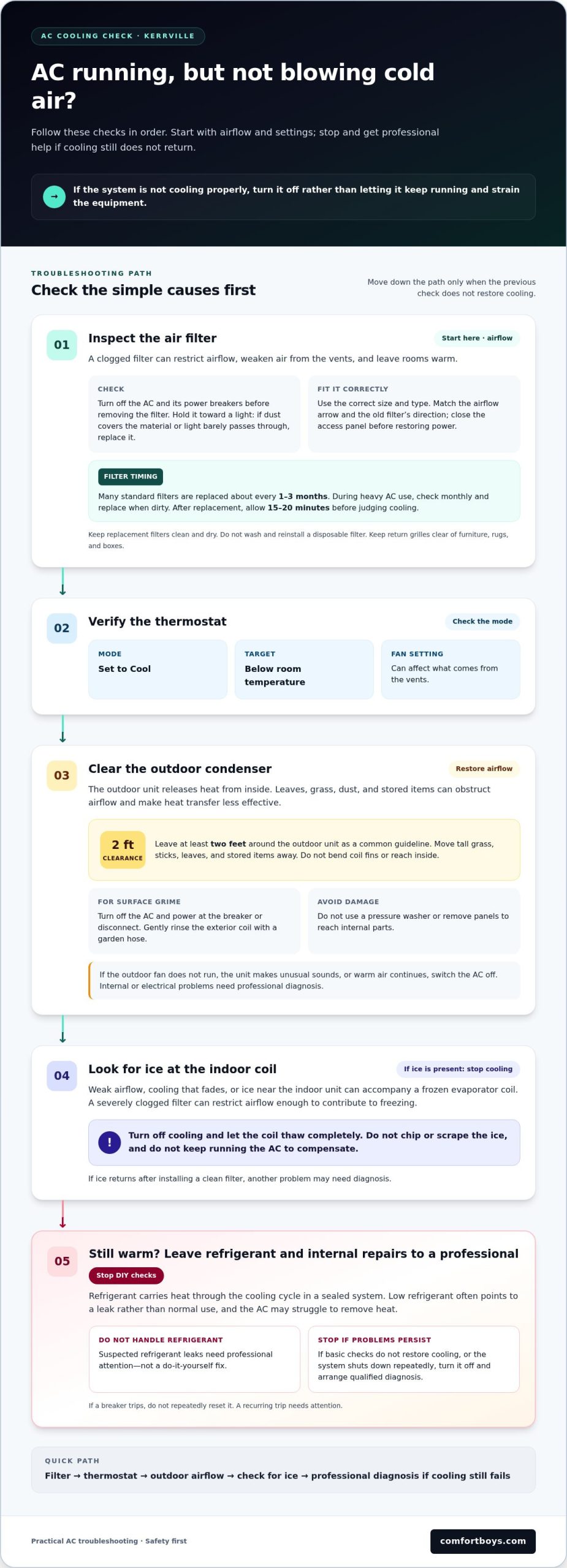
A dirty air filter can restrict airflow enough to make your AC cool poorly or stop cooling altogether. If you’re wondering why your AC isn’t blowing cold air in Kerrville, check the filter first, then consider other common causes: incorrect thermostat settings, dirty outdoor condenser coils, low refrigerant, or a frozen evaporator coil. If the problem persists, turn the system off rather than continuing to run it and strain the equipment.
It’s frustrating when the AC runs but your home still feels warm. This guide explains how common problems interfere with cooling, what you can safely inspect yourself, and when to arrange professional repair. You’ll also learn how to recognize a frozen coil and why refrigerant issues aren’t a do-it-yourself fix, so you can choose a sensible next step.
Key Takeaways
- Inspect and replace a dirty air filter when needed; restricted airflow can reduce cooling and contribute to a frozen coil.
- Clear leaves and grass from around the outdoor unit, and gently rinse surface grime with a hose after turning off its power. Don’t use a pressure washer.
- Set the thermostat to Cool and make sure its target temperature is below the room temperature; the Fan setting can affect what comes from the vents.
- Ice on the indoor coil is a sign to turn off cooling and let the coil thaw completely. Don’t chip or scrape the ice.
- Suspected refrigerant leaks need professional attention. If basic checks don’t restore cooling, AC repair can help identify the underlying problem.
1. Blocked or dirty outdoor condenser coils
If you’re asking why your AC isn’t blowing cold air in Kerrville, inspect the area around the outdoor condenser. It releases heat drawn from inside your home. Grass clippings, leaves, dust, and other debris can block airflow, making heat transfer less effective and leaving indoor air warm.
Start with a visual check. Leave at least two feet of clearance around the outdoor unit, a common guideline, and move tall grass, sticks, leaves, and stored items away. Don’t bend the coil fins or reach inside the unit. A blocked condenser can reduce cooling efficiency and put extra strain on the compressor.
To see a step-by-step overview of checks for an AC that isn’t cooling, watch this video:
Surface grime can also cover the condenser coil and interfere with heat release. Before rinsing it, turn off the air conditioner and its power supply at the circuit breaker or disconnect. Gently rinse the exterior coil with a garden hose, avoiding forceful sprays that could damage the delicate fins. Don’t use a pressure washer or remove panels to reach internal parts.
After clearing debris and rinsing visible grime, restore power and see whether the system resumes cooling. If the outdoor fan doesn’t run, the unit makes unusual sounds, or warm air continues, switch the AC off. Electrical components and internal condenser problems need professional diagnosis, not hands-on troubleshooting.
When should I turn off an AC that is blowing warm air? Turn it off when it isn’t cooling properly instead of letting it keep running and strain the compressor. If the breaker trips, don’t repeatedly reset it. A recurring trip needs attention.
How do Kerrville and Texas heat and humidity affect AC performance? Hot outdoor air increases the heat the system must remove, while humidity adds moisture for the AC to manage. A dirty or obstructed condenser has less effective airflow, which can reduce cooling when the system is working hard.
A clogged condensate drain can also affect cooling. In many modern systems, a safety switch shuts off the compressor to help prevent water damage. If the indoor unit stops and you notice water nearby, turn the AC off instead of bypassing the switch or opening electrical compartments.
How can I find a licensed and insured HVAC contractor in Kerrville, Texas? Ask to see current licensing and insurance documentation, then confirm the contractor’s name and details match. If a dirty coil doesn’t restore cooling, the system shuts down repeatedly, or a circuit breaker trips, leave diagnosis and repair to a qualified HVAC professional.
2. Can a clogged air filter stop the AC from cooling?
Yes. A clogged air filter can block airflow through your HVAC system and contribute to poor cooling, according to the U.S. Environmental Protection Agency. The blower may run, yet less air reaches the rooms, so vents can feel weak and the home stays warm. If you’re searching why your AC isn’t blowing cold air in Kerrville, checking the filter is a simple first step.
Turn off the AC and its power breakers before removing or replacing the filter. Find the filter slot at the indoor air handler or return grille, then carefully slide the filter out. Hold it toward a light. If dust and debris cover the material or light barely passes through, replace it with the correct size and type for your system.
- Check the filter’s printed size and airflow arrow before installation.
- Fit the new filter in the same direction as the old one.
- Close the access panel before restoring power to the system.
Replacement timing depends on the filter, household conditions, system use, and indoor dust. Many standard filters are replaced about every 1 to 3 months. During heavy AC use, check the filter monthly and replace it when dirty. A filter that looks clean can still be overdue, so use its condition and manufacturer instructions rather than relying on one schedule for every home.
A severely clogged filter can restrict airflow enough to freeze the evaporator coil. You might notice weak airflow, cooling that fades, or ice near the indoor unit. Don’t keep running the AC to compensate. If you find ice, turn off cooling and let the coil thaw completely. Don’t scrape or chip it. Recurring ice after installing a clean filter points to another problem that needs diagnosis.
Keep replacement filters clean and dry, as the U.S. Environmental Protection Agency advises. Don’t wash a disposable filter and reinstall it. A damp or poorly fitted filter won’t provide the intended airflow and can let debris pass into the system. After installing a fresh filter, allow the AC 15 to 20 minutes to recover before judging whether cooling has improved.
A cabin air filter belongs to a vehicle, not a home HVAC system. In a car, a clogged cabin filter can reduce airflow through the vents and weaken air-conditioning performance. At home, check the central system’s return-air filter. Furniture, rugs, or boxes covering return grilles can also block airflow, so keep those openings clear.
If a clean, correctly installed filter doesn’t help, other reasons include thermostat settings, frozen coils, or a refrigerant leak. Don’t try to handle refrigerant yourself. Persistent dust or airflow concerns may also warrant attention to indoor air quality, especially when replacing the filter hasn’t resolved the issue.
3. Refrigerant leaks and low refrigerant
Refrigerant carries heat through your air conditioner’s cooling cycle. It circulates through a sealed system, so low refrigerant often points to a leak rather than normal use. With too little refrigerant, the AC may struggle to remove heat, leaving the home warm even while the equipment runs. That’s one reason airflow alone may not explain poor cooling.
Look at the overall pattern, not just one vent. For example, the air conditioner may run for long periods without lowering the indoor temperature. Weak airflow can also result from a dirty filter or blocked return, so that symptom alone doesn’t identify a refrigerant leak. A professional technician checks the system to find the cause instead of guessing from vent temperature.
Homeowners shouldn’t open refrigerant lines or try to add refrigerant. Handling the system requires specialized equipment, and topping it up without fixing a leak leaves the underlying problem in place. EPA guidance recommends repairing refrigerant leaks rather than simply adding refrigerant. A technician can inspect the AC, locate the leak, and determine the necessary repair before restoring the refrigerant charge.
Pay attention to changes in cooling and note when they happen. Tell the technician whether warm air comes from every supply vent or only certain rooms, whether the system runs continuously, and whether cooling changed suddenly or gradually. These details can help distinguish a refrigerant problem from airflow restrictions, thermostat settings, or another equipment fault. Don’t remove access panels or handle electrical parts while observing the system.
A refrigerant issue differs from a filter problem. A clogged filter restricts air moving through the indoor system; a refrigerant leak affects the sealed cooling circuit. Both can leave a room feeling warm, but changing the filter won’t fix a leak. If a clean filter and clear vents don’t improve cooling, arrange professional diagnosis rather than repeatedly restarting the AC.
Until the system is inspected, avoid running an air conditioner that isn’t cooling properly. Continued operation can strain the compressor and may turn a smaller issue into a more serious failure. Switch the thermostat off, and leave refrigerant lines, service valves, and wiring untouched. If you notice water around the indoor unit or ice on the equipment, mention it when describing the problem to help guide the technician’s inspection.
A recharge alone isn’t a lasting solution when refrigerant is escaping. The leak must be addressed, and the system’s cooling performance assessed after the repair. This helps identify why the AC stopped cooling instead of masking the symptom with more refrigerant. For Kerrville homeowners, Comfort Boys provides AC Repair Services to diagnose suspected leaks and handle refrigerant work.
4. Checking thermostat settings and cooling mode
A thermostat set to Heat or Off, or to a schedule’s setback, won’t call for normal cooling. Check the display: select Cool, then set the target below the current room temperature. If the screen is blank or shows a battery warning, the thermostat may not be controlling the AC as expected. Correcting a setting may restore cooling without changing the equipment.
For a clear test, set the target at least 3 degrees Celsius below the room temperature and allow five minutes for the system to respond. Listen for the indoor blower and check whether cool air begins moving through the vents. A thermostat may show that it’s calling for cooling, but that alone doesn’t prove the AC is producing cold air.
How can I troubleshoot an AC that is not cooling before calling a technician? Check the thermostat’s mode, target temperature, fan setting, and schedule, then give the system five minutes to respond. If those settings are correct and the AC still blows warm air, turn it off rather than repeatedly changing the controls.
Use this quick thermostat check:
- Choose Cool, not Heat or Off.
- Set the target below the room temperature.
- Set the fan to Auto for a cooling-cycle check.
- Review any schedule or temporary hold that may override your setting.
The fan setting can explain why the air from the vents feels different than expected. With the fan set to On, the blower runs continuously, including between compressor cooling cycles. Air moving during those pauses may feel room-temperature, even if the AC cools during its active cycle. Auto runs the blower during cooling, making it easier to tell whether the system is delivering cooled air.
Schedules can also change the target temperature without an obvious button press. For example, a programmed daytime setting may raise the temperature while the household is away, then return to a cooler target later. Check the thermostat’s current schedule and hold status, and temporarily select a lower cooling target to test its response.
If the display accepts changes but the system doesn’t respond, note what happens: whether the indoor blower starts, the outdoor unit runs, and the thermostat indicates a cooling call. Don’t open the thermostat wiring or AC electrical panels. If the settings are correct but the system still blows warm air, a failing thermostat is one possibility, alongside equipment or airflow problems that need diagnosis.
A smart thermostat can make schedules and temperature adjustments easier to manage, but it can’t correct a mechanical fault. If a correct Cool setting and fan mode don’t restore cooling, stop adjusting the thermostat and arrange AC troubleshooting.
5. Frozen evaporator coils
Ice on the indoor evaporator coil can block airflow and leave warm air coming through the vents. Look for frost on the copper tubing, weak cooling, or unusually heavy condensate drainage. These signs suggest the coil may be frozen, but they don’t identify the cause. A dirty filter, restricted airflow, or a refrigerant problem can all contribute.
Turn off cooling as soon as you see ice, and let the coil thaw completely. Don’t scrape, chip, or pull ice from the coil, as this can damage its fins and tubing. If your thermostat allows it, set cooling to Off and the fan to On to circulate air and help melt the ice. Keep the system out of cooling mode until the ice has fully melted.
While the coil thaws, check for simple airflow issues without opening the equipment. Confirm the filter is clean and correctly installed, and move furniture away from supply and return vents. For example, a sofa pressed against a return grille can restrict airflow. Don’t remove panels or touch wiring, the breaker, or internal components while inspecting the system.
- Turn off cooling when ice is visible.
- Let the evaporator coil thaw fully; don’t remove ice by hand.
- Check the filter and clear blocked vents while the system is off.
- Watch for ice returning after normal cooling resumes.
Once the coil has thawed, restart cooling and observe the system. If ice forms again, turn cooling off and arrange service instead of repeating the thaw-and-restart cycle. Recurring ice means the cause remains. A Comfort Boys technician can diagnose airflow, coil condition, and refrigerant levels, then determine whether the system needs repair.
A frozen coil can also affect the compressor if the AC keeps running without proper airflow or cooling. Don’t try to correct the problem by lowering the thermostat further; that won’t remove ice or fix a mechanical fault. If the system shuts down, avoid repeatedly resetting its breaker. A breaker that trips again needs professional attention.
Note what you observe before service: where ice appears, whether airflow is weak, and whether the coil freezes again after thawing. Those details help a technician narrow down the problem instead of treating ice as the only fault. If thawing doesn’t prevent another freeze, schedule AC repair to have the system diagnosed and the underlying cause addressed.
Comfort Boys Air and Heating: AC Installation
Comfort Boys provides AC Repair Services when warm air continues after you’ve checked the filter, thermostat, and visible airflow. A technician can diagnose recurring frozen coils or suspected refrigerant leaks and determine whether repair is appropriate. If the system needs replacement, AC Installation can restore cooling. Mini Split AC Installation is another option for homes or spaces suited to a ductless system.
Choose repair when the system has a specific fault; consider installation when replacement is the practical next step. Comfort Boys Air and Heating can help you assess the AC issue and the service that fits. Contact Comfort Boys Air and Heating to discuss your cooling needs.
Take the Next Step Toward Reliable Cooling
If you’re still asking why your AC isn’t blowing cold air in Kerrville, choose a clear diagnosis over more trial-and-error adjustments. Before arranging service, note when the cooling changed, which rooms feel warm, and whether the system runs, stops, or freezes. These details help focus the conversation on what your home needs.
Comfort Boys offers AC Repair Services for cooling problems, AC Tune Ups for system maintenance, and AC Installation when replacing equipment is the right direction. The goal is to find a practical next step based on your system’s condition, not guess at a fix.
Share what you’ve noticed and discuss your cooling needs with the team. Contact Comfort Boys Air and Heating to get started and move toward a more comfortable home.
Frequently Asked Questions
Can a clogged air filter stop the AC from cooling?
Yes, a clogged filter can restrict airflow enough to reduce cooling and strain the system. A filter that’s too small or installed backward can also interfere with airflow, even when it looks clean. Check that its size matches the slot and its airflow arrow points toward the air handler. If replacing it doesn’t improve comfort, another part of the system may need attention.
How can I tell if my air conditioner is low on refrigerant?
Warm supply air, long cooling cycles, or recurring ice can accompany low refrigerant, but these symptoms don’t measure refrigerant levels. A technician uses appropriate tools to inspect the AC system and locate a leak. Don’t open refrigerant lines or add refrigerant yourself. If cooling has weakened despite clear vents and a clean filter, turn the system off and arrange professional diagnosis.
Is it worth putting money into a 12-year-old air conditioner?
Age alone doesn’t settle whether repair or replacement makes more sense for a 12-year-old air conditioner. Consider the repair needed, the system’s overall condition, its cooling performance, and whether it has needed repeated service. Compare the proposed repair with an AC Installation assessment, including whether the existing unit suits your home’s cooling needs. That comparison gives you a practical basis for deciding.
What can help prevent AC issues from happening?
Routine care can reduce avoidable problems. Comfort Boys Air and Heating recommends AC service at least once a year and replacing filters every 30–90 days. Keep the outdoor unit clear, thermostat settings appropriate, and vents unobstructed. Kerrville homeowners can also note unusual noises, odors, or changes in cooling early. An AC Tune Up can help identify maintenance needs before peak cooling demand.
Why Is my AC not Blowing Cold Air?
If you’re asking why your AC isn’t blowing cold air in Kerrville, start with the basics: thermostat mode, target temperature, filter condition, and clear vents. Warm air can also stem from dirty condenser coils, a frozen evaporator coil, or a refrigerant leak. The pattern matters: weak airflow points toward a restriction, while recurring ice or persistent warm air calls for system diagnosis.
Why is my AC blowing warm air during the hottest part of the day?
On extremely hot days above 35°C, an AC may struggle to maintain its set temperature, especially if it’s older or undersized. Rooms with direct sun, crowded return vents, or poor airflow can feel warmer as cooling demand rises. Check that doors and windows are closed and vents remain open. If the system keeps running without improving comfort, switch it off and seek diagnosis.
What are common reasons an AC is running but not blowing cold air?
Common causes include an incorrect thermostat setting, restricted airflow, dirty outdoor coils, a frozen indoor coil, or low refrigerant. For example, a fan set to On may circulate room-temperature air between cooling cycles. Check the thermostat and visible airflow first. If the AC keeps running without cooling, avoid repeated restarts; continued operation can strain components instead of fixing the fault.
How do I check and replace a dirty AC air filter safely?
Switch the thermostat off and shut off the AC power before opening the filter compartment. Slide the filter out without forcing it, then match its printed dimensions and airflow arrow when installing the replacement. Close the compartment before restoring power. If the filter is damp, damaged, stuck, or difficult to access, leave the equipment closed and have the issue inspected rather than reaching inside the air handler.