
Preventive inspections are more useful than waiting for a commercial heating system to fail. Commercial heating maintenance in Kerrville can help identify developing problems, such as worn belts or refrigerant leaks, before they disrupt business operations. Kerrville’s four distinct seasons place changing demands on heating and cooling equipment throughout the year.
Maintenance should provide practical value, not just add another task to the operations calendar. A planned inspection gives you a clearer picture of system condition and can flag when repairs may be needed. This guide covers what commercial inspections can reveal, what affects maintenance needs, and how to spot signs that equipment needs attention. It also explains how HVAC service in Kerrville and the Texas Hill Country can support a practical plan for reliable operation.
Key Takeaways
- Schedule inspections to catch developing equipment issues before they interrupt business operations.
- Commercial heating systems may use boilers, heat pumps, underfloor heating, or gas and electric furnaces, so maintenance should fit the equipment type.
- Commercial AC systems typically need professional maintenance two to four times a year because longer run times and larger spaces increase wear.
- Watch for weak airflow, unusual noises, frequent cycling, warm air from vents, or higher-than-normal energy bills as signs a system may need attention.
- Kerrville service-area listings include ZIP codes 78028 and 78029, useful details when planning local HVAC support.
Are HVAC inspections worth it for a commercial property in Kerr County?
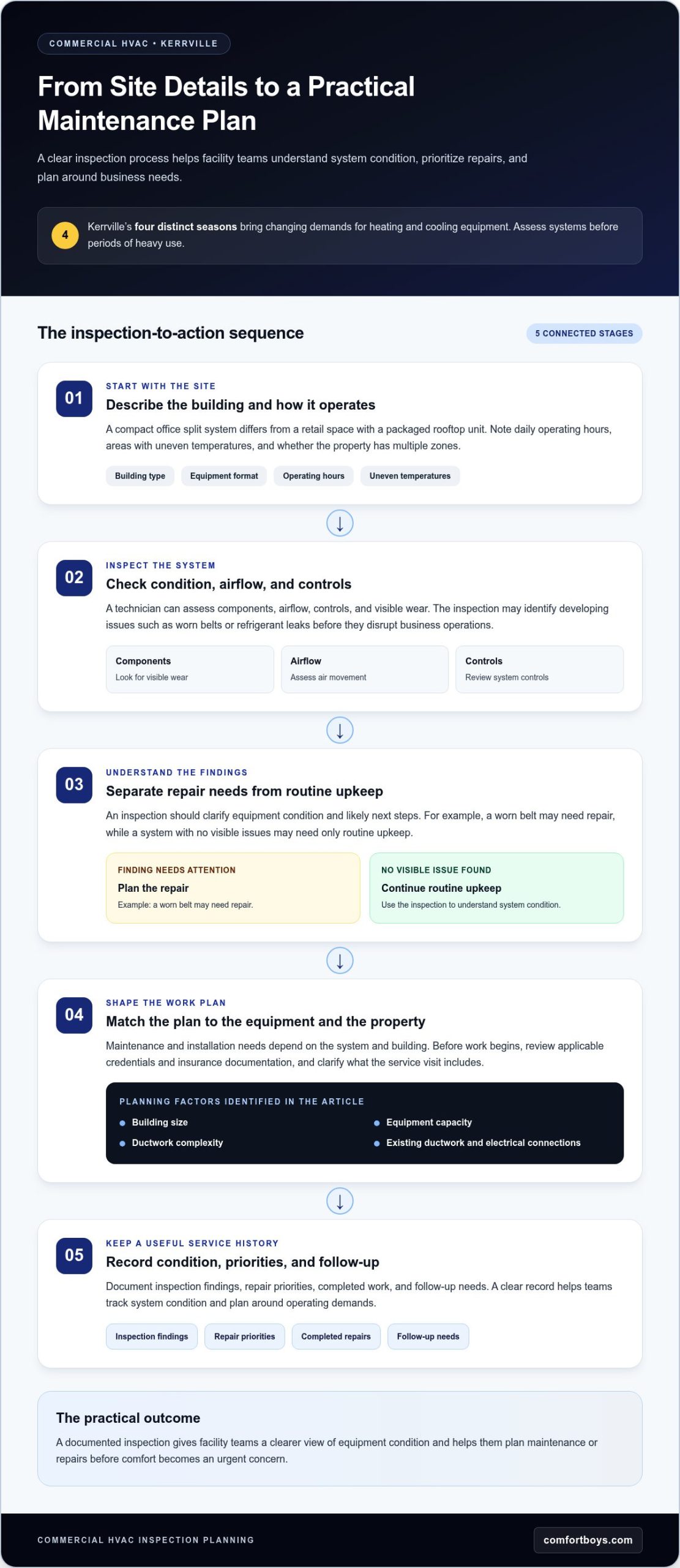
Yes. For a Kerr County business, regular HVAC inspections can identify worn belts or refrigerant leaks before they lead to a disruptive breakdown. Kerrville’s four distinct seasons place changing demands on heating and cooling equipment. Commercial heating maintenance in Kerrville helps facility teams spot developing problems and plan repairs before comfort becomes an urgent concern.
An inspection is useful when it gives operators a clearer view of equipment condition and likely next steps. A technician can assess components, airflow, controls, and visible wear, then explain which findings need attention. A worn belt, for example, may need repair, while a system with no visible issues may need only routine upkeep. This information helps businesses plan around operating needs.
The video below explains how a rooftop unit moves air and provides heating and cooling.
Kerr County businesses have different buildings and equipment needs. A small office with a compact split system differs from a retail space with a packaged rooftop unit. Light commercial maintenance should account for equipment type, daily operating hours, and areas where uneven temperatures affect staff or customers. Recording system condition and repair priorities during a visit creates a useful service history.
Commercial and residential HVAC installations differ in scale and planning. A home system usually serves a smaller, more defined space, while a commercial installation may serve multiple zones or need to work around business hours. In either setting, planning starts with the building, the equipment, and how the existing systems connect. Choosing equipment capacity without assessing those factors can leave areas uncomfortable or the system poorly matched to demand.
Commercial HVAC installation and sizing depend on building size, equipment capacity, ductwork complexity, and connections to existing ductwork and electrical systems. These factors work together: a larger building may need different capacity, while complex ductwork can affect how conditioned air reaches each area. A sound assessment considers the entire setup rather than choosing equipment based on floor area alone. Existing electrical connections and controls also shape the installation plan.
Licensing and insurance matter when organizing commercial repairs or installation. Before work begins, review applicable credentials and insurance documentation, and clarify what the service visit includes. This helps property managers understand who is doing the work and what it covers. Clear documentation also makes it easier to track inspection findings, completed repairs, and follow-up needs.
Whether a property needs a repair, installation, or routine inspection, the most useful service plan reflects its equipment and operating demands. Kerrville’s seasonal shifts make it sensible to assess heating and air conditioning before periods of heavy use. A documented inspection can identify concerns early and help a business plan maintenance and repairs.
Service areas in Kerrville and the Texas Hill Country
Service-area details help Kerr County businesses plan HVAC visits around building access and operating schedules. Kerrville listings include ZIP codes 78028 and 78029, giving property managers a concrete starting point when identifying a location. A street address, equipment location, and preferred access window also help clarify the service request. For a multi-site operation, record each property separately rather than assuming one address represents every building.
The Texas Hill Country includes communities beyond Kerrville, so broad regional wording may not clarify whether a particular site is within a service area. Fredericksburg is one example of a Hill Country community. State the exact town and ZIP code, and specify whether the job involves commercial equipment, a residence, or both. This makes service-area information more useful than a general reference to the region.
Equipment details matter as much as location. A rooftop system has different access needs from a ductless mini split. Before arranging a visit, note the system type, the affected area, and whether the request concerns heating, air conditioning, or both. A concise description helps distinguish maintenance from a repair request and allows facility staff to coordinate access.
Facilities housing vulnerable residents should plan for a heating interruption before one occurs. Keep escalation contacts accessible, identify rooms most affected by a loss of heat, and document the system’s location and operating details. An emergency plan can help staff organize immediate steps while arranging service. Routine service and emergency response are not interchangeable, so describe the urgency clearly when requesting help.
Pricing depends on the case and is given after a quote request. The factors include equipment type, the work required, access conditions, and whether the visit involves diagnosis, repair, or planned maintenance. A clear written scope helps property managers understand what the estimate covers. For example, a request to inspect one accessible unit differs from a repair involving several systems or difficult rooftop access.
Keep a simple site record with the property address, ZIP code, equipment description, and a brief account of the issue. For Kerrville locations, include 78028 or 78029 when applicable. For facilities elsewhere in the Texas Hill Country, name the town, such as Fredericksburg, rather than relying on regional shorthand. Use the location details to review Hill Country HVAC service information and plan the next maintenance step.
Kerrville, Texas, is nearly 1,700 feet above sea level. A customer testimonial says John arrived about an hour after the customer called for service.
Commercial furnace maintenance and repair
Commercial heating systems need service suited to their equipment and operating demands. They may use boilers, heat pumps, underfloor heating, or gas and electric furnaces.
Commercial Furnace Care
Furnace maintenance starts by identifying the system type and reviewing its operating condition. A technician can inspect accessible components, airflow, controls, and ventilation, then document wear or repair needs. A commercial gas furnace and an electric heater, for example, have different components to assess. A clear record helps facility staff track findings and prioritize work before the next heating period.
Commercial heating equipment varies by building. A boiler distributes heat differently from a heat pump, while radiant floors warm and cool more slowly than forced-air systems. Those differences matter when diagnosing uneven temperatures or planning repairs. Note the system type, affected rooms, and operating schedule before arranging service. These details help focus the inspection on the relevant equipment and comfort issue.
Cooling equipment also needs planned maintenance. Commercial AC systems typically need professional maintenance two to four times a year because longer daily run times and larger spaces increase wear. Maintenance and repairs should account for the full heating and cooling setup, including airflow and ventilation. Buildings that rely on cooling for daily operations benefit from recording recurring issues between visits.
Signs of Needed Service
Warm air from vents, weak airflow, unusual noises, frequent cycling, and higher-than-normal energy bills can signal that a system needs attention. Water pooling near an AC unit is another warning sign. Record when each symptom occurs and which area it affects. A noise that begins during startup, for example, gives technicians a useful diagnostic detail.
For heating repairs, describe whether the furnace starts, runs continuously, or shuts off before the space warms. Include thermostat settings and any changes in sound or airflow. Do not assume one symptom identifies the failed part, since different equipment issues can cause similar comfort problems. A precise description supports a clear discussion of inspection findings and possible repairs.
Heating and cooling repairs usually begin with diagnosis, followed by an explanation of the fault and the work needed. For an AC concern, technicians may investigate weak airflow or a refrigerant leak; for a furnace, they assess the heating system’s components and controls. Ask for findings to be distinguished from recommended repairs so you can understand what needs attention now and what can be addressed through maintenance later.
Keep a service log with the visit date, equipment type, symptoms, and completed work. A record of repeated cycling, for instance, can help technicians determine whether the issue has returned. Organized notes also help facility managers plan repairs around business operations and track system performance across seasons.
Preventive maintenance and system reliability
Kerr County commercial systems may use boilers, heat pumps, underfloor heating, gas or electric furnaces, and other heaters. A maintenance plan records inspections, repairs, ignition checks, ventilation condition, and equipment findings. Safety-related work should follow applicable codes and equipment instructions.
Ignition and Safety Checks
For a furnace or gas heater, a technician can inspect ignition components, controls, and burner operation. The review should also consider ventilation and visible equipment condition, with findings recorded for the building manager. For electric heating equipment, the inspection focuses on its controls and electrical components. Documenting the system type helps staff understand what was serviced and what still needs attention.
Reliability During Freezes
Before cold weather, operate the heating system and note whether it starts, maintains the set temperature, and distributes heat across occupied areas. Check exposed pipes and rooms that tend to cool first, then record unusual sounds, cycling, or weak airflow. Kerrville’s hard freezes can test heating reliability, so a written readiness list helps facility teams prioritize problems before colder conditions arrive.
Maintenance Plans and Requirements
A useful plan identifies the equipment, inspection findings, recommended repairs, and follow-up timing. Property managers should align inspections and repairs with applicable safety codes, equipment instructions, and building needs. Keep service records with the equipment documentation. This gives staff a clear history if a system changes hands or develops a recurring issue.
Steam systems need attention to the components that move steam and return condensate. During a service visit, technicians can examine accessible pipes, valves, and traps for signs of leakage or corrosion. Report slow-heating rooms and unusual pipe noise, since these observations help focus the inspection. Identify the affected zone rather than describing the entire building as cold.
Ventilation also affects comfort and indoor air quality. Note whether supply and return openings are clear, whether airflow differs between rooms, and whether occupants report stale air. These observations help distinguish a heating problem from an airflow concern. Commercial buildings may serve several zones, so record the specific locations affected.
Commercial heating maintenance in Kerrville is most useful when each visit leaves a practical record. Keep the equipment type, date, observed issue, and completed work together. A note that one office stayed cool while other areas warmed, for example, gives technicians a specific place to investigate. This history supports better planning across heating and cooling seasons.
Commercial heating and cooling maintenance
In Kerrville, wide daily temperature swings in spring and fall can make HVAC systems switch between heating and cooling more often. A seasonal maintenance plan should account for those changes rather than treating the heating and air conditioning equipment as unrelated concerns.
Start with an equipment inventory. Record whether each area uses a furnace, heat pump, or another heating system, then note its thermostat, air filters, and ductwork access. This record helps organize inspection priorities. A heat pump serving several rooms, for example, needs attention to both its heating and cooling operation.
During a visit, technicians can inspect accessible components, review system controls, and assess airflow through the ductwork. Ask for findings by unit and area. If one office heats slowly while nearby rooms stay comfortable, that detail helps direct the assessment toward airflow, controls, or equipment operation. A written service record makes recurring issues easier to compare across visits.
Commercial AC systems typically need professional maintenance two to four times a year because longer daily run times and larger spaces increase equipment wear. Spring and fall temperature swings add another planning consideration: note repeated changes between heating and cooling, then include them in the service history. Keep the system schedule aligned with actual building use, especially where operating hours vary by department.
Replacement decisions should account for building size, equipment capacity, ductwork complexity, and connections to existing electrical systems. Compare these factors with observed system performance before discussing replacement. Persistent uneven temperatures, for instance, may point to distribution problems rather than an automatic need for new equipment. A careful evaluation is more useful than basing a replacement decision on one symptom alone.
Operating costs also depend on building size, insulation quality, and system age. Poor insulation or aging equipment can reduce efficiency, so record comfort complaints alongside system condition. These details help explain why two buildings with similar equipment may have different heating needs. Track changes in occupied spaces, insulation concerns, and operating patterns to support a more useful maintenance discussion.
Before the next seasonal transition, review the equipment list, service records, and areas with recurring comfort concerns. Note any unusual cycling, airflow changes, or heating delays, and share those observations during maintenance. If a heater needs repair, schedule heater repair to address the equipment issue and restore normal operation.
When reviewing recurring complaints, keep equipment age and specific component findings in the same record as comfort observations. A Kerrville review described a leaking cooling coil in a 21-year-old central air conditioner. That example shows why a maintenance discussion benefits from identifying the affected component and documenting the condition, rather than recording only that cooling is inadequate. Ask the contractor to explain what was inspected and how the finding relates to the system’s operation. Keep that explanation with the unit’s service history so it can inform later assessments.
Before closing out a visit, confirm that the written notes identify the equipment, reported symptoms, and technician observations. Compare them with earlier records and flag unresolved concerns for follow-up. Consistent documentation gives facility managers a clearer basis for planning maintenance and discussing whether further assessment is needed.
Comfort Boys Air and Heating: AC Installation
Comfort Boys helps businesses plan AC installation around building needs and existing equipment. Building size, system capacity, ductwork complexity, and connections to existing ductwork and electrical systems all shape installation choices. Reviewing these factors helps match equipment to the spaces it must serve.
For a facility considering a different cooling setup, mini split AC installation may suit areas that need a separate solution. If an existing system is not cooling properly, AC repair services address equipment problems, while AC tune ups support scheduled attention to air conditioning performance. These services address cooling needs; commercial heating maintenance remains a separate part of an overall building plan.
Share the building layout, current equipment, and areas with cooling concerns when discussing next steps. Contact Comfort Boys to discuss AC installation, repairs, or tune ups for your facility.
Plan the Next Step for Your Facility
Turn maintenance findings into a practical decision for the next operating cycle. Identify the issue that most affects staff, customers, or daily work, then decide whether the next step is a repair, tune-up, or system change. This keeps commercial heating maintenance in Kerrville focused on your facility’s priorities, rather than treating service as a calendar task alone.
Comfort Boys provides AC installation, AC repair services, and AC tune ups for businesses with cooling needs. If your facility is planning an air conditioning upgrade or dealing with a system problem, share the equipment details and how the issue affects operations. A clear starting point makes the service discussion more useful.
Contact Comfort Boys Air and Heating to discuss the right next step for your facility. A considered plan can help your team move forward with greater confidence.
Frequently Asked Questions
Need a pro for your heating and air conditioning service project in Kerrville, TX?
Comfort Boys can help with HVAC needs through heater repair, AC installation, AC repair, and AC tune ups. Before arranging service, note the equipment type, affected rooms, and symptoms such as uneven airflow or unusual cycling. This information helps explain the issue clearly. Comfort Boys serves the Texas Hill Country and San Antonio area, including Kerrville.
How often should commercial heating systems be maintained in Texas?
Have heating systems serviced at least once a year. A visit before the building relies heavily on heat gives technicians a chance to assess operation and document issues. Before the appointment, note rooms that heat unevenly, equipment noises, or thermostat changes. Keep the service record with the equipment details so future technicians can understand the system’s maintenance history.
How to compare commercial HVAC maintenance providers in Kerrville
When choosing a service provider, review applicable credentials and insurance documentation, and clarify what each visit includes. Consider whether the proposed inspection and maintenance plan fits your equipment type, operating schedule, and building needs, and whether findings and repairs will be documented.