
A furnace making a loud humming sound in Fredericksburg isn’t always signaling a breakdown: a soft hum after ignition can be part of normal operation. A loud, sharp, persistent, or worsening buzz is different and may point to a stressed motor, an electrical component, or loose parts. When the sound begins and how it changes can help distinguish normal startup noise from a problem that needs attention.
It’s understandable to worry when a familiar heating cycle suddenly sounds different. This guide covers common causes of furnace humming or buzzing, normal startup sounds, and warning signs that mean it’s time to call an HVAC professional. You’ll also learn what to observe to help narrow down the cause, without attempting electrical repairs yourself.
Key Takeaways
- A soft hum after ignition can be normal, but a loud, persistent, or worsening buzz deserves attention.
- Buzzing that begins with startup may point to a blower motor, capacitor, transformer, or another electrical component.
- Vibration or whistling may come from loose ductwork, restricted airflow, or an unsecured vent.
- Notice when the sound starts, how it changes, and whether the furnace still heats normally; these clues can help identify the cause.
- Turn off the furnace and call an HVAC professional if buzzing comes with a burning smell, flickering lights, or a tripped breaker.
Blower motor problems
The blower motor turns the furnace fan, moving heated air through the home’s ductwork. A new buzz, squeal, or scrape can signal that the motor or nearby blower parts need attention.
If a furnace is making a loud humming sound in Fredericksburg, notice whether it starts with the blower, continues through the heating cycle, or changes as airflow begins. The timing can help distinguish a motor-related sound from routine startup noise.
High-Pitched Motor Noise
A high-pitched squeal or screech can point to worn bearings in an older furnace fan motor. Bearings support the motor’s moving parts, and wear can make them noisy as the blower runs.
Notice whether the sound follows the fan’s operation, especially when warm air starts coming from the registers. A persistent, high-pitched buzz also needs prompt attention. A technician can determine whether worn bearings can be replaced and the motor lubricated, or whether the blower motor needs replacement.
Signs of a Struggling Blower Motor
A struggling blower motor may buzz if its bearings are worn, dirt has collected on the motor, or the motor is beginning to fail. The sound can accompany weaker airflow, so notice whether some rooms get less warm air while the furnace runs.
A capacitor helps regulate power to motors such as the blower motor and stores electrical energy that helps start the blower. If the furnace buzzes during startup and airflow seems abnormal, these details can help identify a motor or capacitor concern.
Grinding or scraping is more urgent than a steady hum. A metal-on-metal sound usually indicates a blower problem, such as one component contacting another as the fan turns. Turn the furnace off rather than letting the blower continue to run, since continued contact can worsen mechanical damage.
You can observe the sound and look for visible dust or debris around the blower area, but turn off furnace power before troubleshooting or clearing anything nearby. Don’t reach into moving parts or attempt electrical repairs. A capacitor can store electrical energy, so leave work on the motor, wiring, and electrical components to a technician.
Furnace maintenance can help identify dirt, worn moving parts, and loose components before they cause noise. A technician can inspect the blower assembly, assess motor bearings and electrical connections, and determine whether cleaning, lubrication, component repair, or motor replacement addresses the cause. The appropriate repair depends on the inspection, not simply on how loud the hum sounds.
Why Is My Furnace Making a Buzzing Noise?
A furnace can make ordinary startup sounds, but a sharp, constant, or worsening buzz calls for closer attention. Note when it begins and whether the heating system continues to operate normally.
Common Causes of Furnace Buzzing
Furnace buzzing can come from loose components, restricted airflow, or a failing electrical part. The sound’s timing offers useful clues about its source.
A loose transformer box may vibrate, while a failing transformer can buzz continuously, even when the furnace isn’t heating. A capacitor helps regulate power to motors, and a failing capacitor can cause buzzing, especially in an older furnace. Loose wiring can also buzz or vibrate. Leave electrical inspection and repair to a technician.
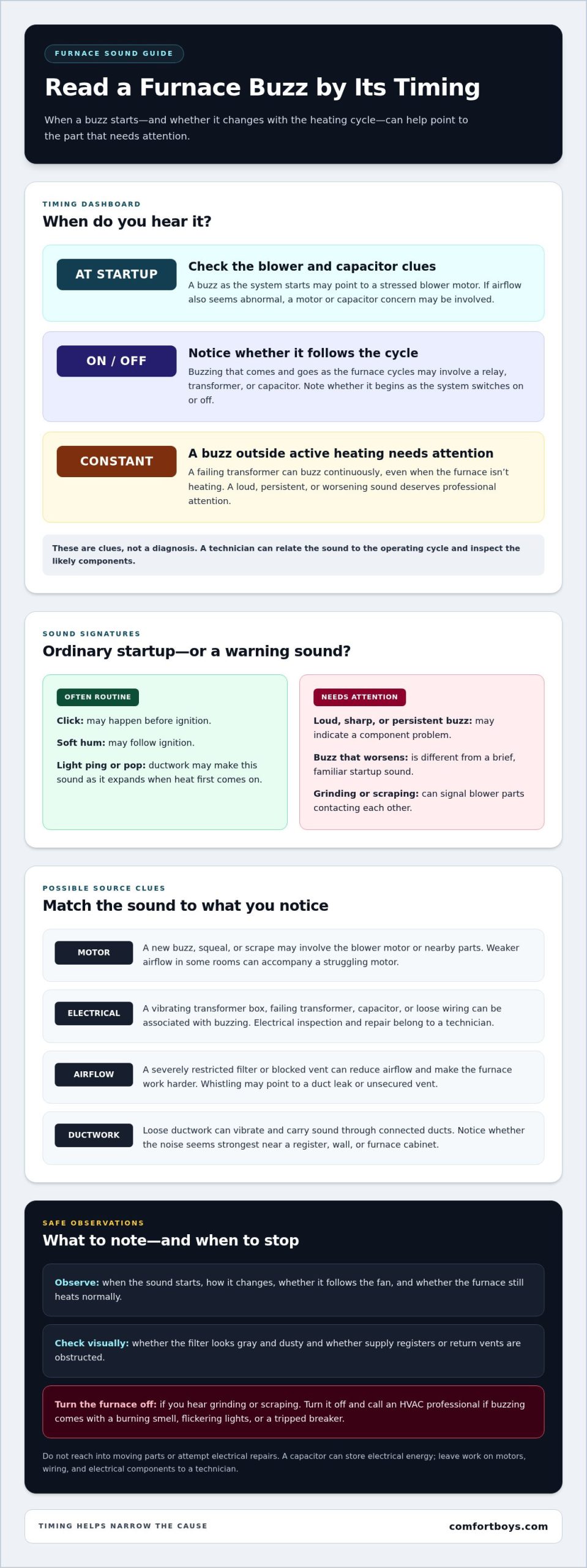
If the buzz comes and goes as the system cycles on or off, a relay, transformer, or capacitor may be involved. Buzzing at startup can also point to a stressed blower motor. A loud, persistent sound deserves professional attention, not repeated attempts to restart the furnace.
Normal Sounds and Concerning Buzzing
Normal operating sounds are brief and tied to familiar steps in the heating cycle. Unusual buzzing is louder, sharper, or persistent.
A furnace may click before ignition and hum after ignition. Ductwork can ping or pop slightly as it expands when the heat first comes on. By contrast, a loud buzz that continues, worsens, or remains while the furnace isn’t actively heating can indicate a component problem.
Compare the sound with previous cycles: note whether it starts at startup, continues during heating, or changes as the furnace switches off. This timing can help a technician narrow down possible causes without treating every routine click as a fault.
Diagnosing and Fixing Furnace Humming
An HVAC technician diagnoses a humming furnace by relating the sound to the operating cycle and inspecting likely components.
For example, a buzz during startup may lead the technician to examine the blower motor and capacitor, while a constant buzz may prompt inspection of the transformer and wiring. The technician can also check for loose panels or components that vibrate. The repair depends on the cause, such as securing a loose part or replacing a failing component. Don’t attempt electrical repairs yourself.
Air Filters, Blocked Vents, and Humming
A severely restricted filter or blocked vent can reduce airflow and make the furnace work harder, adding strain that may contribute to humming.
Check whether the filter looks gray and dusty, and make sure supply registers and return vents aren’t obstructed. Whistling more often points to airflow trouble, such as a duct leak or unsecured floor vent. If clearing an obstruction doesn’t change a loud buzz, another component may be responsible.
For continued humming or buzzing, professional HVAC help can identify whether the sound comes from airflow, a loose part, or an electrical component.
Ductwork vibration
Loose ductwork can vibrate as the heating system runs, creating a hum or buzz that seems to come from the furnace. The sound may travel through connected ducts, so the loudest spot isn’t always near the loose section. Notice whether the noise seems to come from a register, a wall, or the furnace cabinet. Those locations can help distinguish duct vibration from a transformer or blower sound.
To compare locations, listen quietly near a register while the system is running, then near the furnace. A vibration that’s stronger at a vent may point to ductwork or an unsecured register. A buzz centered at the furnace cabinet may have another source. Don’t remove access panels or reach inside operating equipment to locate the noise.
Banging or clanging from a register can happen as ductwork adjusts to temperature changes. Metal ducts expand as warm air passes through, then contract as they cool. A light ping after the furnace starts or stops can fit that pattern. Repeated, forceful banging deserves closer attention, especially if it comes from the same duct section each cycle.
Improperly installed or aging ducts can also bang when the furnace shuts off. For example, a duct panel may shift as airflow changes and strike a nearby surface. Loose ducts can contribute to uneven heating or cooling, energy loss, and higher utility bills. Prompt attention can address both the noise and the comfort problem.
Use these clues to describe what you hear:
- A buzz or rattle strongest at a register suggests checking for a loose vent or nearby duct vibration.
- A bang as heating starts may match duct expansion, while a bang at shutdown can point to shifting or loose ductwork.
- A whistle near a floor vent can indicate an unsecured vent or an air leak in the ductwork.
- Uneven temperatures between rooms alongside duct noise suggest the system may have a comfort or airflow issue.
Whistling differs from a low vibration and often signals airflow trouble, such as a duct leak or an unsecured floor vent. A restricted filter can also make the furnace work harder to draw air, so check whether it looks gray and dusty. If the sound changes after replacing a visibly dirty filter or clearing a blocked register, airflow may be part of the cause.
Track the noise through a full heating cycle: note whether it begins at startup, continues while warm air moves, or occurs as the furnace shuts off. Record the room and register where it’s loudest. If banging, buzzing, or whistling persists, a technician can inspect duct connections and identify loose or poorly fitted sections. A transformer buzz, by contrast, comes from electrical components in the furnace, not a vibrating duct.
When to call an HVAC professional
Call for professional help when a furnace buzz is loud, continuous, sudden, or worsening. Burning smells, flickering lights, and repeated shutdowns make the situation more urgent.
Warning Signs for Professional Service
Warning signs that go beyond a simple airflow issue need trained inspection. Turn off the furnace and call a professional if buzzing occurs with a burning smell, flickering lights, or a tripped circuit breaker.
A loud, continuous buzz also warrants a call, especially if the furnace won’t start, repeatedly shuts off, or keeps buzzing while idle. Don’t open electrical compartments or handle a capacitor, which stores electrical energy. A technician can safely assess wiring, motors, and other components.
Sudden changes matter. A new humming noise that grows louder or persists after basic checks differs from a brief startup sound. Describe when it begins, whether the system is heating, and what other signs appear. This information helps the technician focus the inspection and plan repairs based on the cause.
Finding a Reputable Furnace Repair Company
To find a licensed, reputable furnace repair company in Fredericksburg, look for a provider that clearly presents its credentials and explains its diagnostic process. Ask for a clear description of the fault, the proposed repairs, and how the repair addresses the noise.
A professional should distinguish a failing capacitor from a motor, transformer, or airflow problem rather than assume every buzz has the same cause. For a furnace issue, heater repair is the relevant service. Clear communication about the diagnosis helps you understand the recommended work.
Furnace age can affect which parts need attention. An older blower motor may develop worn bearings, while an aging transformer can malfunction and buzz. Age alone doesn’t identify the fault; the sound’s timing, the system’s operation, and component condition guide the assessment.
Regular care can help catch dirt and loose parts before they add strain or noise. Schedule an annual furnace tune-up, and arrange annual professional furnace cleanings. During heavy-use seasons, check the air filter monthly; replace it if it looks gray and dusty. A clogged filter restricts airflow and makes the system work harder.
Before the appointment, note whether the noise starts at ignition, continues during heating, or occurs while the furnace is idle. Record any burning smell, breaker trip, or repeated shutdown. These observations help a technician assess the humming noise and determine appropriate repairs without guesswork.
Normal furnace humming and startup sounds
A furnace can make brief sounds as its heating cycle begins, and a soft hum after ignition is normal. The key distinction is whether the sound follows the familiar startup pattern or becomes loud, sharp, persistent, or different from previous cycles.
Listen to the sequence. A click may come before ignition, followed by the burner starting and a soft hum as the blower moves warm air. Ductwork may ping or pop slightly when heat first enters it, as the metal expands. These sounds can occur together, but each should be consistent with the system’s usual operation.
Timing gives the sound meaning. A hum that begins after ignition and continues steadily while warm air circulates can be ordinary. A new buzz at startup, a hum that grows louder, or buzzing that continues when the furnace isn’t heating deserves attention. Note whether the change starts before ignition, during blower operation, or as the system shuts off.
Compare the current cycle with a familiar one rather than judging by volume alone. A short click before ignition, for example, differs from a sharp buzz that repeats each time the furnace starts. A slight duct ping as warm air begins moving also differs from continuous vibration near the furnace cabinet. The location, timing, and change in sound help show whether the noise is routine or signals trouble.
Airflow offers another useful clue. Check that supply registers and return vents aren’t blocked by furniture, rugs, or stored items. Look at the air filter: a gray, dusty filter can restrict airflow and make the system work harder. During heavy-use seasons, check filters monthly. Replace a visibly dirty filter according to the furnace’s filter instructions, then note whether airflow and sound change.
Keep a simple record of the heating cycle: when the noise starts, how long it lasts, and whether warm air reaches the rooms. A persistent or worsening buzz, grinding, or unusual noise paired with weak airflow isn’t a normal startup pattern. Don’t open electrical compartments to investigate. Have the heating system serviced at least once a year to help identify dirt, loose parts, or wear before they create new noise.
If your furnace’s startup sound has changed or the humming continues through heating, get help with heater repair to identify the cause.
Comfort Boys Air and Heating: AC Installation
Comfort Boys Air and Heating helps homeowners plan cooling improvements with AC Installation and Mini Split AC Installation. If the furnace noise has also highlighted uneven comfort between seasons, these options can address cooling needs, while AC Repair Services and AC Tune Ups support existing air conditioning systems.
A loud or persistent furnace hum still calls for attention to the heating system, especially if it comes with a burning smell, flickering lights, or repeated shutdowns. For cooling concerns alongside heating questions, contact Comfort Boys to discuss your home’s needs.
Take the Next Step Toward Steady Home Comfort
If your furnace is making a loud humming sound in Fredericksburg, use your observations to guide your conversation with an HVAC professional. Explaining when the sound occurs and how it affects your comfort can help focus on what matters to your household. If your heating system needs attention, Comfort Boys provides heater repair.
Home comfort can also mean planning for warmer weather. Comfort Boys provides AC Installation, AC Repair Services, and AC Tune Ups for cooling needs. These services address a different system than a noisy furnace, but can help when you’re considering broader heating and cooling care for your home.
Choose the next step that fits your home’s current needs, whether that’s resolving a furnace concern or planning for reliable cooling. Contact Comfort Boys Air and Heating to discuss your HVAC needs and move forward with clarity.
Frequently Asked Questions
What Causes a Furnace to Buzz?
Furnace buzzing can come from a loose transformer box, wiring, a capacitor, or a motor under strain. A restricted filter can also make the system work harder and contribute to humming. Timing offers a clue: a buzz during startup differs from one that continues while the furnace is idle. Note when the sound begins and whether it changes as the system cycles.
What You Can Check on Your Own?
You can check the filter, registers, return vents, and furnace access panels without opening electrical compartments. Replace a filter that looks gray and dusty, clear visible obstructions from vents, and make sure accessible panels are closed and latched. Then listen during a heating cycle to see whether the sound changes. Turn off furnace power before troubleshooting near the blower, and don’t touch wiring or a capacitor.
What causes a furnace to make a loud humming sound?
A loud hum can come from a blower motor with worn bearings, accumulated dirt, or developing failure. Electrical components such as a transformer or capacitor can also create buzzing. A loose access panel or metal part may vibrate as the system runs. If your furnace is making a loud humming sound in Fredericksburg, note whether it starts at ignition, continues between cycles, or changes when airflow begins.
Is a loud furnace hum dangerous or a sign of an emergency?
A hum alone doesn’t establish an emergency, but buzzing with a burning smell, flickering lights, or a tripped circuit breaker needs immediate attention. Turn the furnace off and call an HVAC professional in that situation. Loose wiring can arc or vibrate, creating a fire hazard. A persistent, sharp, or worsening buzz also warrants prompt inspection, especially if the furnace won’t start or repeatedly shuts off.
How can I troubleshoot a humming furnace safely?
Start with observations, not disassembly: note where the noise seems loudest, when it occurs, and whether heating continues. Check the visible filter and clear blocked registers. If you need to inspect around the blower, turn off furnace power first, and don’t touch wiring, capacitors, or moving parts. Stop troubleshooting and call a technician if you notice a burning odor, electrical symptoms, grinding, or repeated shutdowns.
Which furnace parts commonly cause humming, such as the blower motor, transformer, or inducer motor?
The blower motor, transformer, and capacitor are common possibilities: worn motor bearings or dirt can cause motor noise, while a malfunctioning transformer can buzz. A technician can also inspect the inducer motor if the sound seems to come from that part of the heating system. Sound location and timing help narrow down the source, but a hum alone can’t identify which component needs attention.
When should I turn off a humming furnace and call an HVAC technician?
Turn off the furnace and call an HVAC technician if humming comes with a burning smell, flickering lights, or a tripped breaker. Call promptly for loud, continuous, sudden, or worsening buzzing, or if the furnace keeps shutting down. Don’t attempt electrical repairs or restart the system repeatedly to test it. Tell the technician when the sound occurs and what other symptoms appeared.