
A new central AC or ductless mini-split should be installed by a licensed HVAC professional. Getting buy-in for a new AC system starts with showing why replacement may make more sense than another repair. Compare the existing unit’s condition, the repair recommendation, and the replacement proposal rather than focusing on one number. A clear side-by-side view helps everyone understand the decision.
It’s reasonable to weigh the upfront commitment carefully, especially when the current system still runs. Compare the likely value of repairing it with the comfort, efficiency, and reliability a properly selected replacement can provide.
This guide explains how to compare repair and replacement estimates, factor in potential savings and incentives, and choose features that suit your home. It also covers why correct sizing and installation quality matter, so you can discuss the options with confidence and make a practical decision together.
Key Takeaways
- Compare the repair diagnosis with a replacement proposal to see which option better suits the system’s condition and your household’s needs.
- Review available incentives and financing carefully, including the rules and timing that affect eligibility.
- Use SEER2 and AFUE ratings to understand cooling and heating efficiency, then weigh those ratings against the features you’ll actually value.
- Look beyond the upfront investment by considering how system efficiency and expected use can affect energy costs over time.
- Assess installation quality alongside the proposal: correct system sizing, a clear scope of work, and a contractor’s reputation all matter.
1. Comparing repair costs with replacement costs
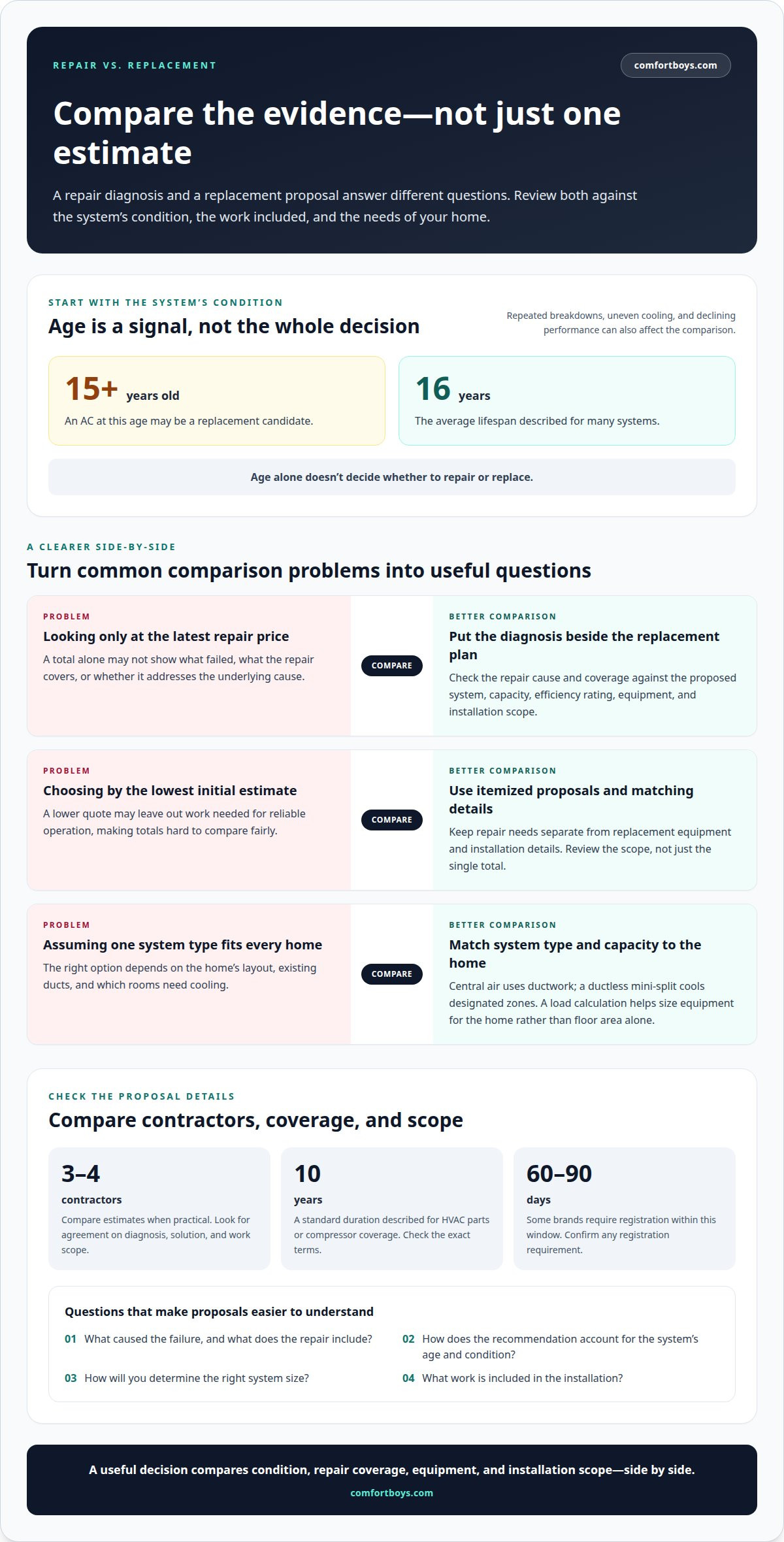
Start with the condition of your current air conditioner, not just the latest repair estimate. An AC that is 15 or more years old may be a replacement candidate, and many systems last an average of 16 years. Age alone doesn’t decide the issue, but repeated breakdowns, uneven cooling, and declining performance can make replacement worth comparing with another repair.
Put the repair diagnosis beside a replacement proposal. Compare what failed, what the repair covers, and whether it addresses the underlying cause. For replacement, review the proposed system’s capacity, efficiency rating, equipment, and installation scope. The lowest initial estimate may not be the best value if it leaves out work needed for reliable operation. Ask for itemized proposals so you can compare the same details rather than relying on a single total.
Ask the HVAC professional: What caused the failure, and what does the repair include? How does the recommendation account for the system’s age and condition? For replacement, how will you determine the right size, and what work is included in the installation? Clear answers make differences in diagnoses and proposals easier to understand.
Compare estimates from three or four contractors when practical. Look for agreement on the diagnosis, proposed solution, and work scope; differences may point to assumptions that need explaining. A detailed comparison also helps when getting buy-in for a new AC system, because it replaces a vague “repair or replace” debate with specific options. Keep the existing unit’s repair needs separate from the new system’s equipment and installation details.
System type matters, too. Central air distributes cooling through ductwork, while a ductless mini-split cools designated zones without the same duct arrangement. The right comparison depends on the home’s layout, existing ducts, and rooms that need cooling. A load calculation helps match system capacity to the home instead of choosing equipment by floor area alone.
Compare brands by the exact model and proposal, not by name recognition alone. Review efficiency ratings, included equipment, parts and compressor warranty terms, and any registration requirements. A standard duration described for HVAC parts or compressor coverage is 10 years, while some brands require registration within 60–90 days. Compare those terms alongside the installation scope. That gives each household member a clearer view of performance, coverage, and what the quoted work actually includes.
2. Rebates, tax credits, and financing
Build incentives and payment options into the comparison only after identifying the system and installation scope. A rebate or tax credit can change a homeowner’s net cost, but eligibility depends on the program’s rules, qualifying equipment, and timing. Separate the equipment price, installation work, and any incentive in your worksheet. That makes the amount due easier to distinguish from potential savings that may arrive later.
Tax credits require particular attention to service dates. According to the Internal Revenue Service, the federal Energy Efficient Home Improvement Credit under Section 25C is unavailable for qualifying property placed in service after December 31, 2025. That date matters when planning an air conditioner or heating upgrade. Don’t assume an earlier estimate or discussion means a later installation qualifies. Treat the credit as a separate line in your comparison, and use the applicable tax rules for the year the property is placed in service.
Rebates are different from tax credits. A rebate may be offered through a utility, state program, or another organization, with its own equipment and application requirements. Start by identifying the program administrator, then record the qualifying system, required documentation, application deadline, and payment process. For example, a program may require proof of purchase or installation details. Those steps affect the incentive’s usefulness, even when the new system otherwise appears to fit.
Financing can spread the upfront commitment instead of requiring the full amount at once. Homeowners can ask HVAC companies whether they offer 0% HVAC financing to spread the cost of a new system over several years. Compare the repayment period, monthly obligation, fees, promotional terms, and what happens when a promotional period ends. A 0% offer is meaningful only when its conditions fit the household’s budget and payment schedule.
Keep financing separate from incentives in your comparison. A rebate reduces the net project cost if the system qualifies and the application is approved; financing changes when payments are made. Neither automatically makes a system the better choice. For a clear household discussion, show the proposal’s total, the incentive amount and timing, and the repayment terms in distinct rows. That structure helps with getting buy-in for a new AC system without presenting a possible benefit as guaranteed savings.
For a practical next step, compare a written repair diagnosis with the replacement plan before deciding how to fund the work. A clear AC repair assessment can help frame that comparison, while the incentive and financing terms remain separate parts of the household decision.
3. What AC features matter for comfort and efficiency?
Efficiency ratings help compare cooling equipment, but they describe different conditions. SEER2 measures an air conditioner’s cooling efficiency over a typical season. Its measurement range is 65–104°F. EER2 measures cooling efficiency at a specific outdoor temperature of 95°F. Compare each rating for the same equipment type, then consider how local summer conditions and household use affect its relevance. A higher rating signals greater measured efficiency, but it doesn’t explain system sizing, installation quality, or how the home feels day to day.
For central air conditioners and heat pumps in cooling mode, a minimum SEER2 rating of 14.3 is a practical comparison point. A 14 SEER unit is described as providing 14,000 Btu of cooling per kilowatt of power, while a 22 SEER unit provides 22,000 Btu per kilowatt. Those examples illustrate why ratings matter, but don’t compare SEER directly with SEER2 as though they were identical measurements. Look at the rating shown for each specific system, and compare equipment under the same rating method.
Operating stages also affect comfort. A single-stage air conditioner runs at 100% capacity whenever it’s on. A two-stage unit’s high stage also operates at 100% capacity, while its low stage typically runs around 70% of capacity, give or take. Variable-speed systems can operate from 25% to 100% capacity. That range lets output adjust to changing cooling demand, rather than relying only on full-capacity cycles. The feature is most useful when steadier operation and closer temperature control are priorities.
Some variable-speed air conditioners can maintain a desired temperature within half a degree, but treat this as a described capability, not a guarantee for every home. Insulation, windows, airflow, system sizing, and installation all influence comfort. An oversized central system can cycle on and off too frequently, causing uneven cooling, extra wear, and higher energy bills. A load calculation helps account for the home’s conditions and match capacity to its needs instead of selecting equipment by floor area alone.
AFUE applies to furnaces, not air conditioners. It describes how efficiently a furnace converts fuel into heat; a 90% AFUE rating means 90% of the fuel’s energy becomes usable heat. A gas furnace with at least 90% AFUE is a useful efficiency comparison point. For a home replacing both cooling and heating equipment, compare the AC’s SEER2 and the furnace’s AFUE separately. Then weigh both ratings against upfront investment, expected operating patterns, comfort priorities, and the complete system proposal.
4. Upfront costs and long-term energy savings
Compare the full project scope, not just the central air equipment. The total can depend on system type, capacity, efficiency, ductwork changes, electrical work, access, and installation requirements. A proposal that includes necessary adjustments may differ from one covering equipment alone. Ask for the work and materials to be itemized, so each estimate accounts for the same tasks. The price depends on the case and is given after a quote request; system choice, home conditions, and installation scope all affect it.
Include ownership costs in the comparison. A new HVAC system’s lifespan is estimated at 10–15 years, so evaluate energy use across the years you expect to keep it. Compare the existing system’s bills with the proposed equipment’s efficiency rating and your household’s cooling patterns. A higher-efficiency unit may use less electricity for cooling, but the actual savings depend on operation, local weather, home insulation, and system sizing. Don’t assume an efficiency rating alone predicts your bill.
Estimate potential energy savings by gathering electricity bills from representative cooling seasons and comparing usage and charges with the proposed system’s efficiency information. Separate cooling costs from other household electricity use when possible. Consider how often the current unit runs, the thermostat setting, and whether rooms stay comfortable. These factors help explain why two homes with similar equipment can have different energy costs.
What permits and building codes apply to AC installation in your area? Requirements depend on the local jurisdiction and the project’s scope, including whether the work changes electrical connections or ductwork. The local building department identifies applicable permit and code requirements; include those steps in the installation plan before work begins.
A new system may provide steadier cooling, improved efficiency, and more dependable operation than an aging unit. A correctly sized replacement can also help address uneven temperatures, while suitable equipment features can better match household comfort needs. For a fair comparison, weigh these benefits against the upfront commitment and installation scope. Getting buy-in for a new AC system becomes more concrete when everyone can discuss immediate project needs alongside potential savings over the system’s service life.
5. Contractor reviews and installation quality
Installation quality affects how well a system provides heating and cooling, so evaluate the work plan alongside the equipment. Reviews can offer insight into communication, scheduling, cleanup, and follow-through. Read several accounts rather than relying on one unusually positive or negative comment. Look for details about similar projects, such as central AC replacement or ductless installation, and whether the work is clearly described.
Compare the written proposal with the home’s actual needs. A sound plan explains the system selection, installation scope, and any work involving existing ducts or electrical connections. Correct sizing matters: an oversized system can cycle too frequently, creating uneven cooling, extra wear, and higher energy bills. A professional load calculation helps match equipment capacity to the home’s insulation, windows, climate, occupants, and heat-generating appliances.
Licensing and insurance are important considerations for central AC or ductless mini-split installation. A licensed HVAC professional is recommended for both types of work. Confirm that the proposal identifies who will perform the installation and describes the work. Reviews can add context, but they don’t replace a written scope, a clear diagnosis, or licensing and insurance details.
Pay attention to how estimates explain differences. One proposal may include duct adjustments or other installation work that another leaves out. Compare the diagnosis, recommendations, equipment, and scope before judging the total. A fair price for a system that works is more useful than a lowball offer that doesn’t clearly account for the job. Avoid paying the full amount upfront; understand the payment schedule and the work tied to each payment.
Use a short review process to make the decision easier to discuss:
- Compare the proposal’s equipment and installation scope with the home’s heating and cooling needs.
- Review customer feedback for specific descriptions of workmanship and follow-through.
- Check licensing, insurance, payment terms, and warranty details in the written proposal.
- Consider whether the plan addresses sizing, airflow, and the local climate.
These steps help separate a persuasive sales pitch from a carefully planned installation. They also make getting buy-in for a new AC system more practical: household members can assess the installer’s process, not just the equipment label. For a professional installation plan tailored to your home, request AC installation.
Comfort Boys Air and Heating
Comfort Boys can help homeowners move from comparing options to addressing their cooling needs. If the existing air conditioner needs attention, AC Repairs offer a practical next step. When replacement suits the home, AC Installation and Mini-Split Services provide central and ductless options to consider. The right choice depends on the home’s layout, existing equipment, and comfort priorities, so the cost comparison and installation plan should fit the specific project.
Bring your repair concerns or replacement goals to the conversation. Comfort Boys provides HVAC services for the next step, whether that means repairing an existing system or installing a new one. Contact Comfort Boys to discuss your AC needs.
Move forward with a clear plan
Getting buy-in for a new AC system is easier when the next step feels practical, not rushed. Turn the household discussion into a plan: decide what needs attention now, which comfort concerns matter most, and what would make replacement worthwhile. This gives everyone a shared starting point for getting buy-in for a new AC system and keeps the decision connected to how the home is used.
Comfort Boys can help with the work that follows, whether you need AC Repairs, AC Maintenance, or AC Installation. The right next step depends on your system’s condition and your home’s needs. Contact Comfort Boys to discuss your options and move ahead with a service that fits the situation.
Contact Comfort Boys Air and Heating to discuss your AC needs. With a clear plan, you can make the next decision with greater confidence and work toward dependable comfort at home.
Frequently Asked Questions
Do you need a professional to install a new AC system?
Yes, a licensed HVAC professional is recommended for central AC and ductless mini-split installation. Professional planning helps match the equipment to the home and coordinate installation details, rather than treating the outdoor unit as a standalone purchase. For example, a home adding cooling to a room without existing ducts may need a different system arrangement than one replacing its central air equipment.
Does my AC unit need to be replaced?
Not necessarily. A repair may be appropriate if the problem is isolated and the system still meets your household’s needs. Consider replacement if breakdowns recur, cooling is inconsistent, or repairs no longer address the underlying issue. Warm air from vents or frequent cycling can signal a problem that needs diagnosis. A technician’s findings, the unit’s condition, and your comfort concerns all inform the decision.
What AC features matter for comfort and efficiency?
Start with the features that address your home’s actual comfort problems. A variable-speed system can adjust its output as cooling demand changes, while a programmable or smart thermostat can help manage temperature settings. Compare SEER2 ratings for seasonal cooling efficiency, and consider sound levels if the outdoor unit sits near a bedroom or patio. The best feature set depends on how your household uses each space.
What is the typical cost of a new AC unit?
There isn’t one price that applies to every AC replacement. The total depends on the equipment selected, the home’s cooling needs, and the installation work included. A unit-only figure may not reflect the complete project. For a useful comparison, distinguish the equipment from labor, materials, and any necessary changes to existing systems. A written proposal should make clear what the work covers.
What should you consider before buying a new air conditioner?
Consider how the home is used, which rooms feel uncomfortable, and whether existing ductwork suits the replacement plan. Also weigh efficiency, system type, warranty terms, and installation scope. For example, a homeowner in San Antonio or Boerne may prioritize dependable cooling during hot weather, while a room addition could call for a different layout. Aligning the purchase with household priorities makes the decision easier to discuss.
How much does a new AC system cost in the United States?
There’s no single price that applies to every installation. Equipment type, capacity, home layout, and the work needed to complete installation all affect the project total. Central air replacement and a ductless system aren’t directly comparable if their coverage and installation requirements differ. Ask for a written proposal that separates the equipment from the installation scope, so you can compare equivalent work.
What factors affect the cost of replacing an air conditioner?
Replacement costs depend on the system type and size, the home’s layout, and whether existing ductwork or other installation details need attention. Access to the equipment location and the scope of work can also affect the proposal. Replacing equipment without changing the system setup differs from adding cooling to a previously unconditioned space. Review the itemized work, not just the total.
How much can a new AC system save on energy bills?
There’s no fixed savings amount for every household. The change depends on the old and new systems’ efficiency, how often the AC runs, thermostat settings, and the home’s insulation and windows. For a practical estimate, compare past electricity bills with the proposed system’s efficiency information, then consider how household use may change. Treat the result as a planning estimate, not a guaranteed reduction.