
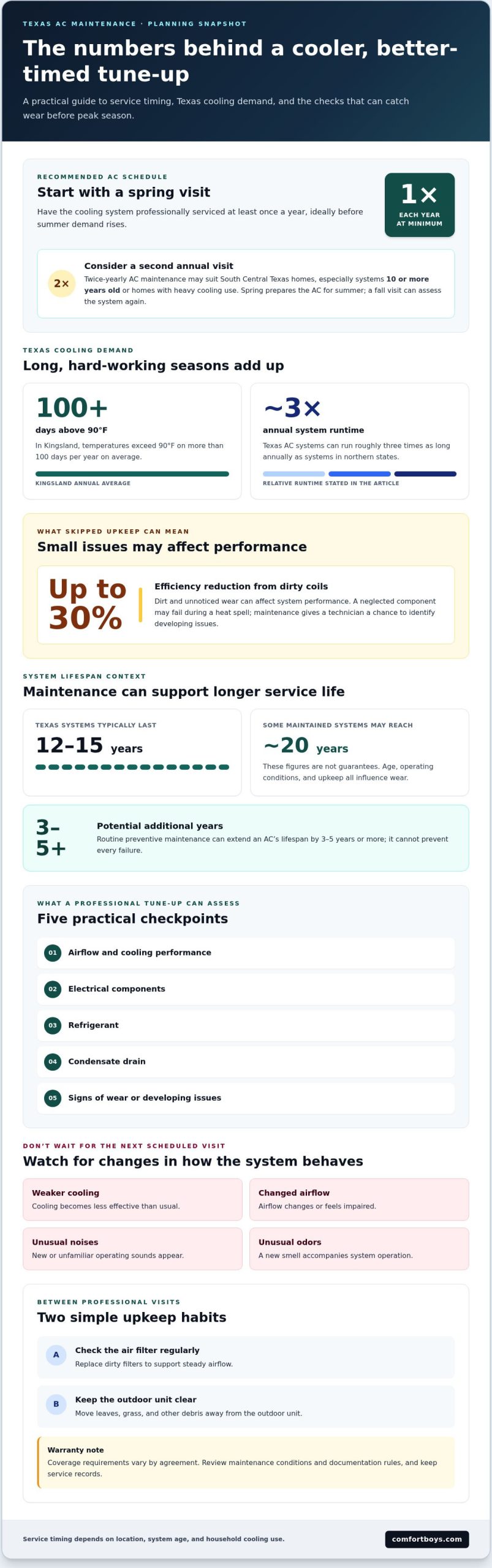
Texas heat makes annual AC maintenance a practical baseline. Schedule service at least once a year, ideally in spring before peak cooling season. If you’re wondering how often your AC should be serviced in Texas, twice-yearly maintenance may suit South Central Texas homes, especially when the system is 10 or more years old.
It’s easy to postpone an AC tune-up when your system seems to cool normally. But after long periods of heavy use, changes in airflow, cooling, or operating sounds may become more noticeable when Texas heat arrives.
Here, you’ll learn how often AC should be serviced in Texas, what a professional tune-up typically covers, and which warning signs call for earlier attention. You’ll also see how basic upkeep, such as checking the filter, complements professional service so you can plan to keep your home comfortable.
Key Takeaways
- Plan AC maintenance at least once a year, ideally in spring; homes in South Central Texas with systems 10 or more years old may benefit from twice-yearly service.
- A tune-up can assess airflow, electrical components, refrigerant, the condensate drain, and signs of wear before peak cooling demand.
- Check your air filter regularly and keep leaves, grass, and debris clear of the outdoor unit to support steady airflow.
- Don’t wait for the next scheduled visit if cooling weakens, airflow changes, or the system develops unusual noises or odors.
- If a repair approaches 50 percent of the cost of a new system, replacement may be worth considering alongside repair.
What Happens If You Skip Annual Maintenance?
Skipping maintenance can allow small operating problems to become breakdowns during Texas’s long cooling season. Scheduling an inspection before spring heat builds gives a technician a chance to identify wear before the system faces sustained demand.
Pan The Organizer’s video covers filter care, outdoor-unit upkeep, and warning signs that may need professional attention:
Costs of Skipped Maintenance
Skipped maintenance allows dirt and unnoticed wear to affect system performance. Dirty coils can reduce efficiency by up to 30%, increasing the work required to cool a home. A neglected component may also fail when the AC is running through a heat spell. That can mean an unexpected repair and reduced comfort, rather than addressing wear during a planned visit.
Maintenance can’t prevent every failure, but it gives a technician a chance to spot developing issues. For example, a clogged drain can be cleared before water disrupts normal operation.
Texas Heat, Humidity, and Runtime
Texas weather puts sustained demand on cooling equipment, while humidity adds to the home’s cooling load. In Kingsland, temperatures exceed 90°F on more than 100 days per year on average. Texas AC systems can also run roughly three times as long annually as systems in northern states. Extended runtime means more operating hours for coils, electrical parts, fans, and drains.
Humidity makes effective moisture removal an important part of indoor comfort. If airflow or drainage is impaired, rooms may feel less comfortable even while the AC runs. Keep debris away from the outdoor unit and replace dirty filters to support airflow between professional visits.
Preventive Care and System Lifespan
Preventive maintenance checks equipment before a minor issue becomes a larger failure. Routine maintenance can extend an AC’s lifespan by 3-5 years or more. Texas systems typically last 12 to 15 years, while some maintained systems may reach roughly 20 years. These figures aren’t promises for every unit; age, operating conditions, and upkeep all influence wear.
AC and heating systems should be serviced at least once a year. A second seasonal visit gives a technician a chance to assess cooling before summer and heating before winter. A spring visit can focus on cooling readiness, while a fall check addresses heating operation, particularly in South Central Texas homes with older systems.
Maintenance and Warranty Considerations
Maintenance can affect warranty coverage when a manufacturer or home warranty contract sets upkeep conditions. Requirements vary by agreement, so review the terms for maintenance duties, exclusions, and documentation rules.
Can regular AC maintenance affect manufacturer or home warranties? It can if the applicable terms require maintenance or tie coverage to upkeep. Keep service records and follow the maintenance requirements in both agreements. A service log also helps document the care your system received.
For Texas homeowners, scheduling maintenance before peak demand is a practical way to catch issues early. A spring inspection, followed by a seasonal check, can help address wear before extended use turns it into a breakdown.
When Is the Best Time to Schedule AC Maintenance in Texas?
Texas homeowners should schedule AC maintenance at least once a year, ideally in spring before summer demand rises. In South Central Texas, twice-yearly AC maintenance may better suit homes with heavy cooling use or systems 10 or more years old.
Should Texas homeowners schedule AC maintenance in spring and fall or once a year? Have the AC serviced at least once a year, ideally before the cooling season. South Central Texas households may choose a second visit. Fall maintenance can focus on the heating system.
Recommended Service Frequency in Texas
At least one professional AC maintenance visit each year gives a technician time to assess the cooling equipment before peak summer temperatures. Spring is a practical time to schedule it, before months of heavier operation. An inspection can identify worn components or other issues before you rely on the system daily.
For full HVAC care, schedule visits before summer and winter. A technician can assess the cooling system ahead of hot weather, then check the heating system in fall. Texas homeowners should have the heating system serviced at least once a year, too. This distinguishes the AC schedule from the broader care plan for your home’s heating and cooling equipment.
South Central Texas Maintenance Frequency
Twice-yearly AC maintenance is advised for South Central Texas homes, where long cooling periods can increase system use. It may be especially useful for systems 10 or more years old, as their operating components have already accumulated years of wear. A spring visit prepares the AC for summer; a second visit provides another opportunity to assess its condition.
In Kingsland, schedule the tune-up in March or early April, before temperatures climb. That timing gives homeowners a chance to address a concern before peak cooling demand. Spring and early fall are generally useful maintenance windows across Texas. Choosing between one or two AC visits depends on location, system age, and how heavily the household relies on cooling.
Annual Tune-Ups and Seasonal Scheduling
An annual AC tune-up means one professional cooling-system visit each year, preferably in early spring. If you follow a twice-yearly HVAC schedule, the second appointment can focus on heating before winter rather than repeating the AC tune-up. This distinction helps you plan seasonal care without confusing an AC-only visit with maintenance for the whole HVAC system.
Spring and fall are both suitable times for professional maintenance in hot Texas climates. A spring visit focuses on the AC before summer; fall scheduling supports a heating-system check before winter. The best timing is before seasonal demand peaks, not after performance changes appear. If you want to explore ongoing maintenance support, review the Comfort Service Club as you plan the year’s appointments.
What Happens During an AC Tune-Up?
A spring tune-up checks whether your AC system is ready for cooling season. Technicians inspect key components and evaluate airflow before peak demand.
What AC maintenance can homeowners do themselves, and what should a technician handle? You can check the filter and clear debris around the outdoor unit. Leave refrigerant checks, electrical inspections, and system testing to a qualified technician.
Professional Tune-Up Tasks and Checks
A professional tune-up combines cleaning, inspection, and operating checks to identify issues affecting cooling. Technicians commonly check the air filter, clean the outdoor unit, and clear the condensate drain line. These tasks address blockages that can interfere with airflow or drainage.
Electrical checks may include tightening connections, measuring voltage and amperage, and inspecting contactors and capacitors. A technician can also test safety controls to identify worn or loose components before they disrupt normal operation.
Cooling performance matters, too. The inspection may include checking refrigerant levels, looking for leaks, measuring the temperature split, and evaluating compressor performance. According to ENERGY STAR, checking refrigerant levels is among the maintenance tasks to consider. In the United States, refrigerant work is regulated by the Environmental Protection Agency (EPA) and should be handled by a qualified technician.
Airflow gives technicians another way to assess system operation. A typical inspection range is roughly 350 to 450 CFM per ton. The right reading depends on the equipment and its condition, so technicians evaluate the system rather than relying on airflow alone.
Homeowner Maintenance and Technician Work
Homeowner upkeep supports the professional inspection but doesn’t replace it. Check the filter regularly and replace it when it’s dirty or due. A clogged filter can restrict airflow, making cooling less effective. Keep leaves, grass, and other debris away from the outdoor unit so air can move around it.
Spring is a useful time to combine simple checks with a professional visit. You might notice a dirty filter while preparing the AC for cooling season and mention it during the inspection. A technician can assess components that require tools or system measurements.
Leave refrigerant handling and electrical testing to a qualified technician. These checks involve components and measurements beyond ordinary filter care. A professional can also inspect the condensate drain, test safety controls, and evaluate compressor operation during a tune-up. Household upkeep and professional checks address different parts of AC maintenance.
Texas heat and heavy air conditioner use
In Texas, long cooling seasons mean an air conditioner can accumulate operating hours quickly. That sustained demand makes routine upkeep useful: restricted airflow or worn components can affect how the system runs in hot weather.
Texas air conditioners often run for eight to ten months each year, and some run longer. Houston systems may operate heavily for six to nine months. During peak summer, an AC may run 12 to 16 hours a day. Those hours add up across the compressor, fan motor, electrical components, and coils. More operating time gives dirt and wear more chances to affect cooling. A system that runs longer may also have fewer breaks between demand periods.
Heat increases the work required to move indoor warmth outside. Humidity adds another demand because the air conditioner also removes moisture as it cools. Restricted airflow can make it harder for the system to move enough air across its components. For example, a dirty filter can reduce airflow, making the AC work harder to maintain the thermostat setting. That doesn’t mean failure is inevitable, but it does make filter checks and professional inspections worthwhile.
Cooling patterns vary by location. Systems in Austin and Houston often start running in March and continue well into October. That long stretch makes spring preparation practical: homeowners can identify developing problems before the hottest periods. A tune-up can assess operating parts and airflow, while routine filter checks help catch a common restriction between visits.
Filter timing also matters during heavy use. Inspect HVAC filters every month, especially through summer, when dust and household debris can build up faster. Replace standard one-inch filters every one to three months. The exact interval depends on filter condition and household use. Homes with pets or frequent system operation may need more frequent attention than a lightly used home.
Outdoor conditions matter, too. Leaves, grass, and debris around the condenser can obstruct airflow through the outdoor unit. Keep at least two feet of clearance around it and remove loose debris from the surrounding area. After mowing, for example, check that grass clippings haven’t collected against the unit. This simple routine supports airflow but doesn’t replace a technician’s inspection of electrical components or refrigerant.
Heavy use makes it practical to schedule maintenance before peak demand. In Texas, an AC system may already be running regularly by early spring. Pair a filter check with a professional tune-up to address separate needs: household upkeep supports airflow, while an inspection assesses the equipment’s condition. This routine helps you respond to wear before cooling performance noticeably changes.
Warning signs that call for earlier service
A scheduled tune-up isn’t a reason to ignore changes between visits. In Texas, a sudden drop in cooling, weak airflow, or an unfamiliar sound can mean your AC needs attention sooner. Note when the change began and whether it affects one room or the whole home. Those details can help identify whether the issue may involve airflow or the system as a whole.
Pay attention to changes in how your air conditioner runs. If it keeps operating but rooms stay warm, first check the thermostat setting and air filter. A dirty filter can restrict airflow; if replacing it doesn’t improve cooling, arrange service. Notice whether the unit starts and stops repeatedly, runs unusually long, or struggles to reach the set temperature. These patterns can signal a problem that routine maintenance alone may not address.
- Weak airflow: Check whether vents are open and the filter is clean. Persistent weak airflow needs inspection.
- Warm air: If the system runs but blows warm air, arrange AC service rather than waiting for the next tune-up.
- Water near the indoor unit: Visible leakage may indicate a drainage concern. Don’t ignore water around equipment or nearby flooring.
- Unusual noise or odor: A new rattling, grinding, or burning smell deserves prompt attention. Turn the system off if you notice a burning odor, then seek repair.
Some changes call for faster action than others. A sudden loss of cooling during Texas heat, water spreading around the indoor unit, or a burning smell shouldn’t wait for an annual appointment. If the system runs without cooling, note what the thermostat displays and whether the outdoor unit is operating. Don’t open electrical panels or handle refrigerant; leave those checks to a technician.
Repair or replacement decisions depend on the system’s condition, age, and the repair needed. A repair approaching 50 percent of the cost of a new system is a point at which homeowners can consider replacement. That comparison helps frame the decision, but it doesn’t make replacement automatic. For example, a single repair on a system with otherwise reliable operation differs from repeated failures affecting cooling and heating.
Keep a simple record of recurring symptoms, repair dates, and changes in efficiency. If the same issue returns after a repair, that history can help identify whether the system has a recurring fault. Don’t wait for complete failure if the AC is losing cooling or making new noises. For persistent problems, schedule AC repair service to have the system assessed.
Comfort Boys Air and Heating: AC Installation
Comfort Boys helps homeowners with AC needs, from seasonal upkeep to system changes. AC tune-ups support preventive care, while AC repair services address systems that are losing cooling or have stopped working. When repeated issues or the system’s condition point toward a new unit, AC installation may be the next step. Comfort Boys also provides mini-split AC installation for homes suited to a ductless setup.
Choose a service based on the problem: maintenance to prepare your system, repair for a malfunction, or installation when replacing or adding cooling equipment. Contact Comfort Boys to discuss your AC needs.
Make Your Next AC Decision With Confidence
A comfortable home starts with a clear plan for your cooling system. If you’re deciding how often your AC should be serviced in Texas, consider your system’s age, how well it performs, and whether anything has changed since its last inspection. These details can help you choose between scheduling maintenance and addressing a developing problem.
Comfort Boys provides AC tune-ups for preventive care, AC repair services when a system isn’t working properly, and AC installation when replacement is the right direction. Describe what your system is doing and the help you need to plan the next step.
Contact Comfort Boys Air and Heating to discuss your AC needs and choose a practical way forward. A little attention now can help you feel more prepared for the next stretch of Texas weather.
Frequently Asked Questions
How Often Should You Service Your AC in Texas?
Have your AC serviced at least once a year, preferably before regular summer use begins. In South Central Texas, a second annual visit may suit older systems or homes with heavy cooling demand. Plan around your household’s typical cooling season rather than waiting for the first hot spell. Homeowners around San Antonio and Boerne can use the change of seasons to plan maintenance.
Can Skipping Maintenance Lead to Emergency Repairs?
Yes. Skipped maintenance can allow developing problems to worsen during heavy use. A drainage issue or failing electrical component, for example, can interrupt cooling when the system is working hardest. If cooling stops, note any unusual noise, odor, or water near the equipment before arranging repair. That information gives a technician useful context about how the problem developed.
How Often Should You Service Your AC in South Central Texas?
South Central Texas households can schedule AC maintenance twice a year to account for the region’s climate and extended cooling use. Plan one visit before cooling season, then consider the system’s condition and workload when arranging the next. If the second appointment includes fall heating maintenance, make sure the AC and heater each receive the appropriate checks. A seasonal calendar helps keep both systems on track.
Should You Enroll in an HVAC Maintenance Plan?
A maintenance plan can suit homeowners who prefer to organize seasonal visits in advance. Comfort Boys Air and Heating’s Comfort Service Club includes twice-yearly professional maintenance, with a spring cooling checklist and a fall heating checklist. Consider whether the scheduled visits fit your home’s needs and whether you prefer a recurring plan. Keep the plan details with your household’s service records for easy reference.
Twice-a-Year Maintenance: Is It Worth It?
Twice-yearly maintenance is worth considering for South Central Texas homes with systems 10 or more years old, or equipment that sees prolonged use. A spring appointment focuses on cooling readiness, while a fall visit can assess heating operation. If your system is newer or used less heavily, an annual AC visit remains the baseline. System age, use, and recent performance help guide the schedule.
How Often Should a Residential Air Conditioner Be Serviced in Texas?
Have a residential AC professionally serviced at least once a year. Keep a record of the appointment date, service findings, and recurring comfort problems, such as a room staying warmer than others. Compare those notes at the next visit. A service history makes it easier to assess the system’s performance and decide whether its maintenance needs have changed.
What Does Routine Air Conditioner Maintenance Include?
Routine maintenance typically combines a system inspection with cleaning and performance checks. A technician can assess airflow, electrical components, refrigerant, drainage, and signs of wear. The specific checks depend on the equipment and its condition. Before the appointment, note changes you’ve noticed, such as uneven cooling or repeated cycling. Those observations help focus the inspection on how the AC behaves in your home.
Does Texas Humidity and Heat Require More Frequent AC Servicing?
Heat and humidity increase cooling demand, so some Texas homes benefit from more than the annual AC visit. South Central Texas households can consider twice-yearly maintenance, especially with older equipment or extended use. Humidity also makes moisture removal part of the system’s workload. For households in Kerrville, Fredericksburg, Pipe Creek, Comfort, Spring Branch, New Braunfels, and Blanco, local usage patterns can help shape seasonal scheduling.