
A comfortable home starts with an HVAC system suited to the house, not just the forecast. For HVAC installation in New Braunfels, TX, options include central air conditioning and ductless mini-split systems. The right fit depends on the home’s layout and comfort needs. Air-conditioning systems should be serviced at least once a year to help keep them in working order.
Choosing equipment is only part of the decision. Consider how the home’s heating and cooling needs shape your options, and review what the installation and repair warranties cover because terms can vary. Clear information upfront makes it easier to plan for comfort and ongoing care.
This guide covers AC and heating installation and maintenance, ductless service, and equipment choices to consider in New Braunfels. It also explains installation and repair warranties, helping you understand the details that matter before moving ahead.
Key Takeaways
- Compare central air and ductless options by considering your home’s layout, existing equipment, and comfort needs.
- Learn which installation details can affect system performance and what to keep in mind when planning maintenance or repairs.
- Review warranty terms carefully so you understand what applies to the equipment and what applies to the installation or repair work.
- Consider heating needs alongside cooling when evaluating equipment, helping you plan for comfort across seasons.
- See how AC installation, repair, tune-ups, and mini-split installation can support different home comfort needs.
Air-conditioning installation, repair, and maintenance
In New Braunfels, a well-planned air-conditioning system starts with matching equipment to the home. Installation, repair, and routine maintenance each support dependable cooling in different ways.
Choosing the Right System Size
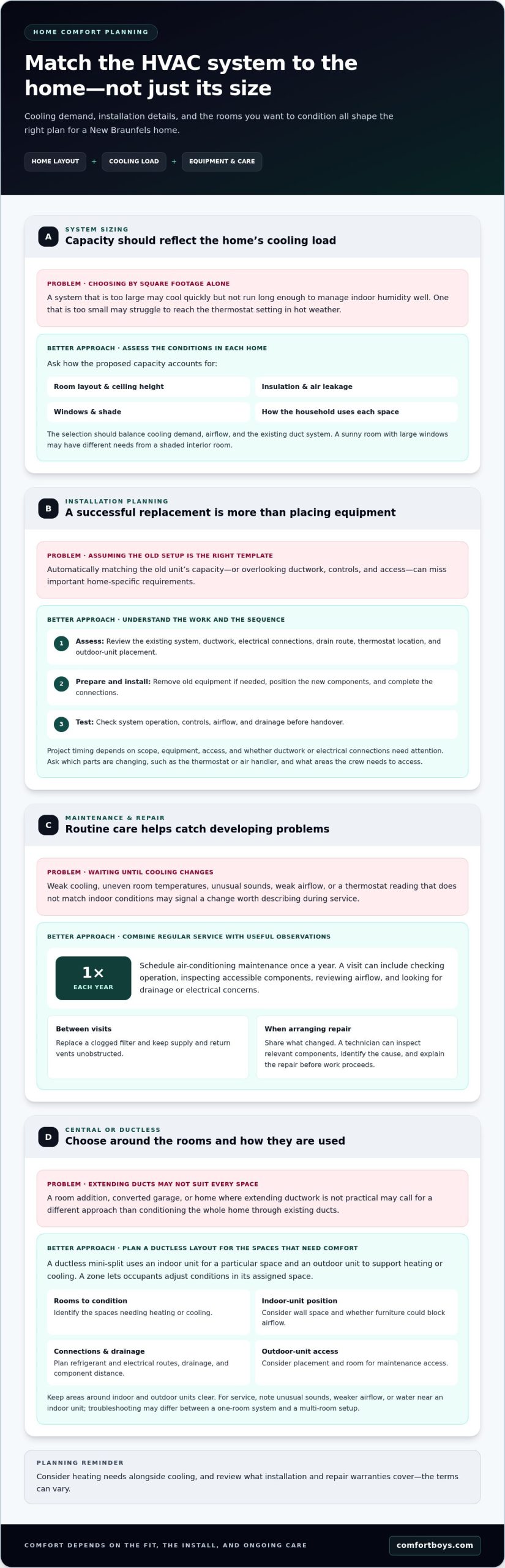
System size should reflect the home’s cooling load, not just its floor area. A technician considers room layout, ceiling height, insulation, windows, shade, air leakage, and how the household uses each space. For example, a sunny room with large windows may have different cooling demands from a shaded interior room.
Ask how the proposed capacity accounts for those home-specific conditions. An oversized system may cool quickly but not run long enough to manage indoor humidity well. An undersized system may struggle to reach the thermostat setting in hot weather. The right selection balances cooling demand, airflow, and the existing duct system, making a load assessment more useful than choosing equipment by square footage alone.
Heating and Cooling System Installation
Heating and air-conditioning installation involves more than placing equipment. The installer evaluates the existing system, ductwork, electrical connections, drain route, thermostat location, and outdoor-unit placement. These details affect how the equipment fits the property and how air reaches individual rooms.
For a replacement, compare the new system’s capacity with the home’s needs rather than automatically matching the old unit. Changing the equipment type or location can also affect duct connections and controls. During installation, the crew removes old equipment, positions and connects the new components, and checks operation. Ask for a clear explanation of the work and which parts of the system are changing, such as the thermostat or air handler.
Installation Process and Timeline
Installation typically begins with a home assessment and equipment selection, followed by preparation, removal of existing equipment if needed, placement, connections, and system testing. The timeline depends on the project scope, equipment, access to the work area, and whether ductwork or electrical connections need attention.
A direct replacement may involve fewer tasks than a project that changes equipment location or requires duct modifications. For example, a blocked attic access point can affect how installers move equipment, while damaged duct sections add work before airflow can be checked. Before work begins, understand the planned sequence, areas the crew needs to access, and the testing that follows installation. A final operating check helps identify control, airflow, or drainage issues before the system is handed over.
Maintenance helps catch developing problems before they disrupt cooling. Schedule air-conditioning maintenance once a year. A service visit can include checking system operation, inspecting accessible components, reviewing airflow, and looking for signs of drainage or electrical concerns. Replacing a clogged filter and keeping supply and return vents unobstructed are practical homeowner steps between visits.
When cooling weakens, note what has changed: unusual sounds, uneven room temperatures, weak airflow, or a thermostat reading that doesn’t match indoor conditions. Share those observations during repair service. A technician can inspect relevant components, identify the cause, and explain the repair before work proceeds. Clear symptoms help focus the assessment, while regular tune-ups support more consistent system operation.
Ductless system installation and service
A ductless mini-split can cool selected rooms without relying on a network of ducts. Its indoor unit serves a particular space, while an outdoor unit supports heating or cooling. This layout can suit a room addition, converted garage, or home where extending existing ductwork isn’t practical. The right design depends on the rooms you want to condition and how you use them.
Installation starts by identifying the spaces that need heating or cooling. The installer then determines indoor-unit locations, routes refrigerant and electrical connections, and positions the outdoor unit. Wall space, drainage, maintenance access, and the distance between components all affect placement. For example, a bedroom may need a different indoor-unit location than an open living area.
Ask how the proposed layout will serve each room and whether separate zones make sense for your household. A zone lets occupants adjust conditions in its assigned space rather than relying on one central thermostat for every room. The system should be selected and arranged around the home’s layout, comfort priorities, and existing equipment. Careful planning helps avoid placing an indoor unit where furniture blocks airflow.
Service can include inspecting system operation, cleaning or maintaining accessible components, and diagnosing a loss of cooling or heating. Keep the areas around indoor and outdoor units clear, and note changes such as unusual sounds, weaker airflow, or water near an indoor unit. These observations give a technician useful clues during troubleshooting. A mini-split serving one room may need a different diagnostic approach from a multi-room setup.
New Braunfels is within the broader San Antonio and Texas Hill Country service region for local HVAC work. Comfort Boys serves New Braunfels and nearby communities, including San Antonio, Boerne, Kerrville, Fredericksburg, Pipe Creek, Comfort, Spring Branch, and Blanco. Project logistics can depend on the home’s location, access, and installation requirements. These regional considerations are separate from the technical choice between ductless and central equipment.
Financing and service promotions are separate from equipment design. Financing terms can affect the total repayment amount, while a promotion may apply only to particular work or conditions. Review the stated terms, including eligibility, exclusions, and the period covered, before relying on an advertised offer. A promotion doesn’t determine whether a ductless setup suits the home; room needs and installation requirements do.
There isn’t a reliable “best company” ranking that fits every New Braunfels home. Compare the proposed system layout, explanation of installation steps, warranty terms, and how repair concerns will be handled. For permits, requirements can depend on the project scope and applicable local rules; a like-for-like replacement may differ from work that changes electrical connections or building features. For more on ductless installation service, review the work involved and how it fits your home’s comfort needs.
Installation and repair warranties
A warranty can cover different parts of an HVAC project, so read the written terms before work begins. Distinguish equipment coverage from installation workmanship and repair coverage. For example, a compressor issue and a loose electrical connection may fall under different terms. The document should identify covered parts, exclusions, claim steps, and any maintenance conditions.
For a new heat pump, keep the equipment paperwork, installation proposal, and completion records together. Check which components the warranty names and how to start a claim. For repair work, ask what the repair warranty applies to: the replacement part, the labor, or both. A return visit for the same reported fault is not automatically covered unless the written terms say so.
Texas HVAC licensing requirements depend on the work and the contractor responsible for it. Ask which license applies to the planned installation and have the responsible contractor’s details included with the written proposal.
Before hiring an installer, ask practical questions that connect directly to the job:
- Which equipment and components are included in the proposal?
- What do the equipment and workmanship warranties cover, and what exclusions apply?
- How should a warranty claim be submitted, and what records should be kept?
- Which installation steps and final operating checks are included?
- Who will explain the system controls and maintenance requirements?
Clear answers help you compare proposals without assuming similar-looking warranties offer identical coverage. Keep the signed agreement, equipment model information, service records, and repair invoices together. If a heat pump needs service later, these records help establish what was installed, what work was completed, and which warranty terms may apply.
Common installation problems include poor airflow, drainage issues, incorrect control settings, and connections that need adjustment. Reduce avoidable problems by reviewing equipment placement, duct or refrigerant connections, drainage, and thermostat operation during the project walkthrough. Ask the installer to demonstrate heating and cooling modes before completion. For a heat pump, confirm that both modes operate and that you understand how to use its controls.
Repair decisions also benefit from a clear diagnosis. Describe the symptom, such as a heat pump that runs without changing room temperature, then ask what inspection or test supports the proposed repair. Request an itemized explanation of the work and its warranty terms before authorizing it. If the same symptom returns, record when it happens and share that detail with the service technician.
Warranty language matters most when a problem occurs, not just at installation. Save maintenance and repair records, follow the care steps stated in the agreement, and note claim deadlines or required documentation. A written explanation makes it easier to distinguish equipment coverage from installation or repair coverage when you need support.
Equipment brands and options
Choosing equipment for a New Braunfels home involves more than comparing manufacturer names. Start with the system type, the home’s existing ductwork, and the rooms needing heating or cooling. A central air conditioner distributes cooled air through ducts, while a ductless mini-split serves selected spaces without that network. A heat pump is another option to consider for year-round comfort. Each system type has different installation requirements.
Brand comparisons become useful after you define the project requirements. Compare complete system proposals, not isolated model names: the indoor and outdoor components must work together. Ask which equipment models are included, how they fit the home, and which controls come with them. For example, replacing only an outdoor unit may raise compatibility questions with existing indoor equipment. A proposal should clearly explain the components and work.
Use these factors to organize your comparison:
- System type: Decide whether central air, a ductless mini-split, or a heat pump fits the home’s layout.
- Room coverage: Identify whether the system serves the whole home or targeted spaces, such as an addition.
- Existing components: Note the condition of ducts, thermostat, and indoor equipment before comparing replacement options.
- Controls: Consider how household members will set temperatures and operate the equipment each day.
Efficiency labels and model specifications can help compare similar equipment, but they don’t replace a home assessment. Check the exact model numbers in each proposal and compare the same type of equipment. A higher-rated option may have different features or installation needs, so understand what the rating measures. Ask how the selected system’s capacity and airflow relate to the rooms it will serve.
For a ducted system, check whether the existing supply and return paths suit the new equipment. A restricted return grille or damaged duct section can affect airflow even with new equipment. For a ductless setup, compare the proposed indoor-unit locations and the rooms each unit serves. A bedroom and an open living area may need different placement plans. Location affects daily use and service access.
Thermostat compatibility is another practical comparison point. A new control should suit the chosen equipment and the household’s operating habits. Ask what functions the proposed thermostat supports, how it connects to the system, and whether existing wiring can be used. Don’t assume a familiar brand name means the controls or components will match your current setup.
Before choosing, request a written equipment list with model identifiers and the installation scope. Compare how each proposal addresses the home’s layout, existing components, and comfort priorities. This keeps the decision grounded in the actual system rather than brand recognition alone. In New Braunfels, local cooling and heating needs matter alongside equipment features.
Heating installation and maintenance
Heating deserves attention in New Braunfels, even when cooling dominates the conversation. Start by identifying the equipment type, the rooms it serves, and any comfort issues. A heat pump provides heating and cooling through one system, while a furnace provides heat separately. Existing equipment, ductwork, and household preferences help shape the replacement decision.
During a heating installation, the work plan should account for the indoor equipment, controls, airflow paths, and connections. For a heat pump, the heating mode needs to be tested alongside cooling. For a furnace, confirm the proposed equipment suits the home’s heating needs and existing setup. Ask which components will be replaced and how the new thermostat will operate.
Maintenance begins with simple observations. Check the thermostat setting, keep return-air grilles clear, and replace the filter according to its instructions. A blocked grille or dirty filter can restrict airflow and affect how the system operates. Note changes such as uneven room temperatures, unusual sounds, or frequent cycling, then share those details during service.
Professional maintenance can assess system operation, airflow, controls, and visible equipment condition. The work depends on the type of heater. For example, a heat pump has both heating and cooling modes, while a furnace uses a different heating process. A technician can inspect the relevant components and explain any repair needs based on observed symptoms.
- Before installation: List rooms that feel cold and describe when the problem occurs.
- During planning: Review equipment type, included components, and thermostat compatibility.
- At handoff: Ask for a demonstration of heating mode and basic control settings.
- Between visits: Keep vents clear and record any change in sounds or comfort.
These steps make the heating plan more specific than choosing equipment by brand alone. A cold bedroom, for example, may point to an airflow concern rather than a system-wide equipment problem. If some rooms feel comfortable while others do not, note the difference and whether it changes with closed doors or blocked vents. That information helps focus inspection and service.
For a home considering both heating and cooling updates, review how the systems work together. A heat pump may combine those functions, while a separate furnace and air conditioner use distinct equipment. Compare the installation scope, controls, and maintenance needs for the proposed setup. If the project also includes cooling equipment, explore air-conditioning installation options as part of the overall plan.
Comfort Boys Air and Heating: AC Installation
Comfort Boys provides AC installation, repair, and routine system care for homeowners and businesses in New Braunfels and across the San Antonio and Texas Hill Country area. Turn to the team when an aging unit needs replacement, cooling falters, or maintenance is due. For homes where extending ductwork isn’t practical, Comfort Boys also installs mini-split systems for selected spaces.
A useful next step is to describe the rooms you want to cool, any comfort concerns, and whether existing equipment will stay or be replaced. That context helps focus the discussion on the work your home needs, whether it’s a new installation, repair, or maintenance visit.
Contact Comfort Boys Air and Heating to discuss your AC installation needs.
Make your next HVAC decision with confidence
Your next step doesn’t need to be a full-system decision. Start with the comfort issue that matters most: a room that stays warm, unreliable cooling, or equipment nearing replacement. A short list of priorities can focus the conversation and clarify what you want your home’s system to do.
For HVAC installation in New Braunfels, TX, Comfort Boys offers AC installation, AC repair services, and AC tune-ups. Whether you’re planning a replacement or addressing a current cooling concern, the team can help you identify the service that fits the situation.
Contact Comfort Boys Air and Heating to discuss your AC needs and take a comfortable next step for your home.
Frequently Asked Questions
What does HVAC installation cost in New Braunfels, TX?
Installation cost depends on the equipment type, home layout, and work the project requires. A central system replacement may involve different tasks from a ductless installation or a project that changes existing connections. The system capacity and condition of ductwork also affect the scope. For a useful estimate, compare written proposals that identify equipment, installation work, and any included components. The final price is provided after a quote request.
How much does HVAC installation cost per ton in New Braunfels, TX?
There isn’t one useful per-ton figure for every New Braunfels installation. Tonnage describes cooling capacity, but price also depends on equipment selection, installation scope, existing system compatibility, and any ductwork changes. A larger capacity alone doesn’t explain the project’s full cost. Compare complete proposals for the same type of system, including model details and installation tasks. The price depends on the case and is given after a quote request.
Are HVAC installation rebates or tax credits available in Texas?
Rebate and tax-credit eligibility depends on the program’s current rules, qualifying equipment, and installation details. Before making a decision, review the eligibility criteria, required purchase or installation records, and application deadlines. Keep the equipment model information and final invoices together, since programs may require project documentation. Don’t assume every system or household qualifies; program requirements determine eligibility.
What warranty and maintenance requirements apply after HVAC installation?
Warranty coverage and maintenance conditions depend on the written equipment and workmanship terms. Keep the warranty documents, model information, installation records, and service receipts together. Follow the stated maintenance instructions and replace air filters every 30-90 days. For example, a filter change record can help document routine care. Review the warranty for exclusions, claim steps, and any maintenance records required to support a claim.
best HVAC installation companies in New Braunfels TX
There isn’t a reliable best-company ranking for every New Braunfels home. Compare the proposed system layout, installation explanation, warranty terms, and how repair concerns will be handled.
New Braunfels permits required for HVAC installation
Permit requirements can depend on the project scope and applicable local rules. A like-for-like replacement may differ from work that changes electrical connections or building features.