
An HVAC service club can make routine care easier by grouping scheduled tune-ups with benefits such as repair discounts and priority appointment access. For San Antonio homeowners, the benefits of an HVAC service club often come from catching maintenance needs earlier and having clearer terms when a repair is needed. Membership isn’t the same as a warranty on existing equipment, but keeping service records can help document upkeep.
Dependable comfort is easier to manage when routine care is planned. This guide explains what a service club can include, how tune-ups support system maintenance, and what to understand about discounts and warranty records. You’ll also learn how to compare membership terms with your home’s heating and cooling needs.
Key Takeaways
- See how a service club can organize routine HVAC maintenance and what membership terms to review.
- Learn how priority appointment access and repair-related benefits may make service easier to plan.
- Understand which system checks a tune-up may include and how they can help spot maintenance needs.
- Compare the value of regular maintenance with the factors that influence repair costs.
- Find out how service records can support warranty documentation and help track equipment care.
Repair discounts and warranty benefits
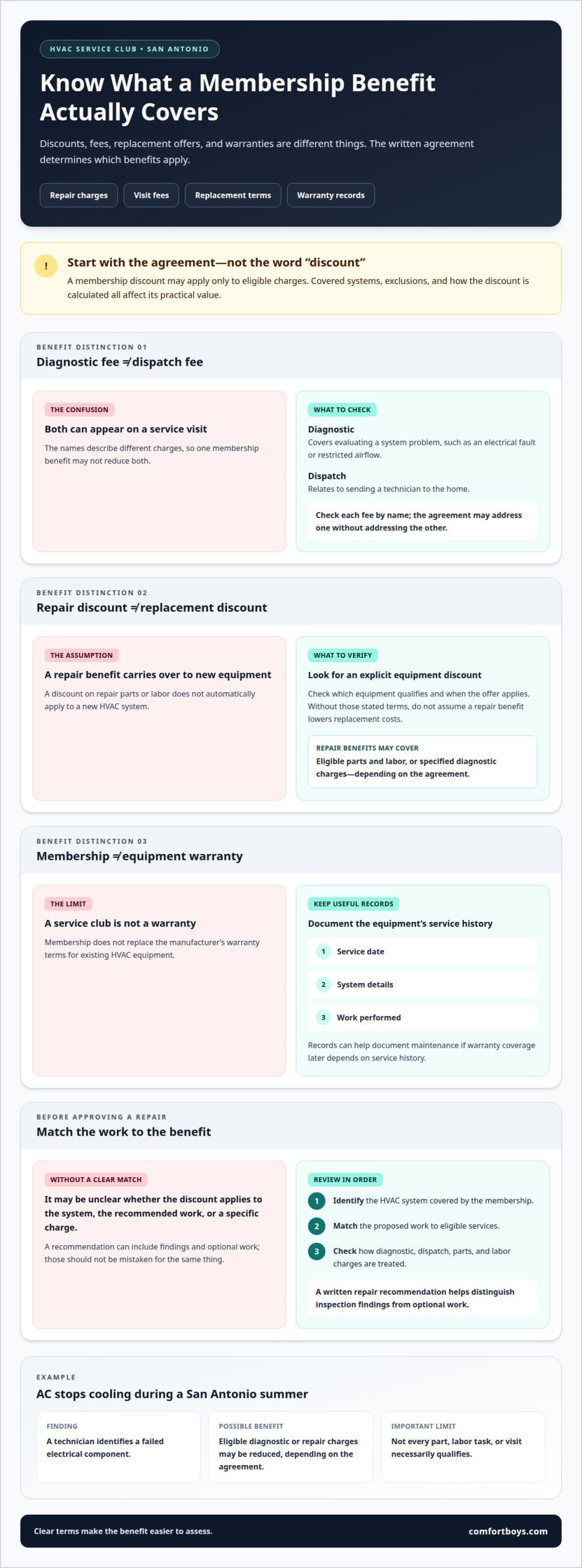
A membership discount can reduce the cost of an eligible HVAC repair, but the agreement defines what qualifies. Some plans discount parts and labor or reduce diagnostic fees. The practical value depends on the equipment and work covered, as well as any exclusions. Membership discounts may apply to only certain repair charges, so check the agreement to see what is covered.
Diagnostic and dispatch fees cover different parts of a service visit. A diagnostic fee covers evaluating a system problem, such as an electrical fault or restricted airflow. A dispatch fee relates to sending a technician to the home. Check the agreement for each fee by name, since a membership may address one without addressing the other. This distinction clarifies which costs a benefit actually reduces.
For example, an air conditioner might stop cooling during a San Antonio summer, and a technician may find a failed electrical component. A membership benefit can reduce eligible diagnostic or repair charges, depending on the agreement. It doesn’t mean every part, labor task, or visit qualifies. Review the written terms for covered systems, exclusions, and how the discount applies if more than one repair is recommended.
Repair discounts and replacement discounts are separate benefits. A discount on repair labor or parts doesn’t automatically apply to a new HVAC system. If you’re considering replacement, check whether the agreement explicitly describes an equipment discount, which equipment qualifies, and when the offer applies. Without those terms, don’t assume a repair benefit will reduce replacement costs.
Timing can affect whether repair or replacement makes sense. A technician’s inspection can identify the system’s condition and the work needed to restore operation. One repair recommendation, for example, differs from recurring faults or several failing components. Membership may help with eligible maintenance or repairs, but it doesn’t determine which option best fits the equipment.
Warranty support also has limits. A service club membership isn’t a warranty on existing HVAC equipment, and it doesn’t replace the manufacturer’s warranty terms. Keep inspection and repair records together, including the service date, system details, and work performed. These records can help document maintenance if warranty coverage later depends on service history.
Before relying on a discount, use a simple review process: identify the covered system, match the proposed work to eligible services, and check how diagnostic, dispatch, parts, and labor charges are treated. A written repair recommendation helps distinguish inspection findings from optional work. This makes the membership benefit clearer before you approve a repair.
The most useful benefit is the one that matches your actual need. A homeowner facing a small repair may value a parts-and-labor discount, while someone arranging an inspection may focus on diagnostic charges. For replacement planning, only a stated equipment discount applies. Clear distinctions among fees, repairs, warranties, and replacement offers help San Antonio homeowners assess membership realistically.
What Is an HVAC Maintenance Club Membership?
An HVAC maintenance club combines scheduled system care with service benefits for enrolled homeowners. The agreement explains which visits and access benefits membership provides. Priority scheduling means preferred access to appointments, not a guaranteed arrival time. During San Antonio’s busy summer, that distinction matters when cooling demand rises and homeowners need a working system.
Priority scheduling affects how appointment requests are handled. Members may receive priority access to service appointments, helping households plan around a problem or maintenance visit. Priority doesn’t mean every request is handled immediately. Scheduling depends on technician availability, the service needed, and existing appointments.
Scheduling can matter even more during peak seasons. As summer heat puts more systems to work, demand for appointments can rise along with the need for cleaning and repairs. Priority scheduling can help members access appointments sooner in the service queue, though it doesn’t specify an exact arrival time.
Read the agreement for renewal and cancellation details. Some plans renew automatically, while cancellation may need to happen before the next service cycle. These terms determine how long membership continues and when to act to end it. A clear renewal notice helps you understand when enrollment will continue.
Fees can also differ by appointment timing. During regular business hours, a standard service-call fee is waived under the described membership terms. After-hours fees may still apply. That distinction means priority access and fee treatment are separate benefits: a membership can improve appointment availability without removing every charge connected with an evening or other after-hours visit.
Before enrolling, homeowners can follow a short review process:
- Identify which HVAC system the membership covers.
- Read how priority scheduling works during peak seasons.
- Note whether the agreement renews automatically each year.
- Understand cancellation timing and possible after-hours fees.
For example, if you notice reduced cooling in summer, you can request service as a member and ask for an available appointment. Priority scheduling can help with access, while the agreement’s terms explain how appointment timing affects fees. You can also plan a separate maintenance visit before peak demand rather than waiting for a breakdown.
The value of a club depends on using its included services and benefits. A household that schedules routine visits and values priority access may find membership more useful than one needing only occasional repairs. Compare covered visits, scheduling terms, renewal details, and fees with your home’s HVAC needs to see what the plan provides.
What the Comfort Club maintenance agreement includes
A maintenance agreement sets out planned visits and checks for heating and cooling equipment. In San Antonio, compare each plan’s schedule and inspection scope, not just its billing period.
Scheduled Heating and Cooling Visits
Scheduled visits put HVAC maintenance on the calendar before a heating or cooling problem interrupts home comfort. The agreement should explain which systems receive service and how visits are arranged across the seasons. A Comfort Club agreement includes condenser coil cleaning once per year. Look for clear visit descriptions so you can distinguish seasonal maintenance from repair work requested after a breakdown.
Annual Maintenance and Safety Inspections
Annual maintenance should assess equipment operation as well as routine cleaning. A technician can inspect accessible components, assess system performance, and identify concerns that need attention. For gas heating equipment, a safety check may look for a cracked heat exchanger, which can create a carbon monoxide risk. The written agreement should clarify which inspection tasks are included and how findings are communicated.
Maintenance Visit Checks
A useful tune-up checks more than whether the system starts. Common tasks include cleaning coils, checking airflow, verifying refrigerant charge levels, calibrating the thermostat, clearing condensate drain lines, and tightening electrical connections. These checks address different parts of system operation. Restricted airflow and a blocked drain, for example, are separate issues, so the service record should state what was inspected and what follow-up was recommended.
AC and heating systems should each be serviced at least once a year. Scheduling maintenance before the equipment is relied on heavily gives a technician an opportunity to assess its condition. Compare plans to see whether visits are scheduled separately, which equipment they cover, and whether the same inspection scope applies to each.
San Antonio homeowners can compare plans by matching the agreement to their household’s equipment and maintenance priorities. Check the number and timing of visits, the covered HVAC system, the stated cleaning and inspection tasks, and the billing period. Monthly and annual payment arrangements describe how charges are spread or collected; they don’t, by themselves, explain what maintenance is included. Read the service scope alongside the payment terms.
After each visit, a written record connects inspection findings with completed work. It can note which coils were cleaned, whether airflow and electrical connections were checked, and what follow-up the technician recommended. If a heating concern appears during a cooling-focused appointment, the report can distinguish that observation from work completed during the visit. Clear records also help you plan the next maintenance appointment.
What Makes a Maintenance Plan Useful for Preventing Breakdowns?
A maintenance plan creates regular opportunities to spot wear before it interrupts heating or air conditioning. Its value depends on the visits included and the repairs excluded.
Scheduled Tune-Ups and Repair Costs
Scheduled tune-ups give a technician time to assess system condition before heavy seasonal use. AC and heating systems should each be serviced at least once a year. Checks during a visit can reveal a developing issue that needs attention before it affects operation. Preventive maintenance can help equipment operate efficiently and keep heating and cooling bills manageable.
That doesn’t mean every problem will be found or prevented. Review the service record after each visit to see what was inspected, what needs follow-up, and whether the work falls within the plan. A record of recurring air-conditioning trouble, for example, can help distinguish a new repair from an issue noted earlier.
Preventing Emergency Repairs
Maintenance can reduce the chance that an overlooked problem becomes an urgent breakdown during a demanding season. A technician may notice a drainage issue or unusual system operation during a scheduled inspection. Addressing a finding before it disrupts cooling can help avoid an unexpected service need. A tune-up is preventive care, not a promise that emergency repairs won’t occur.
Use inspection findings to plan the next step. If a technician identifies a repair need, the agreement determines whether that work is included or billed separately. A maintenance plan generally covers specified visits and services, not every part, labor task, or emergency call. Read those limits alongside any repair discount to understand the benefit.
Plan Costs and Repair-Cost Comparisons
Compare the membership charge with the scheduled maintenance and benefits included. Then consider what the agreement excludes, such as repairs outside its stated scope. A plan’s value isn’t measured by one avoided repair alone. It also depends on whether the covered visits suit your equipment and include work you would otherwise arrange.
Repair costs depend on the fault, parts required, and labor involved. A small component issue differs from a major compressor failure, so one repair example can’t predict another household’s expenses. Compare like with like: the agreement’s covered maintenance against the proposed repair work, not an assumed repair total.
Keep inspection reports, repair recommendations, and completed-work records together. These details make it easier to track recurring concerns and which tasks the plan covered. If air-conditioning performance changes between visits, the service history gives the technician useful context. It also helps homeowners distinguish preventive maintenance from a separate repair request.
Before choosing a plan, list the HVAC systems that need care, the visits included, and the exclusions that matter most. Then weigh the schedule against your home’s heating and cooling needs. A plan is most useful when its maintenance scope is clear and its service records help guide timely decisions, rather than creating an expectation that every repair is covered.
Equipment lifespan and manufacturer warranty protection
Regular care can help HVAC equipment provide reliable service over time. For owners, the goals are steady performance, fewer avoidable breakdowns, and better-informed replacement decisions.
A tune-up gives a technician an opportunity to identify wear or operating concerns before they grow. A system running with restricted airflow, for example, may need attention to restore normal operation. Maintenance doesn’t guarantee that a component won’t fail, but documented inspections show what was observed and addressed over time.
Manufacturer warranty protection is separate from a maintenance club. The manufacturer’s warranty explains what equipment or parts it covers and any applicable conditions. Keep warranty paperwork with service records, including inspection dates and repair details. If a part later fails, those records can help document maintenance history when discussing a warranty claim.
Regular inspections can also help owners notice issues that could affect the home. A condensate drain concern, for example, deserves attention before water affects nearby areas. A technician can record the finding and recommended next step. Maintenance can help identify concerns, but it doesn’t guarantee that equipment or home damage will be prevented.
Replacement decisions benefit from a clear record of the system’s condition. If the same HVAC equipment needs repeated attention, records can help distinguish recurring problems from new ones. Owners can use service history alongside inspection findings to weigh continued repairs against replacement. A single maintenance visit cannot determine how long a system will keep running.
Keep these records together for practical use:
- Manufacturer warranty documents and equipment details.
- Inspection reports showing observed conditions and completed work.
- Repair records describing the issue and the parts addressed.
- Follow-up recommendations and notes about recurring breakdowns.
Service records can support warranty documentation and provide useful information when selling a home. A prospective buyer can review a clear history of maintenance and repairs rather than relying on a verbal summary. Keeping reports organized by system makes it easier to find the relevant inspection or repair record during a sale.
For continued equipment care, schedule an AC tune-up and keep the resulting service record with your warranty documents.
Comfort Boys Air and Heating: Comfort Service Club
Comfort Boys offers the Comfort Service Club for homeowners who want to make HVAC maintenance part of their home-care routine. If you’re weighing membership against booking individual visits, consider how scheduled care fits your system’s needs and the agreement’s terms. AC Tune Ups address air-conditioning upkeep, while AC Repair Services are for systems that need repair. AC Installation is the next step when replacement makes more sense than another tune-up or repair.
Use this guide to decide whether a service club suits your maintenance priorities, repair needs, and equipment plans. For HVAC service or details about the Comfort Service Club, contact Comfort Boys.
Choose a Plan That Fits Your Home
Use your next HVAC decision to establish a care routine that fits your household. Consider how you prefer to plan home upkeep, how you want service needs handled, and what you expect a membership agreement to cover. Then judge the benefits of an HVAC service club in San Antonio against those priorities, rather than choosing based on a single perk. A clear fit makes it easier to stay consistent and understand what you’re signing up for.
If you’re ready to put that plan into practice, talk with Comfort Boys Air and Heating about the next step that suits your home. Contact Comfort Boys Air and Heating to discuss your HVAC needs and available services. A thoughtful choice today can help you approach future home comfort decisions with greater confidence.
Frequently Asked Questions
What is the best HVAC maintenance plan in San Antonio?
The best plan is one whose scheduled care and service benefits match your equipment and priorities. Compare the systems covered, maintenance visits, repair discounts, appointment access, and renewal terms. San Antonio and Hill Country homeowners who value planned upkeep can consider the Comfort Service Club from Comfort Boys. Review its included services against how you use your heating and cooling system before deciding.
Is a maintenance plan worth it for a newer AC?
A service club can be useful for a newer air conditioner if you want scheduled care and easier access to service. A new system still needs maintenance, and organized service records provide a clear history of care. For example, you can keep tune-up records with the installation documents. A plan’s value depends on whether its visits and benefits fit your maintenance habits.
What benefits are included in HVAC service club memberships in San Antonio?
Benefits vary by membership, so review the agreement for its actual inclusions. The benefits of an HVAC service club in San Antonio can include scheduled maintenance and priority scheduling, while Comfort Boys Air and Heating’s Comfort Service Club also provides a 10% discount on future services. Check which equipment the agreement covers and how each benefit applies. That makes it easier to match membership features to your home’s service needs.
How much does an HVAC service club membership cost in San Antonio?
Comfort Boys describes its pricing as upfront, flat-rate, and transparent with no hidden fees. When comparing a membership, consider the payment period alongside the visits and benefits included. The monthly amount is only one part of the decision; the plan’s service scope and your maintenance priorities also matter.
What preventive maintenance visits are included in San Antonio HVAC service plans?
The Comfort Service Club includes twice-yearly professional maintenance, with a Spring Cooling Checklist and a Fall Heating Checklist. These visits provide seasonal attention for the cooling and heating equipment. The specific maintenance tasks are described through the respective checklists. For a household in San Antonio, scheduling seasonal visits can help organize system care around the periods when cooling or heating is needed.
Do San Antonio HVAC service clubs offer discounts on repairs or replacement systems?
Some plans offer repair-related savings, but the agreement determines which services qualify. The Comfort Service Club provides a 10% discount on future services. That offer describes services, not a separate discount on replacement equipment, so homeowners shouldn’t assume a new system purchase receives the same reduction. Review the terms for how a discount applies before using it to compare repair and replacement options.
Do HVAC service club members get priority or emergency service in San Antonio?
Comfort Service Club members receive priority scheduling. Comfort Boys Air and Heating also offers 24/7 Emergency Services, which is separate from the membership’s scheduling benefit. Priority scheduling concerns appointment access; it isn’t a stated arrival-time guarantee. If an air conditioner stops working during a hot San Antonio day, contact the company about the service need and whether emergency assistance is appropriate.
Are HVAC service club memberships worth the cost compared with paying for maintenance and repairs separately?
Compare the membership’s included maintenance and service benefits with the care you would arrange separately. A homeowner who uses scheduled visits and values priority scheduling may place more value on membership than someone who rarely books maintenance. Repairs outside the plan’s coverage can still require separate service. The agreement’s scope and your expected use provide the clearest basis for comparison.