
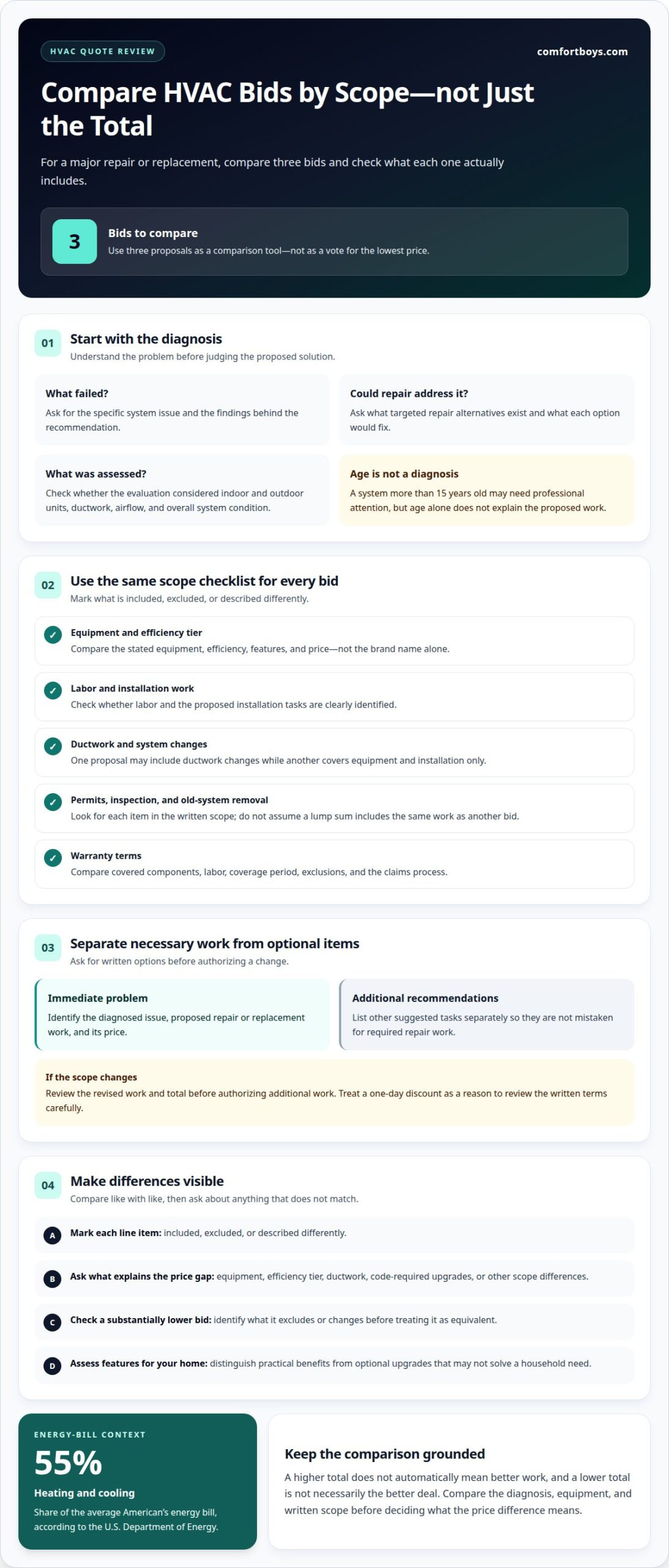
A higher HVAC quote doesn’t automatically mean better work, and a lower one isn’t necessarily the better deal. A second opinion on an HVAC quote in Kerrville can help clarify whether replacement is necessary or a targeted repair may address the problem. For major repairs or new equipment, compare three bids and review exactly what each includes with experts like Comfort Boys Air and Heating.
It’s reasonable to want clear answers before committing to a major home-comfort project. This guide explains when another opinion can help, how to compare equipment, sizing, efficiency, and pricing, and what to consider when choosing a provider in Kerrville, Boerne, and nearby Hill Country communities. You’ll be better prepared to assess the recommendations and choose a path that fits your home.
Key Takeaways
- Ask what specific system issue supports a replacement recommendation and whether a targeted repair could address it.
- Compare bids by equipment, efficiency, labor, ductwork, permits, removal, and other included work, not just the total.
- Look for a sizing assessment that considers the home and system conditions; equipment that’s too large or too small can affect comfort and efficiency.
- Bring the original quote, equipment details, repair history, and notes about comfort problems to make another evaluation more useful.
- Choose a Kerrville-area provider whose recommendations and written scope are clear, without letting a short-lived offer rush your decision.
Why are some HVAC companies so much more expensive?
HVAC quotes can differ because a repair, replacement, or maintenance visit may cover different work. Compare the written diagnosis and scope before weighing the totals.
Written Options and Pricing
Before work begins, ask for written repair options that identify the diagnosed problem, proposed work, and price. A clear quote lets you compare the same repair across proposals instead of guessing which parts or tasks each total covers. Check whether it includes labor and replacement parts, and note any additional recommended work separately.
Ask which costs are necessary to address the immediate problem and which tasks are optional. For example, a quote might separate a failed-component repair from recommended maintenance. If the proposed work changes after inspection, review the revised scope and total before authorizing the additional work.
Rebates or tax credits for energy-efficient HVAC systems depend on the equipment and the applicable program’s eligibility terms. They aren’t a standard deduction from every Texas quote, so compare any incentive separately from the written price.
Repair or Replacement Decisions
A replacement recommendation should explain what failed and why a repair would not address it. Ask which indoor and outdoor unit conditions were assessed, and whether the technician checked ductwork, airflow, and the overall system condition. These findings help show whether the recommendation responds to a specific problem or replaces equipment that may still be serviceable.
A second opinion can help determine whether a targeted repair could extend the system’s life. Before agreeing to replacement, ask what repair alternatives exist and what each option would address. An HVAC system more than 15 years old may need professional attention, but age alone doesn’t explain the diagnosis or the work proposed.
For Kerrville homeowners, distinguish an urgent breakdown from a longer-term efficiency decision. A repair may address a current fault; replacement may make sense when the system’s condition and repair needs support it. The written explanation should connect the recommendation to observed equipment and home conditions.
System Signs and Cost Comparisons
Frequent breakdowns, uneven airflow, or rooms that no longer reach the thermostat setting are useful details to share during an evaluation. Note when each issue occurs and whether it continues after a repair or maintenance visit. A technician can assess these symptoms alongside the indoor and outdoor units, ductwork, and airflow.
Compare repair and replacement by scope, not by the total alone. Replacement quote prices vary with system size, efficiency, ductwork, and code-required upgrades. Ask which factors account for the difference between estimates, and whether each quote includes the same equipment and work. Heating and cooling account for 55% of the average American’s energy bill, according to the U.S. Department of Energy.
Treat a discount valid for only one day as a reason to slow down and review the written terms. The proposal should show what the price covers and identify any potential additional work. That makes it easier to assess the recommendation without letting a deadline take the place of a clear diagnosis.
Comparing equipment options and efficiency
Compare equipment by efficiency, features, and fit for your home, not brand name alone. For a major project, gather three bids and review each proposal’s scope before comparing totals.
Reasons Quotes Differ
HVAC quotes can vary because companies have different overhead, advertising budgets, and sales structures. A proposal from a commissioned sales representative may be organized differently from one prepared another way. That doesn’t establish whether the equipment or installation is better; compare the specific work and equipment details.
Ask which features suit your home and which may offer little practical benefit. For example, compare heating options by their stated efficiency and included features, then consider whether those features meet your household’s needs. A clear explanation helps distinguish useful value from a higher price without letting sales pressure drive the decision.
Replacement Quote Line Items
Check whether each replacement quote separately identifies the equipment and efficiency tier, permits and inspection, ductwork, old-system removal, and labor. A lump sum can obscure differences in scope. One bid might include ductwork changes while another covers equipment and installation only, making the totals difficult to compare.
Put the bids side by side and mark every included, excluded, or differently described task. Then ask about each specific difference. This can reveal whether a higher quote covers additional work, a different efficiency tier, or a more complete installation scope.
Compare equipment options at the same level of detail. Review the stated efficiency, features, and price for each option, then consider how they match your home’s comfort needs and expected use. Ask which features offer a practical benefit and which are optional upgrades. An appealing option may not solve a problem your household has.
Use three bids as a comparison tool, not as a vote for the lowest total. Check whether each proposal describes comparable equipment and work, including ductwork and removal. If one bid is substantially lower, identify what it excludes or changes before treating it as equivalent. A complete scope makes the difference easier to understand.
Warranty terms also belong in the comparison. Review which components are covered, whether labor is included, the coverage period, exclusions, and the claims process. Compare the terms for the specific equipment and installation proposed. Don’t assume two warranties offer the same protection because their summaries use similar wording.
To organize your questions, use this HVAC equipment and repair overview as a starting point for comparing the options and written scopes in your bids.
Should I get a second opinion on my HVAC quote?
Yes. Get another evaluation when the diagnosis, replacement recommendation, or installation scope is unclear. An independent assessment can help you compare the proposed work and understand what each quote includes.
Warning signs include a quote that omits key work, refuses to provide costs in writing, or offers a price valid only that day. Pressure to pay for equipment or services before work starts is another reason to pause and review the proposal.
To get another opinion on an HVAC quote in Kerrville, share the original quote, equipment information, repair history, available photos, and notes about comfort problems, energy bills, or recent breakdowns. Ask the technician to assess the system independently and explain how the findings support the recommendation.
Scope, Warranties, Permits, and Installation
Review the scope for equipment, labor, permits, ductwork, accessories, removal, and installation details. Each item should make clear what work is proposed, so you can compare the full job rather than totals with different coverage. For warranties, review the covered parts or work, stated terms, and exclusions.
When applicable, permits and inspections should be clear parts of the proposed work. Ask how the installation will be completed and what the final inspection covers. If several tasks are grouped under one vague line, it’s harder to identify what the price includes or compare the installation plans.
Load Calculations in Installation Quotes
Ask whether the provider performed a load calculation and how it informed the proposed system size. Proper sizing matters: an oversized HVAC system can short cycle and waste energy, while an undersized system may struggle to keep the home comfortable.
A useful explanation connects the calculation to your home’s conditions, not just a general square-foot estimate. Compare the sizing rationale across proposals and ask how it addresses both cooling and heating needs. If a quote names equipment without explaining how it was sized, it’s difficult to evaluate against another recommendation.
Installation and Maintenance Costs
Installation costs depend on the equipment, labor, ductwork, accessories, permits, and removal included in the scope. Maintenance is separate from replacement work, so check whether the proposal includes maintenance tasks or prices them as an additional service. Compare each task and its purpose instead of treating bundled totals as equivalent.
Whole-system installation or replacement generally takes between one and three days. Installing or replacing a furnace or air conditioning unit may take from a few hours to two days. The scope and equipment involved help explain the timeline in a specific proposal.
Warning Signs in a Quote
Review proposals closely if they lack an itemized scope, leave costs unclear, or impose a deadline that gives you little time to compare. A major recommendation should connect the diagnosis to the equipment, work, and installation plan. If that connection is missing, ask for an explanation before deciding.
Compare the complete scope and warranty terms with another assessment, not just the price. Notes about recent breakdowns or comfort issues can help the technician address your concerns directly. Written details make differences easier to spot and give you a clearer basis for choosing the work.
Assessing equipment sizing and quote pricing
A second opinion on an HVAC quote in Kerrville can clarify whether the proposed equipment suits your home. Compare the sizing rationale and installation scope before judging the totals.
For a 2,000-square-foot home, Kerrville sizing guidance places air-conditioning capacity between 2.5 and 5 tons. That’s a broad range, not a rule for every home of that size. Ask the technician how layout, insulation, windows, airflow, and other home conditions shape the recommendation. Compare that explanation with the proposed equipment rather than selecting capacity from square footage alone.
Furnace sizing needs its own explanation. Guidance for a 2,000-square-foot home suggests furnace capacity between 50,000 and 80,000 BTUs. Ask how the proposed capacity reflects the home’s heating needs and conditions. The range shows why a generic estimate may not explain a specific equipment choice.
Equipment that is too large can cycle on and off frequently, while undersized equipment may struggle to maintain comfort. Compare each proposal’s capacity, model, and efficiency tier. If bids name different capacities, ask what home conditions or calculations explain the difference. A clear sizing rationale connects the system to your home’s needs.
Quote totals can vary with equipment, efficiency levels, and included installation work. Compare bids line by line for labor, permits, inspection, ductwork, accessories, and old-system removal. A lower total may exclude tasks included in another proposal, so check the scope before treating the quotes as equivalent.
A higher efficiency tier isn’t automatically the right choice. Ask what practical benefit the rating or feature offers for your household’s heating and cooling needs. Compare options within each proposal, then match equivalent choices across bids. This helps distinguish equipment upgrades from differences in installation scope.
A bid significantly lower than the others deserves a closer review of the parts, products, and included tasks. Check whether its equipment capacity and efficiency match the competing proposals, then identify any omitted line items or accessories. A scope difference may explain the lower total without making the bids comparable.
Use a comparison sheet to record each bid’s capacity, model, efficiency tier, included work, and exclusions. Mark differences rather than averaging totals. If one quote proposes a 2.5-ton system and another proposes a larger unit, compare the sizing explanations first. The home’s requirements should guide the equipment comparison.
For a second opinion on an HVAC quote in Kerrville, focus on how the proposed capacity, efficiency, and scope fit your home. A written comparison makes those differences easier to discuss and supports a more informed equipment decision.
Choosing among Kerrville-area HVAC providers
Choose based on the clarity of the assessment, written scope, and installation plan, not price alone. In Kerrville, compare how each provider explains your air conditioning needs, ductwork, and proposed work.
Comparing Local HVAC Providers
For a useful comparison, review three bids for the same project and note differences in equipment, labor, and included work. Check whether each provider explains the recommendation in terms of your home rather than repeating a generic sales pitch. A quote that addresses your comfort concerns and identifies the work gives you more to assess.
Recommendations from family, friends, and neighbors can help you identify local companies they’ve used. Ask what work was completed and whether the final scope matched the written proposal. A neighbor’s air conditioning installation experience, for example, may offer insight into communication, but your home’s layout and ductwork still need an individual assessment.
Checking Contractor Credentials and Reviews
Texas HVAC contractors must be licensed by the Texas Department of Licensing and Regulation and have at least four years of experience in the past six years. Verify the contractor’s license through TDLR, then ask for proof of insurance and review the policy details before work begins.
Read reviews for specific details about estimates, installation, and follow-up instead of relying only on star ratings. Compare several accounts and look for examples related to the work you need. A review describing clear explanations about ductwork, for instance, is more useful than a general comment about price.
Use the same checklist for every Kerrville provider. Record the diagnostic findings, proposed equipment, scope of work, schedule, and warranty terms. Note whether the provider answered questions directly and revised the quote when the scope changed. This keeps the decision focused on the project, not just a persuasive first conversation.
Pay attention to pressure around the decision. A price offer valid only that day can be a warning sign, as can pressure to pay for equipment or services before work starts. Take time to compare written terms and understand what payment covers. A clear proposal should describe the work and costs without relying on a deadline to secure agreement.
For another opinion, share the first quote and explain what you want assessed, such as a replacement recommendation, repair diagnosis, or installation scope. Provide notes about comfort problems and recent breakdowns. Then compare the findings with the original proposal, including the reasoning behind equipment choices and any proposed ductwork changes.
Choose the provider whose assessment is clear, whose credentials you’ve reviewed, and whose written scope fits the home’s needs. To discuss an HVAC concern with a local team, schedule a conversation about your HVAC needs.
Comfort Boys Air and Heating: AC Installation
Comfort Boys Air and Heating can help when your assessment points to an air-conditioning installation, repair, or maintenance need. If replacement is appropriate, AC Installation is a next step; Mini Split AC Installation is another option for homes considering a ductless system.
If the system may be repairable, AC Repair Services can address diagnosed problems, while an AC Tune Up supports routine maintenance. The right service depends on the needs identified in your evaluation. Use the written findings to explain your concern and discuss the next step.
For help with an air-conditioning project or system issue, contact Comfort Boys Air and Heating or visit comfortboys.com.
Take the Next Step Toward Home Comfort
Let the evaluation guide your next move. If the findings point to a repair, replacement, or continued maintenance, keep the written recommendation handy as you plan work that fits your home. A second opinion on an HVAC quote in Kerrville can turn uncertainty into a clearer decision by showing what the proposed work addresses.
Comfort Boys Air and Heating offers AC Installation, AC Repair Services, and AC Tune Ups. Share what you’ve learned about your system and discuss the service that fits its condition and your comfort goals.
Contact Comfort Boys Air and Heating to talk through your HVAC needs and take a practical next step toward a comfortable home.
Frequently Asked Questions
Is a second opinion really free, with no obligation?
Not automatically. Before booking, confirm the evaluation fee and approval terms. Ask whether the visit includes diagnosis, written findings, and a separate repair or replacement estimate, or only a consultation. Clarify whether you’re expected to authorize work during the visit. For example, you can request an assessment without deciding on installation that day. Clear terms help you understand what you’re agreeing to before an HVAC technician evaluates your system.
What should a detailed HVAC installation quote include?
A detailed quote should identify the proposed equipment, efficiency information, labor, ductwork, permits, inspection, accessories, and old-system removal where applicable. It should also state what installation includes and describe exclusions or optional work. Check that the model and capacity match the proposal you discussed. If one quote includes duct changes and another doesn’t, ask for comparable scopes before judging the totals.
How do I compare HVAC quotes and equipment efficiency ratings?
Compare the exact equipment models and stated efficiency ratings, then check that each bid covers a similar installation scope. A higher rating alone doesn’t show whether the equipment suits your home or whether the quote includes the same labor and accessories. List each model, capacity, rating, and included task side by side. Ask how the proposed efficiency level relates to your household’s heating and cooling needs.
What are typical labor and equipment costs for HVAC installation in Kerrville?
Installation price depends on the project. Equipment choice, home size, ductwork, permits, and installation scope all affect the quote. Labor and equipment should be identifiable in the written proposal, so you can see what each bid assigns to them. Compare proposals with the same equipment type and included work; totals aren’t directly comparable if one excludes tasks included in another.
What questions should I ask before accepting an HVAC quote?
Ask what diagnosis supports the recommendation, how the equipment was sized, and what the total includes. Clarify which tasks are optional, what could change the scope, and how the installation will be inspected. If you’re comparing repair with replacement, ask what each option addresses and what condition the system may be in afterward. Keep the answers with the written quote so you can review them carefully.
What warranties and maintenance plans should an HVAC quote include?
Review the warranty document for covered components, labor coverage, duration, exclusions, and any steps required to keep coverage valid. A maintenance plan is separate from warranty coverage, so read which visits or tasks it includes and whether separate terms apply. Ask how warranty claims are handled and keep the final equipment and installation records. These details help clarify what support applies after the project is complete.